Saturday will mark nine months since the United States military swooped into Caracas and arrested Nicolás Maduro, the man who claimed to be the president of Venezuela, but who was really just a narco-terrorist holding the country hostage.
Nine months later, Venezuela is better off. A new hydrocarbons law ended the state’s monopoly on oil production and sales. The U.S. Embassy in Caracas reopened its doors after seven years. An amnesty law has led to the release of hundreds of political prisoners. Commercial airlines can now fly from the U.S. to Caracas, and some flights have started. Some media outlets have more freedom to operate and write or broadcast what they want now. U.S.-backed dialogue with the 2015 National Assembly started August 1, and just this week, “interim president” Delcy Rodríguez asked the sham National Assembly to soften the 2017 anti-hate law, the statute used to criminalize critics and journalists. People are protesting in the streets with some but not complete repression.
The Venezuelan people, both at home and abroad, are generally grateful to Donald Trump, Marco Rubio, and the United States for what they see as giving them a chance at a path toward democracy and freedom — something the country hasn’t experienced in decades — but their patience is wearing thin. The ones I speak to are understandably jaded. They feel like props, chess pieces. All they want is to be free humans who live and work and spend time with the people they love in a country where it’s safe to do so.
Maduro may be gone, but much of his regime remains in place. So far, their lives have not improved in many measurable ways. Food and medicine remain scarce and/or expensive. Many simply want jobs with living wages. Power outages of up to 10 hours per day have become the daily norm due to crumbling infrastructure and the strain from the ramping up of oil production. Several hundred political prisoners remain detained despite the January amnesty law. And the woman who a vast majority of the country sees as its next president has not been allowed to cross back over Venezuela’s borders.
Rubio maintains that his three-point plan is still very much intact: Stabilize. Recover. Transition.
Stabilize a post-Maduro country so that there is no civil unrest, no mass migration, etc. Recover the oil sector and other essential parts of the economy so Venezuela can function like a real country again. Transition to a democratic government by holding free and fair elections. No timeline has been set, and the 2015 National Assembly negotiations feel as if they are moving at a snail’s pace
No one expected overnight changes. No one expected double earthquakes to devastate part of the country and leave thousands dead, even more missing, and even more than that displaced. No one expected those earthquakes to expose that the regime is still very much in place and doing things the way it always has.
With all of that in mind, I wanted to take a closer look at exactly where things stand as we head into October.
Elections
The growing call to set a date for elections gets louder with each passing week. As I mentioned last Friday, several members of Congress have called for Rubio to set a date for elections and use that as a goal to work toward. Sen. Bernie Moreno (R-Ohio) has been one of the most vocal and suggests July 24, 2027, Simón Bolívar’s birthday. He was the country’s original liberator, and Moreno says Trump will be its next.
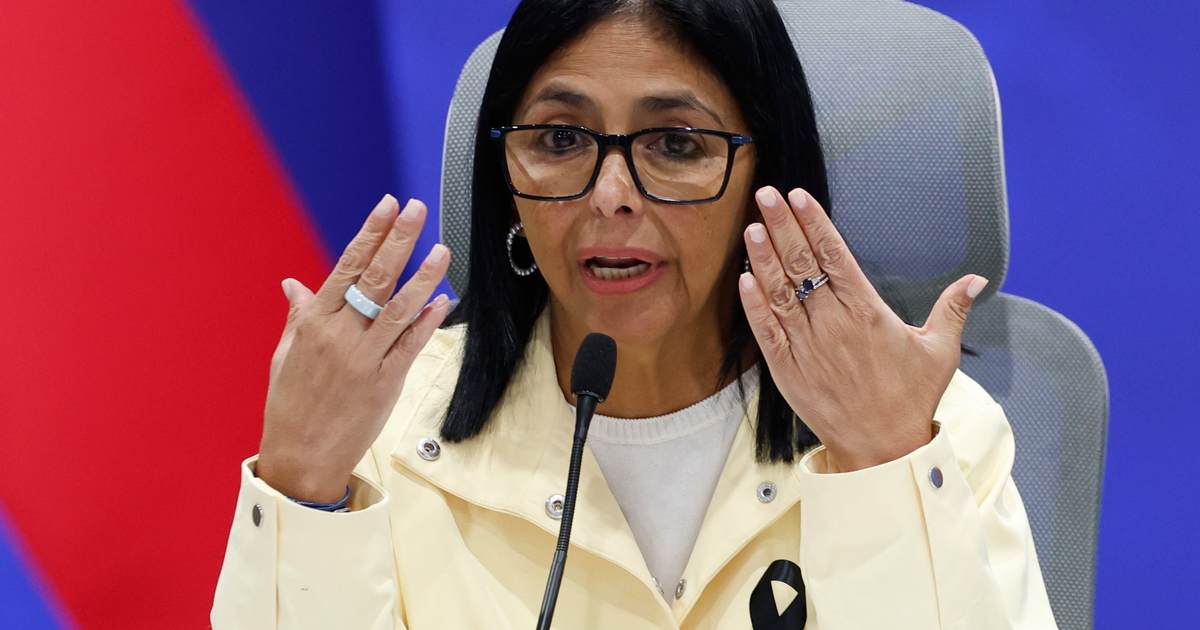
During her speech at the United Nations General Assembly (UNGA) last week, Delcy said that elections will happen, but she didn’t give a timeline and later told reporters that the people of Venezuela would know the right time based on their “ancestral wisdom.”
If the Venezuelan people I talk to regularly are any indication, their “ancestral wisdom” says some point in 2027. The fear among the Venezuelans and many people in the United States, including several members of our Congress, is that Delcy is just trying to outlast Trump and Rubio, hope a Democrat is elected in 2028, and believes that whomever it is will drop the whole Venezuela project and allow her to stay in office for as long as her heart desires.
Several other U.S.-friendly leaders from the region who attended the UNGA last week also supported the need for elections soon and some, like Ecuadorian president Daniel Noboa, suggested setting a timeline.
Recently, in an interview with NTN24, Sen. Rick Scott (R-Fla.) called Delcy a “cartel leader” and said she is not the legitimate president of Venezuela. He’s also been advocating for opposition leader María Corina Machado’s return to the country and says that she should be part of the process. He says he and Machado have been staying in touch.
Steve Forbes, another Trump ally, came out this week and said that he believes leaving Delcy in place was a mistake. He thinks that the path toward democracy should have been the first step before making these big oil deals because doing so with an “illegitimate dictatorship” means the deals won’t last long.
Rubio maintains that it will happen “as soon as possible.”
The 2015 Assembly Talks
I haven’t written much about this because, as I said, it almost feels like putting a bandage on someone who is having a heart attack. It’s moving at a snail’s pace, and at times, it’s confusing.
The talks are led by Dinorah Figuera, an opposition voice and the former president of the 2015 National Assembly, and Jorge Rodríguez, Delcy’s brother, who is a major part of the regime and the current president of the sham National Assembly. While the process started in early August, meetings seem to be few and far between. And while some progress has been made, none of it seems to really move the needle. As of Wednesday of this week, she refused to set a timeline and wondered aloud if the new electoral council should set the calendar or should it be the negotiators.
Right now, the group is aiming for new Supreme Court justices targeted for November and a new electoral-council board for December. That’s a good start. Meanwhile, Jorge has floated three votes before a presidential election: parliamentary, municipal, and gubernatorial, which is basically code for “let’s stall this until 2030, so my sister can remain in power.” They’ll meet for a third round of talks in mid-October.
Related: Venezuela: The Pressure is On
María Corina Machado
Something else we learned last week is that while Delcy was posing for pictures and waxing poetic about ancestral wisdom at the UNGA, someone is refusing to allow Machado into the country. She’s tried at least seven times this summer, by air, land, and sea, and she was denied every single time.
Her aides have been allowed back, including her prominent communications chief, Claudia Macero, who was treated like a rock star among arrival. Her Vente Venezuela political party has re-opened its office doors in Caracas and has been canvassing, protesting, and driving support for the transition.
Machado herself has been fighting for this transition for decades. She’s the one person who was brave enough to stand up to Hugo Chávez and Maduro. She’s the one who organized the people who attempted to oust these dictatorships in 2024. She’s the one who built strong relationships with people like Scott and Rubio in the U.S. and gained their support. She’s the one who gave Trump her Nobel Peace Prize. She’s the one who put her family at risk, who put her own life on the line, who’s been beaten and battered for standing up for the people of her country. She’s the one who lived in hiding for a year and a half. She is the one who will, no doubt, win true free and fair elections if they’re ever held and the one who will be a wonderful partner and ally for the United States, if she is able to take control of her country’s government.
And suddenly, she’s not allowed to return to her country to help with earthquake recovery. Something is rotten there, but so many people are fighting for her return. As a matter of fact, on Thursday, the Senate Foreign Relations the Senate Foreign Relations Committee held a closed briefing with Assistant Secretary of the Bureau of Western Hemisphere Affairs Juan Segura and Director of Policy Planning U.S., Department of State, Jeremy Lewin. The topic was “Update on Venezuela,” but the reality is that Machado’s inability to return was slated to be a big part of the discussion. Bipartisan members of our Congress are very angry over this.
Power and Protests
One of the biggest issues facing the Venezuelan people right now is the energy crisis. As I said, daily power outages can last up to 10 hours a day — it’s starting to make news headlines now, but it’s something I’ve been hearing from people with family there for a couple of months. Reuters reported on Wednesday that “with an unresolved electricity deficit of more than 1,500 megawatts…long-standing power outages are getting worse as demand recovers, leaving households, shops and factories without power for hours every day.”
The power outages are frustrating for the Venezuelan people who are living this reality, but they’re also causing some of the various investors and oil executives who are interested in the country to pause and wonder if it’s worth it. On Tuesday of this week, at the sold-out, $2,950 a ticket Venezuela International Oil and Gas Summit at the Caracas Marriott, the power actually went out twice. Here’s more from Reuters:
Even after a legal mandate approved in January for new projects in the energy sector to generate their own electricity, many executives see no way to start or expand oil and gas developments if the government does not accelerate its plans to restore capacity and fix the deteriorated power grid.
Several companies have submitted projects to the government to capture and use large volumes of gas for power generation that is currently being flared. But none have started.
Between the power outages, the desire for elections, the frustration that all political prisoners haven’t been released, and the disappointment in Machado’s inability to return, among other things, the Venezuelan people are starting to protest daily it seems. Many, including myself, fear that this will continue to grow and cause the exact civil unrest Rubio worries about.
A warning to policymakers in Washington:
Protests over electricity failures are growing across Venezuela. Venezuelans are spending 8 to 12 hours a day without power. No country can recover under these conditions.
The growing frustration among Venezuelans over electricity… https://t.co/PQcln6s5aG
— Jorge Jraissati (@JraissatiJorge) September 28, 2026
“¡Elecciones ya! ¡Elecciones ya!”.
Así gritaban en Guárico cientos de venezolanos hace unas noches en las calles. pic.twitter.com/zCcooiRtWI
— Orlando Avendaño (@OrlvndoA) September 30, 2026
A U.S. Military Base?
On Thursday, a reporter asked Trump if he has plans to build a U.S. military base in Venezuela or elsewhere in South America. He didn’t say yes, but he didn’t say no either.
“We’re looking at doing a lot of things,” the president said. “We’re getting along very well, as you know, and Venezuela has been a great situation. The people are happy, and I’m very happy. We’re taking a lot of oil, and we have a great relationship. Venezuela is making a lot of money and so are we. We’re going to start filling up our national strategic reserves with the Venezuelan oil for very little money, and it’s going to be great.”
🇺🇸🇻🇪‼️ | Donald Trump no descarta una base militar en Venezuela: al ser consultado sobre la posibilidad de construir instalaciones militares en el país o en Suramérica, el presidente de EE. UU. declaró que están «evaluando hacer muchas cosas». Además, destacó la relación… pic.twitter.com/92npoQSidC
— UHN Plus (@UHN_Plus) October 1, 2026
Editor’s Note: Thanks to President Trump and his administration’s bold leadership, we are once again respected on the world stage, and our enemies are being put on notice.
Help us continue to report on the administration’s peace through strength foreign policy and its successes. Join PJ Media VIP and use promo code FIGHT to receive 60% off your membership.