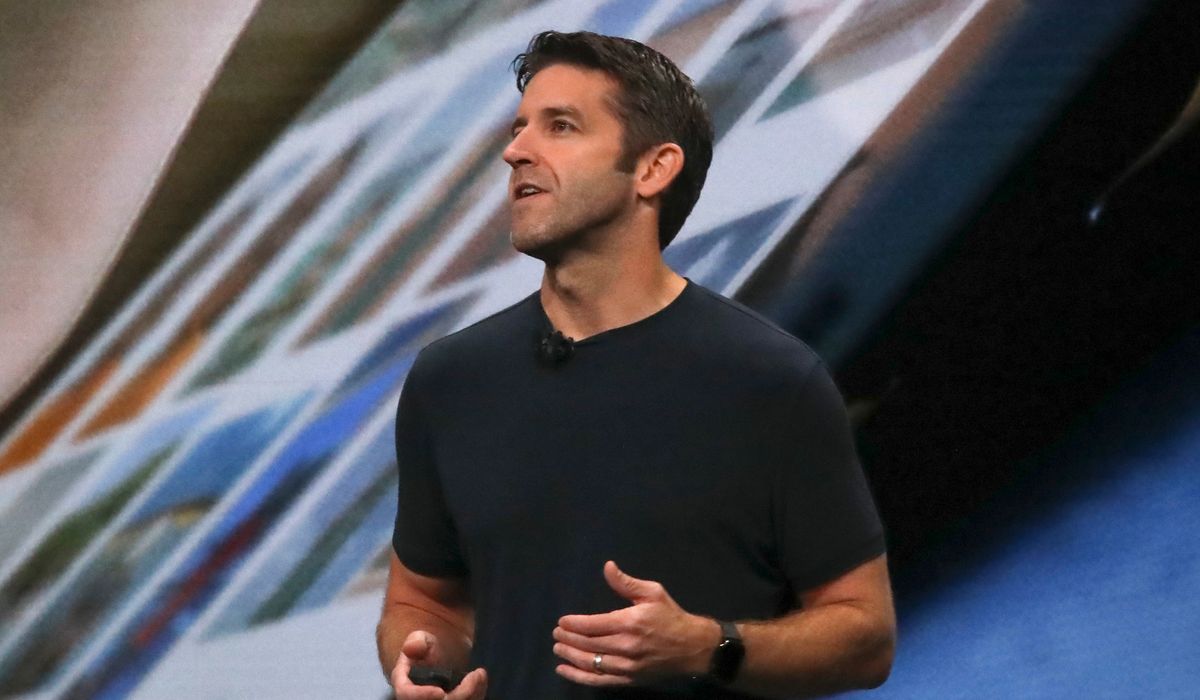
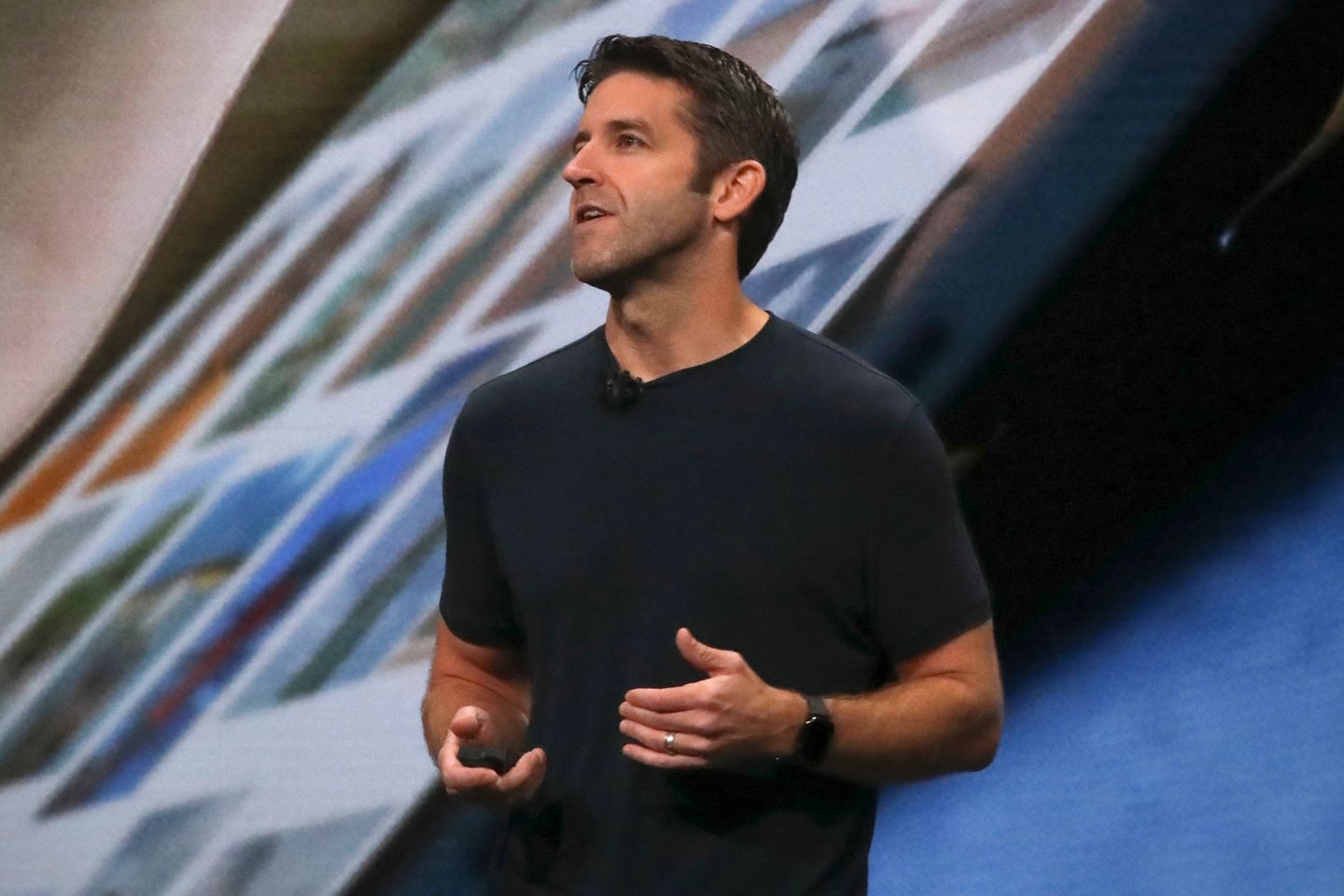
Apple announced Monday that Tim Cook will step down as chief executive officer on Sept. 1, handing the reins to John Ternus — a 25-year company veteran who has quietly shaped nearly every device Apple sells. For most consumers, the name barely registers. For Apple’s board, it was the only name on the list.
Apple announced that Mr. Cook will become executive chairman of Apple’s board of directors and Mr. Ternus, senior vice president of Hardware Engineering, will become the company’s next chief executive effective Sept. 1. The transition was approved unanimously by the board and follows what Apple described as a long-term succession planning process.
The choice signals something deliberate: Apple is not reaching outside its walls or pivoting to a finance-first operator. It is betting on the engineer who built what you hold in your hands.
From screws to silicon
Mr. Ternus received a Bachelor of Science degree in mechanical engineering from the University of Pennsylvania in 1997, where he competed on the men’s swimming team. He began his career designing virtual reality headsets at Virtual Research Systems before joining Apple in 2001 as a member of the product design team, working first on the Apple Cinema Display.
That first project set the tone for the career that followed. Early in his tenure, Mr. Ternus found himself at a supplier facility well past midnight, using a magnifying glass to count grooves on the head of a screw, arguing with a supplier over a 10-groove discrepancy from spec. He has told the story publicly as a kind of origin myth — proof that excellence at Apple means caring about the parts nobody sees.
The Steve Jobs comparison is one he invites carefully. In a recent interview, Mr. Ternus recalled a Jobs anecdote about a carpenter who finished the back of a chest of drawers as beautifully as the front, even though no one would ever see it. “I think about that all the time,” Mr. Ternus said, “because I think that perfectly exemplifies what we do here.”
The org chart climb
Mr. Ternus joined Apple’s product design team in 2001 as only his second job out of college. By 2013, he was a vice president of hardware engineering and was promoted to senior vice president in 2021. In between, he accumulated a portfolio that covers virtually everything Apple makes. As senior vice president, he leads all hardware engineering, including the teams behind iPhone, iPad, Mac, Apple Watch, AirPods and Apple Vision Pro.
Industry observers and Apple insiders had long viewed Mr. Ternus as the most likely candidate to inherit the reins of one of the world’s most valuable technology companies, according to Bloomberg’s Mark Gurman. The speculation intensified after Apple’s chief operating officer, Jeff Williams — once considered Mr. Cook’s natural successor — stepped down from operational responsibilities in July 2025.
Mr. Gurman described Mr. Ternus as “charismatic and well-regarded by Apple loyalists and trusted by Cook, who has granted Ternus more responsibilities.” The executive had emerged as a key decision-maker on product roadmaps, features and strategies, extending his influence beyond the traditional scope of a hardware engineering chief.
The hardware legacy he built
If the board needed a résumé, it had one. Perhaps Mr. Ternus’ most defining achievement was steering the Mac lineup away from Intel processors toward Apple Silicon. He championed the M-series chips — a move that transformed the performance and battery life of MacBooks. Announced at WWDC 2020 and delivered within the year, the transition was breathtaking in its speed and execution.
Most recently, he pushed Apple into unfamiliar pricing territory. Mr. Ternus was a primary champion of the recently launched $599 MacBook Neo, urging the company to release a more affordable machine to capture a younger demographic. “We never want to ship junk,” Mr. Ternus told Tom’s Guide. “We want to ship great products that have that Apple experience, that Apple quality. To do that with the Neo required building something completely new from the ground up.”
His instincts have also run in the other direction. He reportedly opposed the canceled autonomous car project and had reservations about the Vision Pro headset, preferring to steer clear of massive investments that lacked a clear market fit.
What Cook leaves behind — and what Ternus inherits
The succession comes from a position of extraordinary financial strength. Under Mr. Cook’s leadership, Apple grew from a market capitalization of about $350 billion to $4 trillion — a more than 1,000% increase — and yearly revenue nearly quadrupled, from $108 billion in fiscal 2011 to more than $416 billion in fiscal 2025.
But the challenges are real. Software delays tied to the next-generation Siri voice assistant have pushed back several product releases. A tabletop robot once targeted for 2027 is now at risk of slipping into 2028. Wearable projects including smart glasses and AirPods with computer-vision cameras are facing similar development hurdles.
Mr. Cook’s own statement at the announcement framed the handoff in terms of character as much as capability. “John Ternus has the mind of an engineer, the soul of an innovator, and the heart to lead with integrity and with honor,” Mr. Cook said. “He is a visionary whose contributions to Apple over 25 years are already too numerous to count, and he is without question the right person to lead Apple into the future.”
The engineer as executive
Mr. Ternus, who is 15 years younger than Mr. Cook, was among the youngest of top Apple executives rumored as a possible successor, implying that Apple could be looking for someone to lead the company for a long time. After all, Apple has only had two CEOs in this millennium, so leadership continuity appears important to the company.
In a 2024 commencement address at Penn’s engineering school, Mr. Ternus offered a line that suggests the management philosophy he will bring to the corner office: “Always assume you’re as smart as anyone else in the room, but never assume that you know as much as they do.”
As part of the transition, Johny Srouji has been named Apple’s chief hardware officer, consolidating hardware engineering and custom silicon under one executive reporting to Mr. Ternus.
This article was constructed with the assistance of artificial intelligence and published by a member of The Washington Times’ AI News Desk team. The contents of this report are based solely on The Washington Times’ original reporting, wire services, and/or other sources cited within the report. For more information, please read our AI policy or contact Steve Fink, Director of Artificial Intelligence, at sfink@washingtontimes.com
The Washington Times AI Ethics Newsroom Committee can be reached at aispotlight@washingtontimes.com.