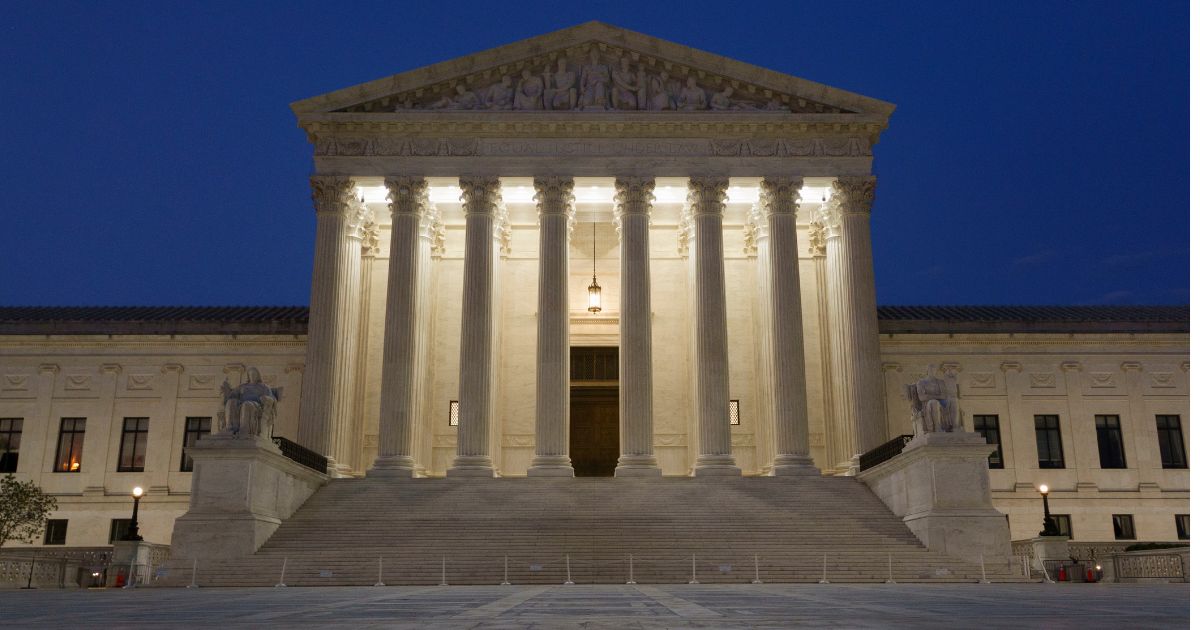
The Supreme Court had a clean opportunity two summers ago to tell Congress whether it can tax money you haven’t received. It passed.
In Moore v. United States, decided June 20, 2024, the Court declined to resolve whether Congress can tax appreciation you haven’t received. That refusal was deliberate and strategic. It carries nine-figure implications for anyone with significant private wealth.
The Case That Asked the Question
Charles and Kathleen Moore invested $40,000 in KisanKraft, an Indian agricultural tool company, in 2006. The company made money every year. It reinvested rather than distributing. The Moores received no dividends.
Then, the 2017 Tax Cuts and Jobs Act imposed a one-time Mandatory Repatriation Tax on American shareholders of controlled foreign corporations for accumulated, undistributed earnings. The Moores owed roughly $15,000. They sued, arguing that the Sixteenth Amendment only authorizes Congress to tax income that has been realized, and that income the Moores had never received couldn’t qualify.
The question presented was explicit: whether the Sixteenth Amendment authorizes Congress to tax unrealized sums without apportionment among the states.
This was the constitutional question the wealth tax debate had been waiting for. The Court agreed to hear it. Then the majority, authored by Justice Brett Kavanaugh, went to considerable lengths to avoid answering it.
The majority’s reasoning ran through a narrow lane. KisanKraft had realized income. Congress has long had the power to attribute a corporation’s realized income to its shareholders. The Mandatory Repatriation Tax operated within that attribution framework. Therefore, the Moores were being taxed on realized income, just attributed to them through an entity.
The broader constitutional question, whether realization is required at all, need not be addressed. It wasn’t.
Four Votes and an Unanswered Question
The separate opinions carry the more important story. Justices Clarence Thomas and Neil Gorsuch dissented, concluding that the Sixteenth Amendment requires realization, and the Mandatory Repatriation Tax failed that test.
Justice Amy Coney Barrett, joined by Justice Samuel Alito, concurred in the judgment, but wrote separately to say explicitly what the majority wouldn’t: The Sixteenth Amendment’s reference to income “derived” from any source “encompasses a realization requirement,” and realization is required before Congress can tax financial gain without apportionment.
Barrett’s concurrence and Thomas’ dissent together represent four justices prepared to draw a constitutional line that would stop federal and state wealth taxes cold.
Only Justice Ketanji Brown Jackson, writing solo, praised the majority’s restraint and signaled openness to Congress’s broader taxing latitude. The scorecard: four justices for a realization requirement, one against, and five who declined to answer the realization question. It didn’t produce a holding.
Justice Thomas was pointed in his dissent. The Court “should not have hesitated” to impose a realization requirement when the votes were there, he wrote, rather than deferring the question to a future case when the alignment might shift.
Constitutional doctrine set on your terms beats doctrine set on someone else’s terms. The majority chose patience. Four justices — two in dissent, two in a separate concurrence — recorded that patience as an error.
What Wealth Tax Advocates Are Counting On
Federal and state wealth taxation remains constitutionally untested at the Supreme Court level. Oregon Democratic Senator Ron Wyden’s mark-to-market proposal, which would subject publicly traded assets held by taxpayers with over $1 billion in net worth or $100 million in income over three years to annual taxation regardless of whether gains have been realized, was not constitutionally foreclosed by Moore.
The Biden administration’s 2025 budget proposal for a minimum tax on unrealized gains for households with more than $100 million in assets was not foreclosed.
California’s AB 259, which proposed a 1 percent annual wealth tax on net worth above $50 million before dying in committee in January 2024, was not foreclosed.
A ballot initiative targeting California’s November 2026 election that would impose a 5 percent tax on billionaire net worth, including unrealized gains, has not been foreclosed.
The post-decision coverage framed Moore as a government win. On narrow grounds, it was. What it wasn’t was a constitutional green light for taxing gains you haven’t received. The majority’s opinion explicitly declined to answer that question. Every proposal premised on doing so remained constitutionally unchallenged.
Why It Matters Beyond the Headlines
I’ve spent 30 years advising ultra-high-net-worth families on private equity, private credit, and family office structures. The clients carrying the most direct exposure to this question are exactly the ones you’d expect: founders with illiquid positions in closely held businesses, limited partners locked into fund commitments for 10-year holds, and real estate principals whose embedded appreciation in core holdings dwarfs their available liquidity.
An annual tax on unrealized appreciation isn’t an income tax in any functional sense for these clients. It’s a forced-sale mechanism.
A founder holding $200 million in private company equity, none of it liquid, faces a tax bill he can only pay by selling part of what he owns or borrowing against it at terms the market dictates.
The “buy, borrow, die” criticism of current law is real. Its remedy, mandatory annual recognition of gains you can’t monetize without selling the underlying asset, creates its own structural damage.
The administration problem compounds the constitutional one. Annual mark-to-market taxation of illiquid private assets requires valuation infrastructure that doesn’t exist. California’s Franchise Tax Board estimated it would need $200 to $300 million annually to administer its proposed wealth tax — roughly 2-3 percent of projected revenue — for a regime with no precedent in American tax law. The IRS isn’t staffed to build that infrastructure, and no timeline for building it has been proposed.
The Constraint That Didn’t Come
The Moore case produced a constitutional question deferred, not resolved: four justices on record for the answer that stops wealth taxation, one against, and five who declined to address it.
The next challenger to bring a tax on genuinely unrealized gains, one that can’t be rationalized as attributing realized corporate income to a shareholder, will arrive at a Court that may have the votes to rule differently than this majority allowed itself to.
The Sixteenth Amendment was ratified in 1913 to reverse Pollock v. Farmers’ Loan and Trust Co., which had held that an unapportioned income tax on property income was an unconstitutional direct tax. The amendment gave Congress broad power to tax incomes from whatever source derived.
That breadth is what Wyden and the California legislature are relying on. It’s also what four Supreme Court justices are prepared to constrain. The constraint didn’t come in Moore. It may be closer than the wealth tax advocates are assuming.
Your estate planner probably flagged Moore as a win for the government. She wasn’t wrong. She may have missed the most important sentence in Justice Thomas’s dissent: that the Court should have drawn the line when it had the votes to draw it. Four justices agreed with him about the line. They disagreed only about the timing.
The views expressed in this opinion article are those of their author and are not necessarily either shared or endorsed by the owners of this website. If you are interested in contributing an Op-Ed to The Western Journal, you can learn about our submission guidelines and process here.
Advertise with The Western Journal and reach millions of highly engaged readers, while supporting our work. Advertise Today.