Does the “spirit of Aloha” trump the US Constitution? Hawaii’s Supreme Court thought it did when it came to the Second Amendment. So did the Ninth Circuit, which reversed a federal district court over a blanket ban on carrying firearms last year. Both courts ruled that Hawaii’s pre-statehood ‘traditions’ of, er, disarming its populace took precedence over the Constitution.
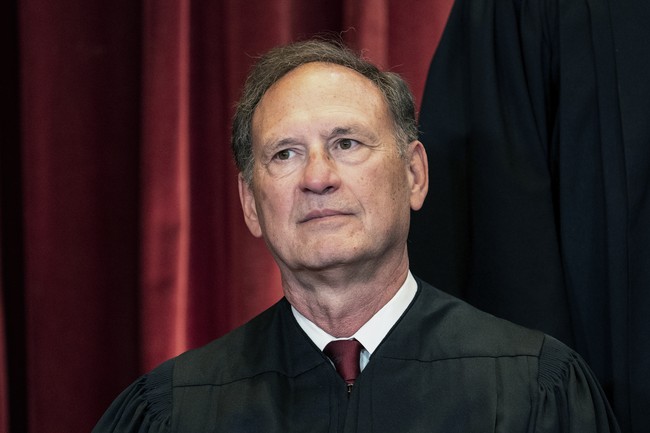
In a widely anticipated ruling, the Supreme Court begged to differ. More accurately, Justice Samuel Alito scoffed to differ in the 6-3 decision for Wolford v Lopez. Hawaii apparently attempted to argue that its “customs and traditions” fit the mold of Bruen, which drew sharp criticism from both Alito and Justice Amy Coney Barrett in her concurrence. Alito took particular aim at this strategy:
After Bruen, Hawaii and four other States singled out in that decision flipped this default rule. Rather than allowing all to enter private property open to the public unless specifically prohibited, these new laws provided that no one carrying a firearm may enter without express authorization. See Cal. Penal Code Ann. §26230(a)(26) (West Supp. 2026); Haw. Rev. Stat. §134–9.5(a) (2023); Md. Crim. Law Code Ann. §6–411(d) (Supp. 2025); N. J. Stat. Ann. §2C:58–4.6(a)(24) (West 2024); N. Y. Penal Law Ann. §265.01–d(1) (West 2025).
Hawaii’s new default rule is part of a tight web of laws that severely restricts the carrying of firearms for self-defense. To start, carrying a handgun for self-defense requires a special license, and obtaining that license is a rigorous process. Haw. Rev. Stat. §134–9. Applicants must first complete a detailed application that requires the disclosure of medical information. §134–9(g).8 They must then successfully complete an extensive training course in which they demonstrate competency in firearm safety and live-fire shooting, as well as an understanding of the law and available mental-health resources. §§134–9(d), (e). And they must demonstrate the “essential character or temperament necessary to be entrusted with a firearm.” §134–9(h)
But even for those who fulfill these stringent requirements, Hawaii imposes two additional restrictions on carrying firearms. The first bans the possession of a firearm in significant categories of places: “[a]ny [state-owned] building” or “adjacent grounds and parking areas”; “[a]ny public or private hospital” or “other place at which medical or health services are customarily provided”; any “restaurant serving alcohol”; any “stadium, movie theater, or concert hall”; any “public library property”; “any public or private” college or university; “any public school, charter school,” or private school; any “beach, playground,” or park; “any bank or financial institution”; any “amusement park, aquarium, carnival, circus, fair, museum, water park, or zoo”; and any “public gathering, public assembly, or special event conducted on property open to the public.” §134–9.1(a).9 Some of these places are owned by the State, but many of the categories include privately owned property. So even if the owner of such a place wanted to admit individuals who are carrying a gun for self-defense, the owner could not do so.
The second restriction—the one at issue in this case—generally prohibits licensed individuals from carrying a firearm, even if unloaded or inoperable, “on private property of another.” §134–9.5(a). Certain categories of individuals, such as police officers, are exempt, §§134–9.5(d), 134–11(a), but the ban otherwise applies unless “express authorization” has been given “by the owner, lessee, operator, or manager of the property,” §134–9.5(a). Such authorization must take one of two forms: “clear and conspicuous signage” that confers such consent or “[u]nambiguous written or verbal authorization” to carry a firearm on the premises from “the owner, lessee, operator, or manager of the property” or an agent of such a person. §134–9.5(b).
In other words, Hawaii responded to Bruen by making it all but impossible for even those licensed to carry to exercise their Second Amendment rights. The state then attempted to invoke Bruen to claim that the “Aloha spirit” preceding statehood justified these restrictions. Alito dropped the hammer on that argument:
Then, in the wake of Bruen, Hawaii passed the statute at issue in this case, and the State contends that this law continues a Hawaiian tradition and shows that Hawaiians disfavor the carrying of guns in their midst. Accordingly, the State maintains, its new default rule merely expresses the circumstances under which implied consent may be reasonably inferred in Hawaii.
This argument is little different from the central argument offered by the city of Chicago in McDonald, and Hawaii’s version fares no better. As the plurality explained in McDonald, the Second Amendment has the same meaning in all parts of the United States. 561 U. S., at 784–785. It cannot give way to “the spirit of Aloha” in Hawaii, contra, State v. Wilson, 154 Haw. 8, 27, 543 P. 3d 440, 459 (2024), any more than it can yield to the spirit of the Big Apple (Bruen) or the Windy City (McDonald). It applies in the same way to our 50th State (where about 8% of adults possess guns) and our 49th State (where the figure is roughly 59%).12 Merely local attitudes can neither shrink nor inflate the meaning of fundamental Bill of Rights guarantees that apply to the States through the Fourteenth Amendment.13
When we assess whether a challenged law is consistent with the right the Second Amendment codified, we seek the general understanding of that codified right at the relevant point in time. An outlier legal rule adopted in a few locales is not enough. See supra, at 7–8; Bruen, 597 U. S., at 39 (“‘[T]he language of the Constitution cannot be interpreted safely except by reference to the common law and to British institutions as they were when the instrument was framed and adopted’” (emphasis deleted)). And as we have explained, “overwhelming evidence” shows an “enduring American tradition permitting public carry.” Id., at 67. Hawaii’s prohibitions on public carry represent a distinct outlier.14
The state had also argued that statutes in colonial times also satisfied the Bruen test. Once again, Alito rebuts this argument:
With this preliminary question out of the way, we turn to Hawaii’s main argument: that analogous colonial and early state laws support the constitutionality of the State’s new law. These old laws, however, are vastly different from Hawaii’s new default rule. They consist almost entirely of laws that prohibited unauthorized hunting of deer or small game on someone else’s private property.15
Barrett offered a sharper response to Hawaii’s argument, including its invocation of the “Aloha Spirit” as a justification for infringing on the Constitution:
Under Hawaii’s new default rule, no licensed individual (with narrow exceptions) can carry a gun onto someone else’s property, even if it is held open to the public, without express and unambiguous authorization. Haw. Rev. Stat. §134–9.5(a) (2023). Hawaii explains that this law reflects Hawaiians’ aversion to the public carry of weapons—an attitude reinforced by almost two centuries of restrictive gun laws. See 2023 Haw. Sess. Laws 114 (explaining that the default rule was enacted “based on the legislature’s assessment of public sentiment and broadly shared preferences within the State”); Brief for Respondent 6–7, 21–22. The State represents that Hawaiians do not think that people should be able to carry guns onto private property— even if it is held open to the public—unless they obtain express consent. See id., at 6. In fact, the overwhelming majority of Hawaiians agree that “loaded, concealed firearms should not be allowed into businesses at all.” Id., at 7 (emphasis in original). These attitudes appear to reflect the State’s “Aloha Spirit,” which, as explained by the Supreme Court of Hawaii, “clashes with a federally-mandated lifestyle that lets citizens walk around with deadly weapons during day-to-day activities.” State v. Wilson, 154 Haw. 8, 27, 543 P. 3d 440, 459 (2024).
To satisfy Bruen, Hawaii must identify historical laws that pursued an analogous goal in an analogous way. Hawaii draws two analogies: one to 18th-century antipoaching laws and the other to 19th-century laws that were mostly designed to suppress newly freed blacks. Unsurprisingly, the analogies fail.3
Yikes. Does the Aloha Spirit usually include denial of civil rights? That’s the vibe that the state of Hawaii gives with this argument. Barrett makes that case a bit more subtly in noting that Hawaii’s new set of rules seems to have no purpose at all except to deny law-abiding citizens the exercise of their constitutional right to self-defense:
So the problem with Hawaii’s default rule is not that it targets a regulatory problem besides poaching. It is that the rule does not target any particular abuse of firearms at all. Rather than identifying a specific threat to public peace and safety, Hawaii admits that it enacted the rule because many of its citizens oppose the public carry of guns. In other words, Hawaii is responding to the general danger associated with the presence of firearms, not to any specific, heightened risk of their misuse. See 2023 Haw. Sess. Laws 114 (invoking general “risks to public health, safety, and welfare associated with firearms and gun violence”). And rather than confining the rule to specific places where firearms are likely to be misused, Hawaii applies it to all private property, even property held open to the public. From the hardware store, to the gas station, to the fast-food restaurant—individuals cannot carry weapons for self-defense unless they obtain express consent.6
The 18th-century hunting regulations do not support such a rule. Mere disapproval of protected conduct is not a valid reason to severely restrict it.
Barrett also points out in the footnote that Hawaii already restricts firearms from sensitive places like schools, banks, and bars. The new, post-Bruen rules are clearly intended to deny citizens the exercise of the Second Amendment simply out of distaste for it, which obviously violates their civil rights as explicitly stated in the Constitution. As Barrett concludes her concurrence:
While most Hawaiians might prefer that no one carry firearms in public places, a majority’s opposition to a constitutional right is not a permissible basis for restricting it. After all, “[t]he very purpose of a Bill of Rights was to withdraw certain subjects from the vicissitudes of political controversy” and “to place them beyond the reach of majorities and officials.” West Virginia Bd. of Ed. v. Barnette, 319 U. S. 624, 638 (1943).
Justices Elana Kagan and Ketanji Brown Jackson both submitted dissents. They both approach Wolford v Lopez on the basis of property rights, but Kagan’s heart doesn’t appear to be in it; her dissent is two paragraphs long. Jackson’s, with Sotomayor concurring, runs 31 pages. Alito addressed this approach in a footnote on page 18:
The principal dissent’s main argument is that “[t]his case is about property rights, not gun rights.” Post, at 6 (opinion of JACKSON, J.). Because a State is generally free to alter traditional property-law principles as it chooses, the dissent contends that Hawaii’s alteration of the traditional rule on access to private property open to the public does not infringe Second Amendment rights. This argument fails because States may not adopt property-law rules that violate constitutional rights. For example, a State may not adopt property-law rules that violate the freedom of speech. See, e.g., Reed v. Town of Gilbert, 576 U. S. 155, 159 (2015) (ordinance regulating signs on private property); City of Ladue v. Gilleo, 512 U. S. 43, 45 (1994) (similar). Nor may a State adopt zoning rules that violate the equal protection of the laws. See, e.g., Buchanan v. Warley, 245 U. S. 60 (1917). Likewise, a State may not “‘sidestep the Takings Clause’ ” by enacting a law purporting to extinguish a property interest. Tyler v. Hennepin County, 598 U. S. 631, 638–639 (2023). The right protected by the Second Amendment is entitled to no less protection than other constitutional rights.
Jackson’s dissent delves deeply into Hawaii law prior to statehood and colonial status in an attempt to satisfy Bruen. The problem with that approach is that the US Constitution has priority over these traditions. Bruen relies on the interpretation of the Constitution in relation to laws passed and enforced in the United States as guiding analogues for potential restrictions today. Jackson’s approach literally applies foreign law and customs that had no connection to the Constitution, which now constrains Hawaii and has since 1959. Most of her argument is a big non-sequitur as a result, and insofar as Jackson prioritizes property rights above enumerated Constitutional rights, the rest of her argument may be just as non-responsive. Besides, private property owners can still bar firearms (with the exception of hotels, which is a more complicated issue) if they so desire. Those restrictions appear in every state in the country, but the default is not prohibition, which is what Hawaii attempted.
In any event, the Supreme Court finally put an end to the “Aloha Spirit” exception to the Constitution. Hawaii has to abide by it just like 49 other states. Let’s let James Brown explain it to them.
Note: I’m on vacation until Monday, when the Supreme Court will next release remaining opinions. According to SCOTUSblog, there are eight remaining, including the one case regarding mail-in ballots received after Election Day. Get ready for some real fireworks next week.
Editor’s Note: Do you enjoy HotAir’s conservative reporting that takes on the radical left and woke media? Support our work so that we can continue to bring you the truth.
Join HotAir VIP and use promo code FIGHT to receive 60% off your membership.