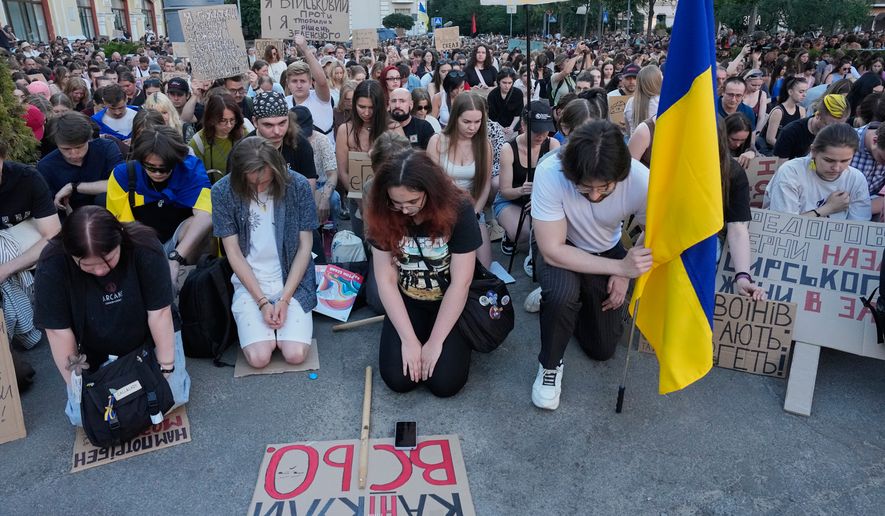
KYIV, Ukraine — Two protesters outside Kyiv’s Ivan Franko Drama Theater held aloft a portrait of Ukraine’s commander-in-chief, Gen. Oleksandr Syrsky, depicted as a Soviet field marshal, complete with countless medals, red lapels and a severe expression.
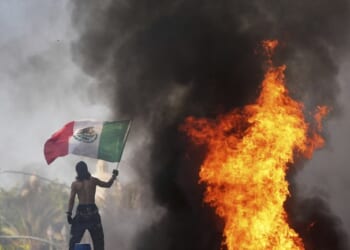
“Syrsky out” was one of the main slogans chanted by the hundreds of protesters who had gathered recently in central Kyiv.
To many Ukrainians, the 60-year-old commander had come to embody some of the worst tendencies they believe are holding their army back: rigid and unthinking obedience, overly centralized decision-making, reluctance to delegate and utter disregard for the lives of soldiers.
Their message was blunt: A small Soviet army cannot defeat a larger Soviet army.
Activists kneel as they take a …
more >
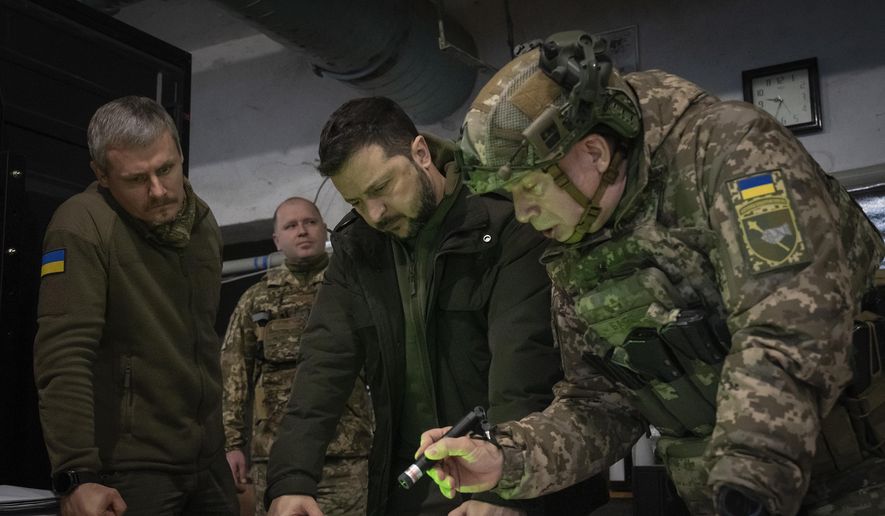
President Volodymyr Zelenskyy appeared to listen.
Days after the dismissal of popular Defense Minister Mykhailo Fedorov triggered Ukraine’s largest wartime protests in years, Mr. Zelenskyy removed Gen. Syrsky and installed Maj. Gen. Mykhailo Drapatyi as commander-in-chief.
While the dispute between Mr. Fedorov and Gen. Syrsky grabbed the headlines, the reshuffle appears to go well beyond settling a personal score.
Mr. Zelenskyy also named Maj. Gen. Ihor Skybiuk chief of the General Staff, removed special operations commander Yevhenii Khmara from the Security Service of Ukraine (SBU) and nominated him instead as acting defense minister and placed counterintelligence veteran Oleksandr Poklad at the head of the security service.
Taken together, the appointments point toward the kind of war Ukraine believes it must fight: Unable to match Russia soldier for soldier or shell for shell, Kyiv is placing greater emphasis on gaining and retaining the technological edge, leveraging its long-range arsenal to devastating effect, streamlining command structures and promoting commanders shaped by Ukraine’s own wars rather than the Soviet military tradition.
The new leadership is betting that ingenuity can stretch the country’s limited manpower and firepower further than raw numbers alone suggest.
Ukrainian President Volodymyr Zelenskyy and Commander …
more >
A new command generation
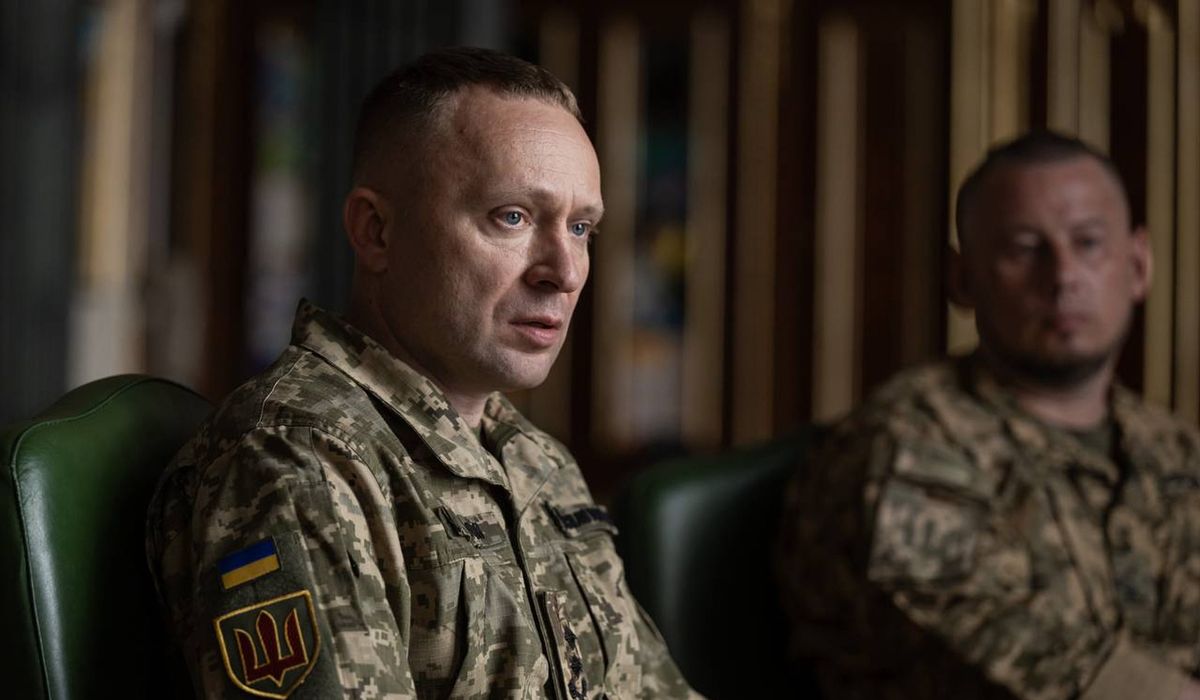
Gen. Drapatyi, 43, belongs to a younger generation of Ukrainian officers whose formative combat experience came after Russia’s first invasion in 2014.
He rose from tank commander to lead frontline formations and later the Ground Forces and Joint Forces. He has also built a reputation for challenging outdated command practices and taking personal responsibility for failures.
In an interview with The Guardian, Rob Lee, a senior fellow at the Foreign Policy Research Institute, described him as a critic of “Soviet-style thinking and micromanagement” who understands the corrosive effect of false reporting inside the military.
That reputation grew even more after a Russian strike killed soldiers gathered at a training ground in June 2025. In a highly unusual gesture, Gen. Drapatyi took full accountability for the deadly mistake and immediately offered his resignation.
“An army in which commanders bear personal responsibility for people’s lives is a living force,” he said at the time. “An army in which no one is held accountable for casualties is dying from within.”
The appointment of Gen. Skybiuk also suggests Mr. Zelenskyy is building a team around the new commander rather than simply changing the figure at the top.
Born in 1977, Gen. Skybiuk rose through Ukraine’s airborne forces, commanded the 80th Air Assault Brigade and later led the Air Assault Forces. His brigade participated in the 2022 Kharkiv counteroffensive, and he became deputy chief of the General Staff last year.
Mr. Zelenskyy described Gen. Drapatyi, Gen. Skybiuk and Mr. Khmara as battle-tested leaders known to the troops. The pairing of the two generals could also reduce the friction between the commander-in-chief and the General Staff that has complicated previous reform efforts.
Their appointments were formalized by presidential decrees on Wednesday.
From special operations to the Pentagon
Mr. Khmara is perhaps the most unconventional member of the new team, as he rose through the ranks not of the regular army but of Alpha, the SBU’s elite special operations center. He commanded the unit before serving briefly as acting head of the security service.
The highly secretive Alpha unit has played a central role in Ukraine’s campaign of drone strikes, sabotage and clandestine operations against Russian military and industrial targets. Most notably, the unit’s capabilities were on full display during Operation Spiderweb, a June 2025 SBU attack in which 117 drones concealed inside trucks were launched near four Russian air bases, striking strategic bombers thousands of miles from Ukraine.
Prepared for more than a year under strict secrecy, the operation showed how small teams, inexpensive drones and careful intelligence work could reach some of Russia’s most heavily guarded military assets. Mr. Zelenskyy said Mr. Khmara’s experience managing such strike operations should become an advantage at the Defense Ministry.
The choice suggests Ukraine intends to expand the methods developed by its most successful special operations units across the broader war effort. Mr. Khmara has been ordered to maintain direct financing for combat brigades, increase drone deliveries, ensure a fairer distribution of personnel and sustain Ukraine’s medium- and long-range strike programs.
As with any bold move, however, the shake-up carries risks.
Mr. Fedorov’s strength was not combat command, but rather overhauling procurement, using battlefield data to steer spending, challenging entrenched interests and linking frontline units more directly with Ukraine’s fast-moving defense industry.
On the other hand, Mr. Khmara’s experience is operational rather than bureaucratic, and Ukraine’s sprawling Defense Ministry can prove harder to manage than a special operations center.
His position also remains temporary while the government completes the legal procedures required for a permanent appointment. Per law, Ukraine’s defense minister must be a civilian, requiring Mr. Khmara’s status to be settled before parliament can confirm him.
Mr. Poklad’s elevation at the SBU creates a clearer division of labor. A career counterintelligence officer, he takes charge of the security service while Mr. Khmara carries Alpha’s offensive culture into the Defense Ministry.
Breaking the chain of micromanagement
The first major test for the new leadership will be completing the army’s corps reform, which aims to replace much of the improvised command structure that emerged during the war. Instead of relying on temporary operational groupings, the military is moving toward permanent corps headquarters responsible for a stable set of brigades and supporting units.
This reform targets a chronic weakness in Ukraine’s chain of command: With few effective headquarters between individual brigades and the General Staff, senior officers have repeatedly become involved in decisions far below their level.
Under Gen. Syrsky, critics described top commanders issuing orders concerning individual positions and, at times, platoons. That degree of micromanagement can slow decisions, blur responsibility and leave frontline commanders little room to respond to rapidly changing conditions.
A functioning corps system would move more authority down the chain of command. Corps commanders would control defined sectors and forces they know, allowing better planning, logistics, rotations and coordination between infantry, artillery, drones, engineers and air defenses.
The transition began in early 2025.
By early this year, 18 corps had been formed across the armed forces and National Guard, but many still did not command the brigades assigned to them on paper. Instead, they continued to oversee sectors containing units borrowed from several different formations.
Pulling those brigades back into their permanent corps is difficult while the armed forces are stretched across a front more than 600 miles long and lack enough reserves to conduct safe rotations. A poorly managed transfer can create a gap that Russian troops and drones can then quickly exploit, as happened near Ocheretyne in April 2024, when Russian forces broke through during a mismanaged rotation between Ukrainian brigades and advanced several miles before the line could be stabilized.
The danger, however, is that the new headquarters become yet another layer of bureaucracy rather than a source of authority. The reform’s success will hence depend on competent staffs, reliable communications and the willingness of senior leaders to stop intervening in tactical decisions.
Technology cannot replace soldiers
Mr. Zelenskyy has also ordered the new leadership to strengthen air defense, develop cyber forces, accelerate weapons deliveries and produce a clearer mobilization plan.
The latter task may well prove the hardest.
With the war dragging into a fifth year, Ukraine’s crippling manpower crisis shows no signs of abating. Many frontline units remain understrength; rotations are difficult and the mobilization process in its current form continues to generate political resistance.
In spite of the breakneck pace of innovation on both sides of the frontline, infantry still remains the core component of both armies. While drones, UGVs and long-range attack vectors can reduce soldiers’ exposure and impose costs on Russia far behind the front, they cannot hold trenches or fully compensate for hollowed-out infantry units.
The Polish-based Center for Eastern Studies warned that Gen. Drapatyi inherits both a manpower crisis and an organizational system that has struggled to create operational reserves or regain the battlefield initiative.
He must also bridge divisions inside the officer corps after several senior commanders publicly backed Gen. Syrsky.
The unresolved fate of Mr. Fedorov adds another complication.
He rejected Mr. Zelenskyy’s offer to become deputy prime minister for military innovation, arguing that only the presidency, the Defense Ministry and the post of commander-in-chief carry enough authority to change the war’s direction.
His departure leaves the new team under pressure to prove that the technological reforms he kickstarted will survive him.
No matter what the headlines would lead you to believe, changing commanders was the easy part. Gen. Drapatyi and his colleagues must now change institutions while holding back a larger enemy, rebuilding morale and finding enough people to hold the front.
With its latest reshuffle, Ukraine seems to have favored technology, autonomous decision-making and a younger command generation. It now remains to be seen whether those qualities can overcome entrenched habits and dwindling manpower, even as rumors swirl that Russia is preparing for another wave of mobilization.