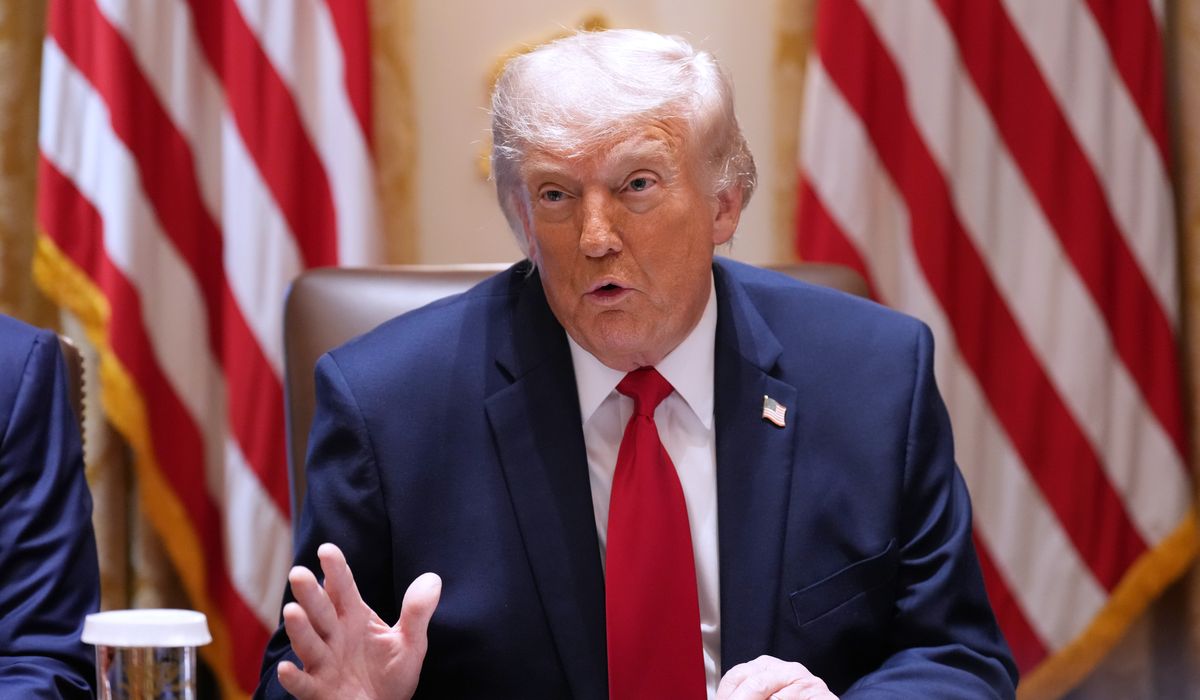
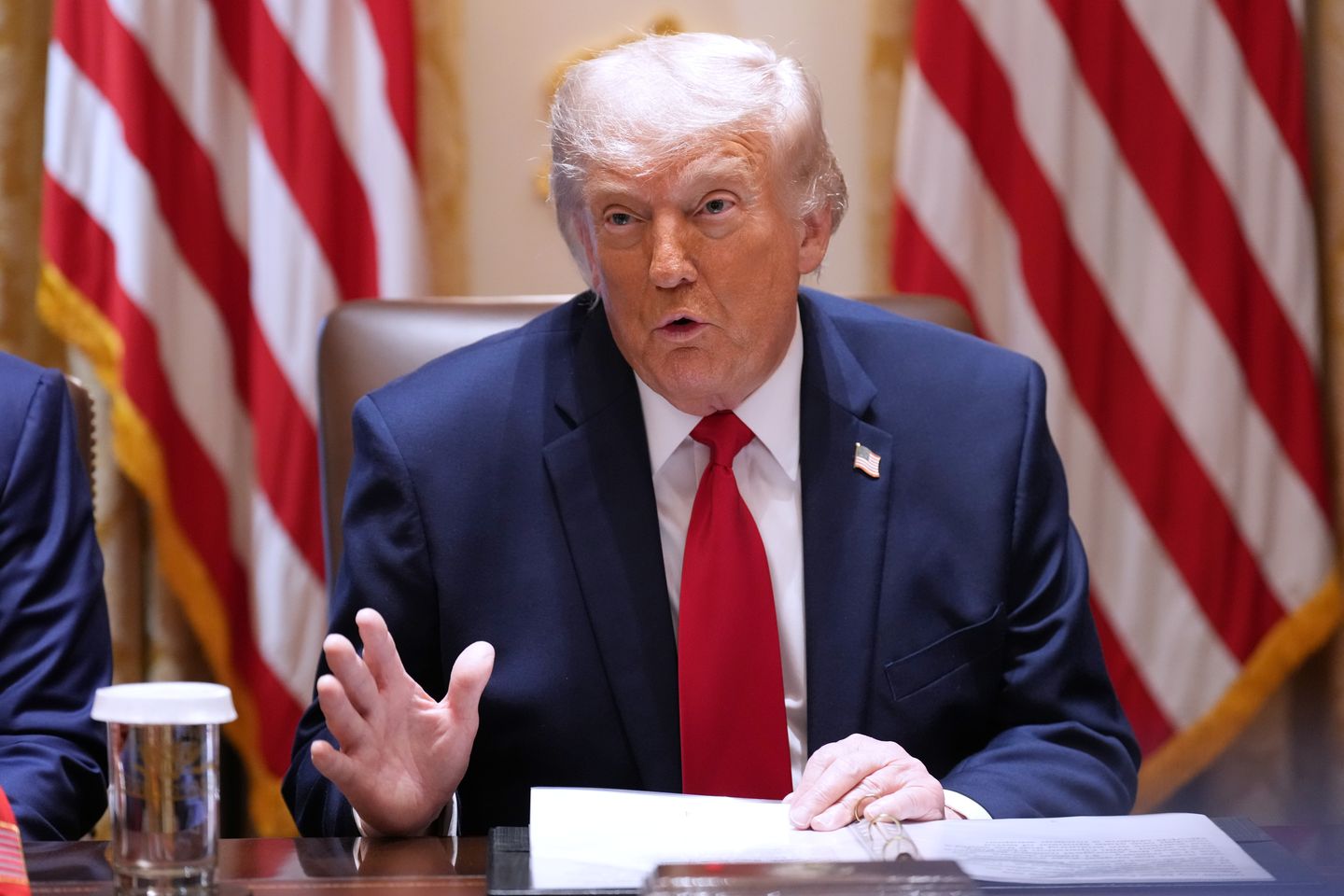
President Trump on Friday said he was heading into the Situation Room to decide whether to approve a U.S.-Iran peace deal that would restore traffic in the Strait of Hormuz and lift the American blockade of Iranian ports.
Mr. Trump, in a lengthy social media post, said he would make a “final determination” on whether to approve a 60-day memorandum of understanding that extends a ceasefire with Iran while setting the table for thornier negotiations about Iran’s nuclear program.
“Iran must agree that they will never have a Nuclear Weapon or Bomb,” the president wrote. “The Hormuz Strait must be immediately open, no tolls, for unrestricted shipping traffic, in both directions.”
Mr. Trump said he expects Iran to remove all mines from the Strait of Hormuz, a critical oil choke point, and the U.S. would remove nuclear dust from 2025 strikes on Iran in coordination with Tehran and the International Atomic Energy Agency.
He said the material would be destroyed.
“No money will be exchanged, until further notice. Other items, of far less importance, have been agreed to,” the president said. “I will be meeting now, in the Situation Room, to make a final determination.”
SEE ALSO: Iranian negotiator says Iran doesn’t get concessions through talk, only ‘with missiles’
A deal would be a breakthrough in settling the three-month-old Iran conflict after weeks of fits and starts in negotiations.
Some GOP hawks have urged Mr. Trump to strike Iran again with military power. At the same time, investors, Gulf allies and others want a return to regular operations in the Middle East to stabilize energy markets and geopolitical affairs.
“Trump is caught in the middle of many political divides. There are hardliners who want to win at any cost and others who want to negotiate an agreement that reopens the strait and gets global shipping back on course. It is not easy to straddle these divisions within his own party, let alone the criticism that will come from Democrats with any deal he signs,” said Darrell West, a senior fellow in governance studies at the Brookings Institution.
Mr. West said it’s also hard to know what kind of deal would satisfy Mr. Trump, since he has shifted his goals and demands.
John R. Bolton, who worked as Mr. Trump’s first-term national security adviser before a famous falling out with the president, criticized the proposed deal in a social media post.
“The reason Iran is willing to discuss anything is the military force of the United States. And under this deal, for 60 days that force will be suspended in the region,” Mr. Bolton, a longtime Iran hawk, wrote on X. “This deal gives the regime 60 more days to work on their nuclear weapons program, rebuild the terrorist network, and repress their own people. This is a significant setback.”
SEE ALSO: Trump weighs 60-day plan to extend ceasefire, push nuclear talks with Iran
Others said renewed strikes might not move the ball.
“It’s unclear that a limited resumption of U.S. military action would compel Iran to submit to U.S. demands, accomplishing what six weeks of intensive bombing that destroyed over 13,000 targets did not achieve,” said David Schenker, a senior fellow at the Washington Institute for Near East Policy and former assistant secretary of state for Near East Affairs.
Mr. Trump in recent days floated adding countries such as Saudi Arabia and Turkey to the Abraham Accords, a landmark set of Trump-era deals that normalized relations between Israel and Arab or Muslim-majority countries in the region.
The idea seemed a bid to make any resulting deal a bigger win for the U.S. that went beyond the prewar status quo. However, the experts say those countries might not be willing to sign onto the accords just yet, so the idea is aspirational.
For now, the pending deal would clear some of the immediate challenges in the region and extend a ceasefire, while setting the table for a new agreement on Iran’s nuclear ambitions.
“The administration may get another nuclear agreement, but it appears that it will be well short of the articulated goal of ending Iran’s nuclear program,” Mr. Schenker said.
He said two other objectives that Mr. Trump cited in withdrawing from then-President Obama’s 2015 Iran nuclear deal — curtailing Iran’s ballistic missile program and its support for regional proxies — did not appear to be in the memo of understanding.
“Based on the published details of the MOU,” Mr. Schenker said, “it will be difficult to portray the war as a big win for the U.S.”
The existence of a completed memo of understanding came to light on Thursday, though Mr. Trump did not appear in public or weigh in during the day.
Mohammad Bagher Ghalibaf, one of the chief negotiators for Iran during peace talks with the U.S., said Friday that Tehran does not expect to gain concessions from Washington through dialogue, “but with missiles.”
Writing on social media, Mr. Ghalibaf said negotiations with the U.S. are merely a formality to “make them understand” Iran’s position following the war.
“We seize concessions not through dialogue, but with missiles; in negotiations, we merely make them understand,” he wrote on X. “The winner of any agreement is the one who is better prepared for war from the day after.”
Mr. Ghalibaf added that Iran does not believe in vocal guarantees from the U.S. or Israel and that only action will build trust.