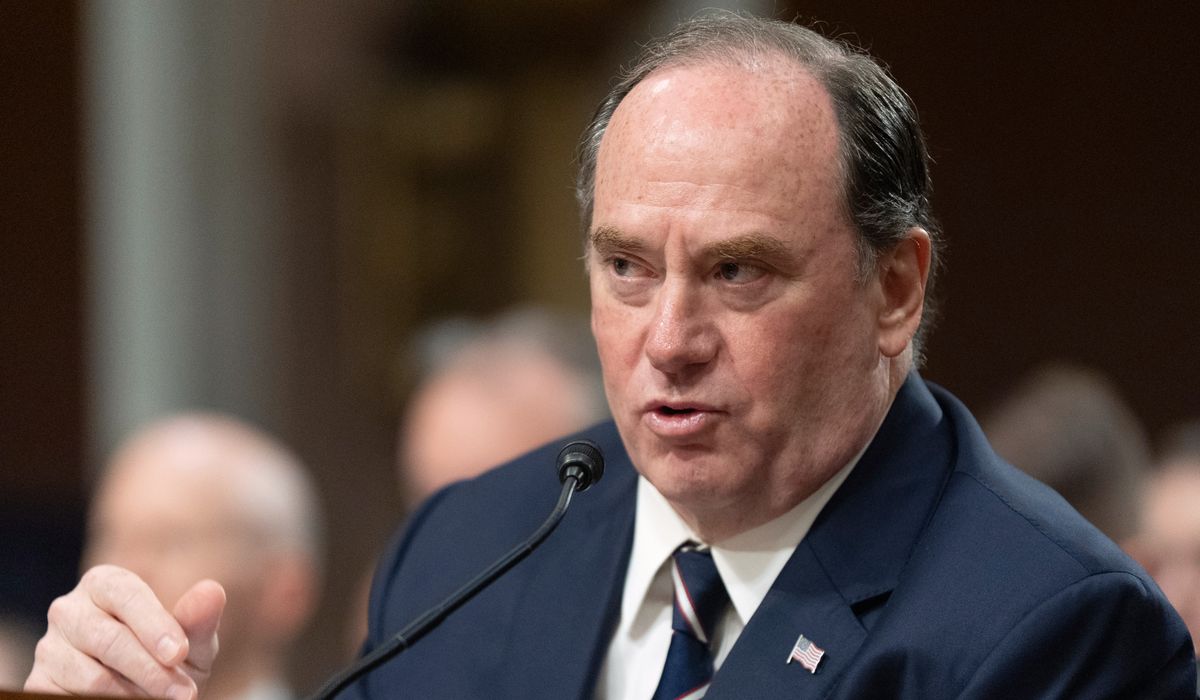
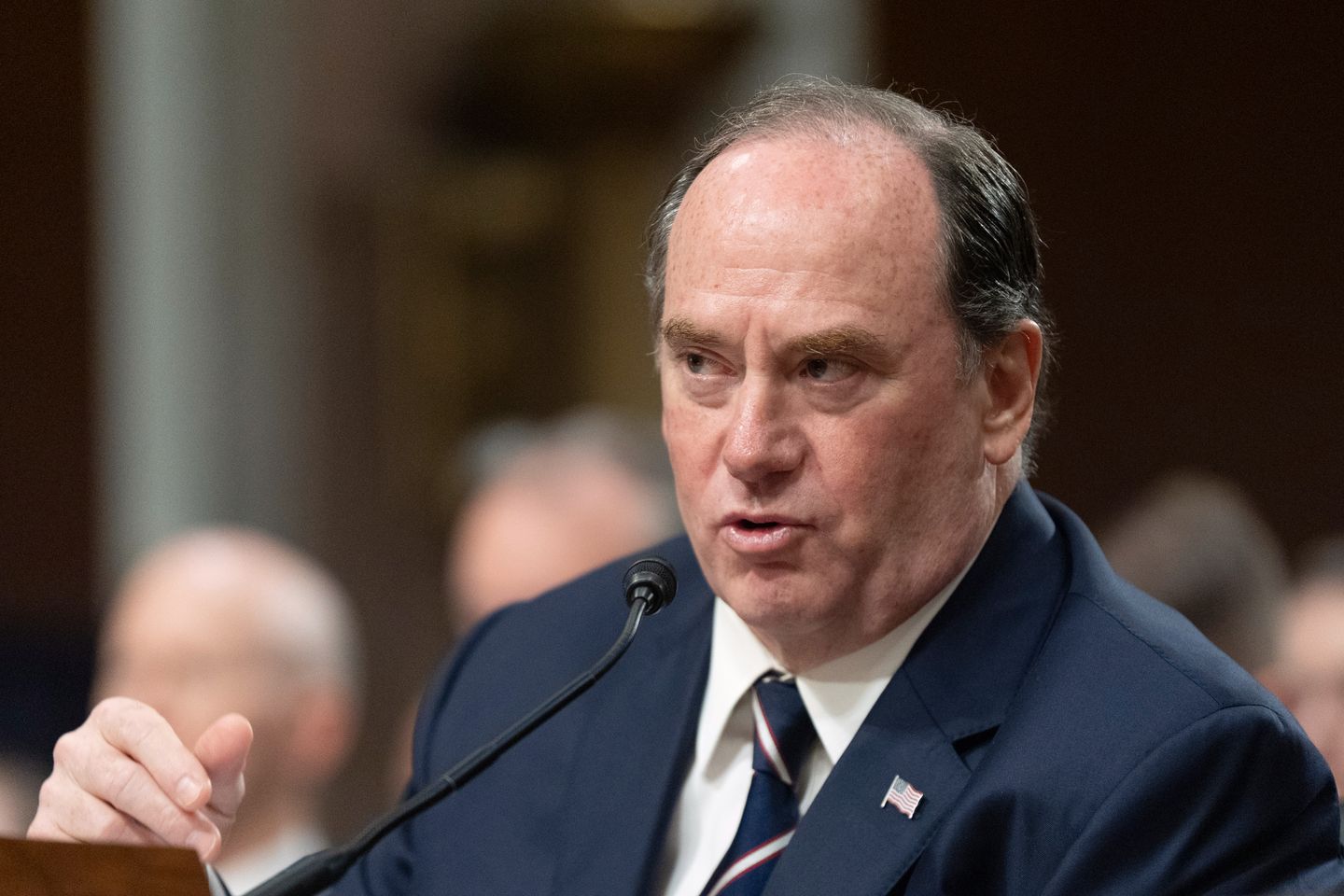
President Trump said it was former Navy Secretary John Phelan’s call to leave the Defense Department, despite multiple reports that he was forced out over disagreements about the administration’s shipbuilding goals and infighting with senior Pentagon officials.
In a post on Truth Social, the president on Thursday cited Mr. Phelan’s success in business and said he did an “outstanding job” as the Navy’s senior civilian leader since joining the administration about a year ago.
“John Phelan is smart, tough, and respected by all, and although he has decided to move on from his position as Secretary of the Navy, I very much appreciate the job that he has done,” Mr. Trump wrote. “And [I] would certainly like to have him back within the Trump administration sometime in the future.”
Before he was appointed Navy secretary in March 2025, Mr. Phelan was the founder and chairman of Palm Beach, Florida-based Rugger Management, a private investment firm. He was a major donor and fundraiser for the Trump campaign.
But unlike many members of the Trump administration, Mr. Phelan was not a military veteran.
“John helped my administration rebuild ‘Sleepy Joe’ Biden’s rapidly depleted and almost abandoned Navy,” Mr. Trump said. “Now, because of John and all the great men and women lovingly and tirelessly involved, we have the strongest Navy in the world, by far.”
SEE ALSO: Trump says fired Navy Secretary is welcome to return to administration
Current Navy Undersecretary Hung Cao, a 25-year Navy combat veteran and former Virginia Senate candidate, will serve as the acting Secretary of the Navy until a permanent choice is named.
Mr. Phelan’s ouster came amid the U.S. naval blockade of Iran, which involves more than a dozen ships. The American military has seized two commercial ships in the Strait of Hormuz, which Iran has essentially closed to shipping traffic.
He is the latest in a long list of former military leaders ousted from the Pentagon. On April 2, Secretary of Defense Pete Hegseth fired Gen. Randy George, the Army chief of staff. The sacking was reportedly linked to tensions between Mr. Hegseth and Army Secretary Dan Driscoll.
Mr. Hegseth has overseen an unprecedented shakeup of the Pentagon’s senior leadership since taking office in early 2025. He has focused on purging officials too closely associated with Biden administration policies, particularly those related to diversity programs.
The ousted officers include Air Force Gen. Charles Q. Brown, former chairman of the Joint Chiefs of Staff; Adm. Lisa Franchetti, the first woman to lead the Navy as Chief of Naval Operations; Gen. Jim Slife, Vice Chief of Staff of the Air Force; and Gen. Jim Mingus, Vice Chief of Staff of the Army.
Lt. Gen. Joseph Berger and Lt. Gen. Charles Plummer, the top legal advisers for the Army and Air Force, respectively, were both removed from office.
Gen. Alvin Holsey, commander of U.S. Southern Command, and Gen. Timothy Hough, director of NSA and Cyber Command, were removed from command or pushed into early retirement before completing a full term. Lt. Gen. Jeffrey Kruse, director of the Defense Intelligence Agency, was removed in 2025 after his intelligence assessments diverged from the administration’s public narrative of the Iran war.
Sen. Jack Reed of Rhode Island, the senior Democrat on the Senate Armed Services Committee, said he was troubled by Mr. Phelan’s apparent dismissal from office, calling it “yet another example of the instability and dysfunction” that have come to define the Department of Defense under President Trump.
“In the midst of President Trump’s war of choice in Iran, at a moment when our naval forces are stretched thin across multiple theaters, this kind of disruption at the top sends the wrong signal to our sailors and Marines, to our allies, and to our adversaries.”
Mr. Phelan championed the future USS Defiant, the lead ship of the newly proposed Trump-class battleship, saying it would be the centerpiece of the administration’s “Golden Fleet” initiative. He claimed the future vessel would be the “largest, deadliest, and most versatile” warship in the world. The Defiant would be fitted with hypersonic weapons, an electromagnetic rail gun, and high-output lasers capable of intercepting incoming missiles and swarms of drones.
Mr. Phelan’s abrupt departure on Wednesday brought to a head months of growing tension with the defense secretary. Also, the White House was reportedly annoyed at the slow progress in the effort to increase the Navy’s fleet.
Rep. Adam Smith of Washington state, the senior Democrat on the House Armed Services Committee, said Mr. Hegseth has ousted “numerous” well-respected military officials and removed others from promotion lists as part of his ongoing culture war.
“He continues to target others in the [Defense Department] who appear to pose a challenge to him personally or don’t fit his worldview, rather than letting merit and competence determine promotions and senior assignments,” Mr. Smith said in a statement. “All of this is creating further chaos and havoc that threatens the stability of our armed forces, does a profound disservice to the men and women who serve our country, and erodes the non-partisan role of the military as well as the good order and discipline among the force.”
Brigham McCown, a senior fellow at the Hudson Institute who led the Navy and Marine Corps transition team for the current Trump administration, said Mr. Phelan faced almost insurmountable challenges building up a new Navy fleet.
“He was desperately trying to get his hands around a situation that has been out of control for decades,” Mr. McCown wrote on X. “The sad fact is that the U.S. maritime industrial base is strategically directionless and broken, incapable of timely producing the required number of ships and submarines on budget.”
At this year’s recent Sea-Air-Space 2026 conference, Mr. Phelan said the Navy was considering South Korea and Japan to manufacture U.S. warships. He argued that the U.S. domestic shipbuilding industry was unable to meet the Trump administration’s aggressive “Golden Fleet” goals.
However, Mr. Hegseth reportedly favored a “Buy American” industrial policy and viewed the Navy secretary’s proposal as an admission that President Trump’s promise to revitalize American manufacturing was a failure.
Mr. McCown said America’s moribund shipbuilding industry won’t be restored overnight.
“Why on earth would we not take advantage of building [guided missile destroyers] and other ships in friendly countries like Japan or South Korea, where they are already being built [and] which is both faster and cheaper until such time as we can do the same?” he said.
He said the U.S. shipbuilding industry is simply unable to quickly provide sufficient warships at scale.
“Continuing to prop up a domestic industry that is uncompetitive, unimaginative, and generally pleased with the status quo whereby Congress continually doles out cash is not the answer,” Mr. McCown said.