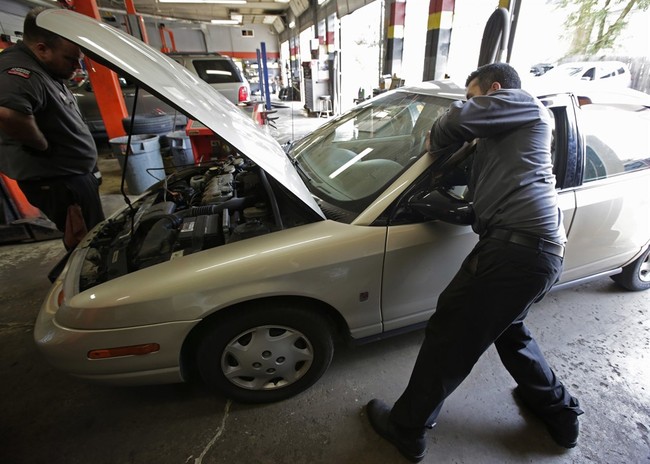
A man who used to change his own water pump knows when ownership has been hollowed out. For decades, Americans could pop the hood, grab tools, call a friend, and keep a car alive for another season.
President Donald Trump’s June 29 memorandum speaks to a frustration millions of drivers already feel: too many modern vehicles have become machines owners pay for, insure, fuel, and maintain, while someone else controls the repair gate.
Trump directed EPA Administrator Lee Zeldin to issue guidance within 30 days clarifying what vehicles may do to repair emissions systems or have those repairs done while staying inside the Clean Air Act.
The memo also tells the EPA to consider deprioritizing civil tampering cases against drivers who act in good faith to return their vehicles to original configuration.
President Trump has taken unprecedented action to remove burdensome regulations, restore consumer choice, and lower costs for American families.
- In February 2026, President Trump’s EPA released guidance affirming farmers’ ability to lawfully fix their own agricultural and non-road equipment, saving an estimated $33,000 per repair on average.
- In February 2026, President Trump announced the single largest deregulatory action in American history: the full revocation of the disastrous Obama-era “Endangerment Finding” and the consumer mandates that depended on it.
- In December 2025, President Trump delivered major relief to American families by resetting the Biden Administration’s costly and unlawful Corporate Average Fuel Economy (CAFE) standards to levels that can actually be met with conventional gasoline and diesel vehicles.
- In July 2025, President Trump signed into law the Working Families Tax Cuts Act, which set the civil penalty for violating CAFE standards to $0, protecting the U.S. auto manufacturing industry from significant fines.
- In June 2025, President Trump signed a joint resolution to end the California EV mandates, which would have effectively been a 100% ban on new gas cars sold in the state by 2035 (with similar effects in 17 states that adopted California’s standards).
The issue goes deeper than a single regulation. Modern cars are computers on wheels, and those computers can turn ordinary repairs into dealership appointments. Replacing a battery, sensor, module, or emissions part may require software access, diagnostic codes, calibration tools, or manufacturer-approved procedures.
Drivers still own the car, but ownership feels thinner when a dashboard warning light becomes a toll booth.
The FTC has studied repair restrictions for years, and its 2021 report warned that manufacturers can limit repair options through unavailable parts, design choices, diagnostic locks, software restrictions, warranty threats, and claims about safety or cybersecurity.
Some concerns are legitimate; a bad repair can make a vehicle dangerous. Emissions controls can’t be optional, yet safety shouldn’t become a polished excuse for forcing every driver back to the highest-priced counter.
The old American instinct was simple: fix what you own. During World War II, American troops kept jeeps, trucks, tanks, and aircraft moving partly because so many men came from farms, shops, garages, and small towns where repair was a normal skill.
They knew how machines talked before they died; that spirit didn’t vanish; it got boxed in by proprietary software, sealed systems, and rules written far from the driveway.
The White House also targeted the California Air Resources Board certification path for aftermarket emissions parts, arguing that the process now takes well over a year even when paperwork and testing are ready. From Just the News:
The memorandum allows consumers to fix their own cars with aftermarket or third-party parts, directs the Environmental Protection Agency to issue guidance clarifying what actions individuals may take to fix their vehicles’ emissions systems, and expedites ways for consumers to acquire aftermarket auto parts.
“This is something that’s very exciting to me,” Trump told reporters in the Oval Office. “It means a lot to people that own vehicles, cars in particular, but cars and anything else. It’s going to save them a lot of money. They’re going to be able to do it themselves.”
The signing also comes after Trump claimed he heard about people who were “arrested for fixing their car.” The order directs the EPA to de-prioritize civil actions against people who attempt to fix or modify their cars if they do so in good faith.
“It’s right to fix, and I think it’s really common sense,” Trump said. “If somebody wants to fix — some of these people are better mechanics than mechanics in the shop. They’re telling the mechanic in the shop how to fix their car or their truck.”
One state’s backlog shouldn’t become a national bottleneck for legal, compliant parts. Drivers need affordable options, and small shots need a fair shot at serving their communities.
Repair freedom also helps local economies. Independent shops employ mechanics, service writers, parts workers, tow drivers, and small business owners who know their customers by name.
Thank you President Trump for your leadership on this very important issue.
Americans should have the freedom to repair their own vehicles. Expanding access to affordable aftermarket parts will give drivers more options and help lower repair costs. https://t.co/Yt3IRQI582
— Rep. Warren Davidson (@Rep_Davidson) June 29, 2026
National repair-access advocates point to over 270,000 service outlets, 900,000 technicians, and roughly 292 million vehicles on the road. When manufacturers control data, tools, and software too lightly, the corner garage loses ground, and families lose choices.
Trump’s memo won’t solve the whole problem. Congress still has work to do on vehicle data access, diagnostic tools, and fair repair competition. Automakers still deserve protection for intellectual property, cybersecurity, and real safety risks.
Drivers deserve protection from being treated like renters after buying a car. The balance should favor ownership, lawful repair, and lower costs for families already squeezed by insurance.
A car has always meant more than transportation in America; it means work, school, church, groceries, doctor visits, and freedom from waiting on someone else’s schedule.
Trump just took a wrench to one of the quiet schemes, making that freedom more expensive. If Washington follows through, the hood may finally open a little wider for the Americans who paid for the car in the first place.
Join PJ Media VIP and use promo code FIGHT to get 60% off. Support independent conservative reporting, sharp analysis, and writers who still believe Americans should be trusted with the things they own.