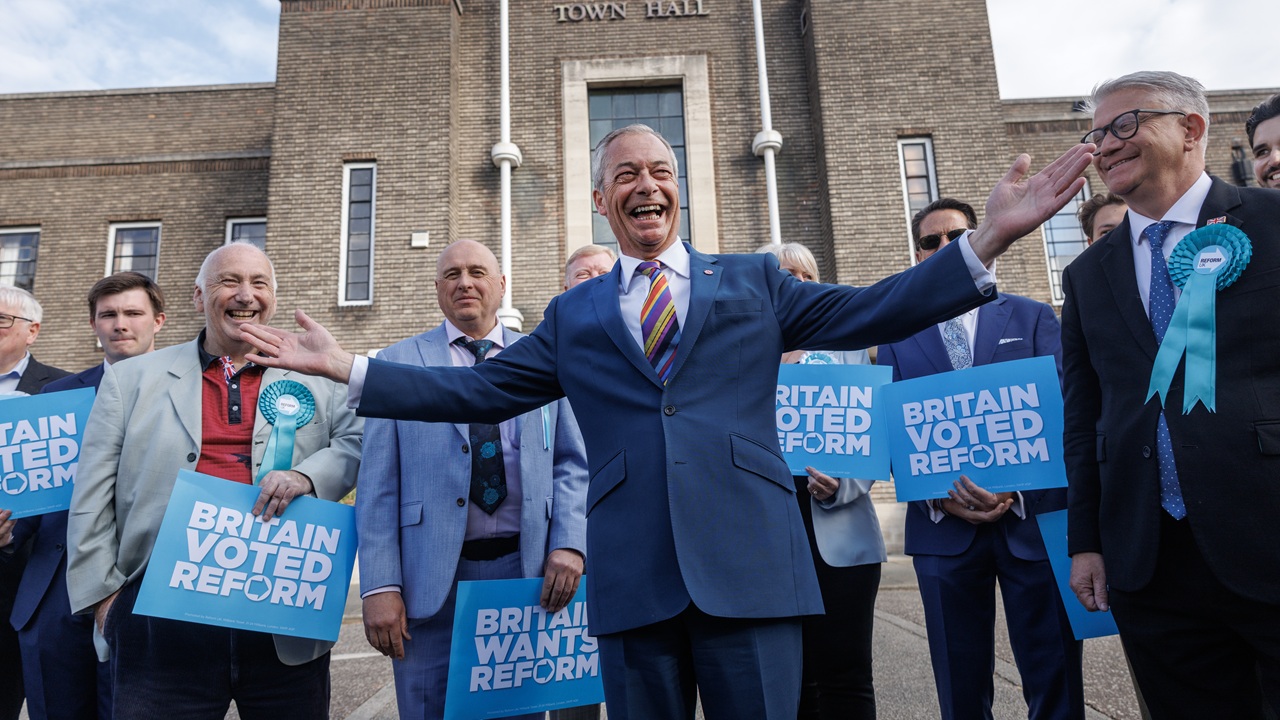
On May 7, 2026, English voters made a dramatic shift. The upstart right-wing party Reform UK won 1,454 council seats and took full control of 14 local authorities.
These victories weren’t in quiet, out-of-the-way places. They happened in areas long considered Labour strongholds.
England has 317 main councils, with about 16,000 elected councillors from around 7,000 wards. (A ward is the smallest political boundary. Similar to a U.S. city council district, each ward has two or local councillors representing an average population of 6000 people.) These councils make decisions that affect daily life, like planning, housing, social care, and services such as waste collection and child protection.
In this year’s elections, nearly 3,000 wards were up for more than 5,000 seats. Reform’s gain of over 1,440 seats gave them control of Barnsley, Calderdale, Essex County, Gateshead, Havering (their first London borough), Newcastle-under-Lyme, Sandwell, South Tyneside, St Helens, Suffolk County, Sunderland, Thurrock, Wakefield, and Walsall.
The size of these wins speaks for itself. Reform took 58 out of 75 seats in Sunderland, ending over 50 years of Labour control. In Sandwell, Labour’s 47-year hold ended in one night. Winning Havering was especially important, showing that even outer London wanted change. Across northern and Midlands towns and some key southern counties, voters showed they were fed up with mass immigration, grooming-gang scandals, and limits on free speech.
Labour suffered the most. They had 66 councils and they now control only 28. This is around 10% of the councils in the country despite being the ruling party in Parliament. Many of the councils lost by Labour are now either under Reform or have no clear leadership. The Conservatives didn’t do much better, losing six councils and holding on to about 25. After years of dominance, both parties are seeing their local power break apart.
American readers, who are used to a system with 500,000 local officials, might find Britain’s setup much smaller, with one councillor for about every 3,500 people. This means that every ward change is important. Just a few wins in key areas can quickly change policies. Reform’s steady gains show that focused grassroots organizing can beat established parties.
For years, working-class communities have dealt with the effects of open-border policies, which put pressure on housing, schools, and the National Health Service. Scandals in places like Rotherham and Rochdale showed how political correctness sometimes took priority over protecting vulnerable girls. At the same time, strict hate speech rules and the closing of bank accounts for dissenters made many feel ignored by those in power. Reform addressed these concerns with a platform focused on controlled immigration, protecting women and girls, and defending free speech.
The similarities between the U.K. and U.S. are clear. Britain’s local councils are like America’s county commissions and school boards, which handle issues like education, border security, and parental rights. U.S. conservative activists have already shown what focused organizing can do. Reform’s success shows how quickly things can change when voters feel heard by one party.
Some critics may call this just a protest vote, but the facts show otherwise. Reform had already won 10 councils in 2025, and 2026 built on that progress. Now that they have real power, expect early actions like stricter checks on social-care contractors, better protection against grooming risks, and planning rules that prioritize current residents.
British voters have made it clear: the old parties no longer have a hold on the working class. For American conservatives looking ahead to the midterms and beyond, the lesson is simple—local power is up for grabs. Issues like immigration, child safety, and free speech are decided at the local level, not just nationally.
Reform UK’s win in 14 councils shows that the commonsense movement is real and growing, and it could help Nigel Farage become prime minister in the 2029 general election.
We publish a variety of perspectives. Nothing written here is to be construed as representing the views of The Daily Signal.