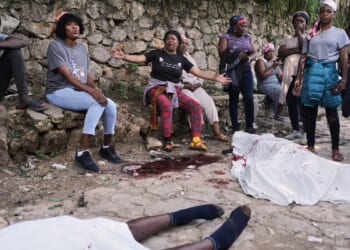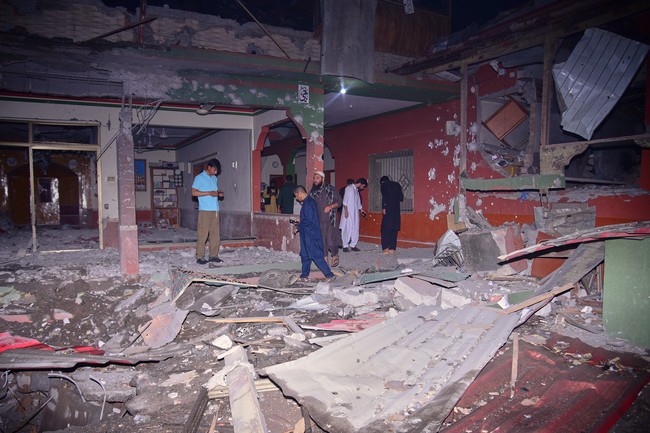
According to the 2026 Global Terrorism Index, Pakistan recorded the highest average impact of terrorism score in South Asia for the third consecutive year and now ranks as the country most impacted by terrorism globally.
The four deadliest terrorist organizations in 2025 were Islamic State (IS), Jamaat Nusrat Al-Islam wal Muslimeen (JNIM), Tehrik-e-Taliban Pakistan (TTP) and al-Shabaab, according to the Index.
Deaths from terrorism in Pakistan are now at their highest level since 2013, added the report.
This data appears to be partially due to the fact that terrorist recruitment in Pakistan has shifted from overt, face-to-face indoctrination into a decentralized digital and social ecosystem. This distributed model blends targeted digital persuasion, online echo chambers, and localized mobilization.
Terrorist organizations operating within and out of Pakistan have radically transformed their recruitment strategies by shifting from physical venues to digital spaces. To circumvent the physical bottlenecks, terrorist groups like Tehrik-e-Taliban Pakistan (TTP), Jaish-e-Mohammed (JeM), and the Islamic State Khorasan Province (ISKP) have optimized their operations for the internet.
For years, recruitment in Pakistan leaned heavily on personal contact, ideological grooming in madrassas (Islamic seminaries), and local terrorist facilitators in certain areas. Terrorist groups such as al-Qaida and the TTP used madrassa-linked spaces, printed propaganda, and trusted intermediaries to identify and recruit youths. This model worked because terrorist networks were physically rooted in communities, especially in the tribal belt, south Punjab, Karachi, and parts of Balochistan, where they could build influence through kinship ties, religious authority, and intimidation.
That older model was also helped by the broader rich jihadi landscape described by NACTA (the National Counter Terrorism Authority of Pakistan), where multiple proscribed organizations continued to operate and overlap in personnel, ideology, and geography. In such an environment, recruitment did not always require persuasion, but it often looked like gradual social absorption into a militant ecosystem that had already normalized violence.
The biggest change has been the move toward digital recruitment. NACTA research says social media has lowered the entry barrier into terrorism, and that terrorist groups now use social media platforms to run propaganda, raise funds, recruit people, and train supporters online.
A 2025 NACTA study describes digital media as transforming radicalization by using X, YouTube, Facebook, WhatsApp, and Telegram to create echo chambers and spread targeted content. This is important because recruitment is now less dependent on a recruiter physically meeting a recruit. Instead, the recruit can be identified, groomed, and activated through repeated online exposure.
Recruitment tactics have evolved in parallel with operational tactics. Earlier groups preferred physical camps, Islamic clerics, and direct indoctrination. Now they combine those methods with encrypted communications, online training, and micro-cells that are harder to penetrate. The same groups that once depended on visible networks now use small, compartmentalized teams and social media-based outreach.
There is also a tactical shift in the profile of recruits. Terrorists increasingly recruit people who can help with propaganda, digital finance, logistics, or low-visibility operations, not just frontline combat.
Pakistan’s current recruitment methods show a widening target base. The old stereotype of the recruit as a poor madrassa (Islamic school) student no longer captures the whole picture. NACTA’s research on educated youth points to college and university students being drawn into propaganda, online fundraising, and recruitment work, especially when social media reduces the cost and risk of contact.
What makes the problem especially dangerous is how deeply it is woven into parts of Pakistani society. Terrorist recruitment benefits from institutions, Islamic beliefs, and informal structures that are already present. That is why cases such as Saad Aziz, Noreen Leghari, and Bushra Cheema show that indoctrination and terrorism are not confined to rural, uneducated, or isolated populations.
In 2019, the Pakistani newspaper Dawn issued an editorial regarding the phenomenon of educated, well-off Pakistanis choosing to join terrorist groups and commit murders and other crimes:
The trope of the madrassah-educated or illiterate extremist from an impoverished background was comprehensively shattered when Saad Aziz was arrested for high-profile terrorist attacks in Karachi.
Coming from a well-to-do family, the young man was a graduate of one of the country’s most prestigious business schools.
Yet, inspired by the militant Islamic State group, he went on to commit a number of heinous crimes – several within the span of a few weeks in the summer of 2015… Among these was the murder of rights activist Sabeen Mahmud, the targeted killing of policemen and the Safoora Goth massacre.
Naureen Leghari is another case of a privileged university student choosing jihad due to her religious convictions. Her father worked as a university professor at Dr. MA Kazi Institute of Chemistry. However, she chose to join ISIS in Syria and was reportedly part of a failed plot to carry out a suicide attack on a church in Lahore.
In another case, in September 2016, Bushra Cheema deserted her husband and left Pakistan for Syria to join ISIS with their four children. In a voice message sent to her husband, she reportedly stated: “I love God and His religion… If you can’t join us, then at least pray your wife and children die in jihad.”
Some terrorist organizations increasingly use women, including in propaganda and in selected attack roles. The Army of Mohammed (Jaish-e-Mohammed — JeM), one of Pakistan’s too-many-to-count jihadist terrorist groups, for instance, launched its first-ever women’s wing. The “Congregation of the Believing Women” (Jamaat-ul-Mominaat) was launched on October 9, 2025, and hosted by JeM’s training facility, “Center of Usman and Ali,” (Markaz Usman-o-Ali) in Bahawalpur, a city in the southeast of Pakistan’s Punjab Province.
The JeM’s women’s wing has since held meetings, launched in-person and online radicalization events, recruitment fairs, and indoctrination courses for women and girls that include specialized training for combat and suicide missions
What makes so many Pakistanis and other Muslims so prone to violence, jihad, or terrorism to achieve political, religious, or social goals is mainly cultural and religious. The violent teachings in Islamic scriptures and the centuries-long Islamic history of jihad (including Muslim-on-Muslim violence as in the case of Shia vs Sunni) make terrorist recruitment in the country widespread and normalized.
Pakistan’s educational system also appears to contribute to the problem. It consists of three main streams: public/government schools, private schools, and madrassas (Islamic seminaries). There are over 40,000 madrassas across the country with roughly 4.6 million students. Madrassas have long been criticized for contributing to violence and jihad, supplying recruits for the Taliban, Al Qaeda, and other terrorist groups.
Pakistan’s public education system is fundamentally Islamic rather than secular. It operates as a hybrid system that blends modern disciplines with compulsory Islamic instruction across the curriculum. These schools follow a national curriculum where Islamic Studies (Islamiat) is a mandatory subject for Muslim students at all levels. The broader curriculum is heavily infused with Islamic values.
Meanwhile, around 25 million children in Pakistan remain out of school, and a vast majority (roughly 77%) of those attending cannot read or comprehend age-appropriate texts by Grade 10.
Analyses, including perspectives published by the newspaper Dawn, highlight that state curricula often use education for indoctrination, presenting subjects like science through an Islamic lens and discouraging critical thinking. As Pervez Hoodbhoy, a Pakistani physics teacher, notes:
The state, in seeking to establish its legitimacy, uses education as a tool for indoctrination. This has turned Pakistan into a more conservative country than most other Muslim countries. Even as it abdicates its basic responsibility by outsourcing education to private hands, the state nevertheless remains vigilant against the penetration of secular ideas into the system.
Western intellectual products, particularly critical thinking and the scientific method, are considered dangerous. Therefore, even science subjects, sprinkled onto a substrate of belief, are taught without using the scientific method.
A 2025 study titled What Are We Teaching at School? by the Lahore-based research and advocacy organization Center for Social Justice (CSJ) found that religious Islamic content was heavily embedded in non-religious subjects, effectively making it compulsory for all students—including non-Muslims—to study and pass exams on Islamic teachings.
“Moreover, when students progress to higher grades, the volume of religious content increases, particularly in subjects where it does not naturally belong. For instance, Grade 9 English textbooks contain chapters like ‘Hazrat Muhammad – The Model of Tolerance’ and ‘The Madina Charter.’ Grade 10 Urdu textbooks feature ‘Simplicity and Humility of Hazrat Muhammad’ and ‘Hazrat Umar,’ which should belong in Islamic Studies rather than compulsory language courses,” it noted.
The study emphasized that embedding Islamic content and mosque imagery in non-religious subjects violated Article 22 of Pakistan’s Constitution, which prohibits compulsory religious instruction for students of other faiths.
A serious response to increased recruitment to terrorist groups, therefore, has to go beyond arrests. A profound education reform is urgently needed in the country. To help combat Islamic radicalization and jihadist terrorism, Pakistan must reform its education sector by updating the school curriculum to improve quality, remove divisive and discriminatory narratives (such as those that portray non-Muslims as inferior), encourage critical thinking, and allow scientific matters to be studied purely through scientific lens.
The evidence also points to the need for stronger policing, digital monitoring, local counter-narratives, and a broader counter-terrorism strategy.
Editor’s Note: Do you enjoy PJ Media’s conservative reporting that takes on the radical left and woke media? Support our work so that we can continue to bring you the truth.
Join PJ Media VIP and use promo code FIGHT to receive 60% off your membership.