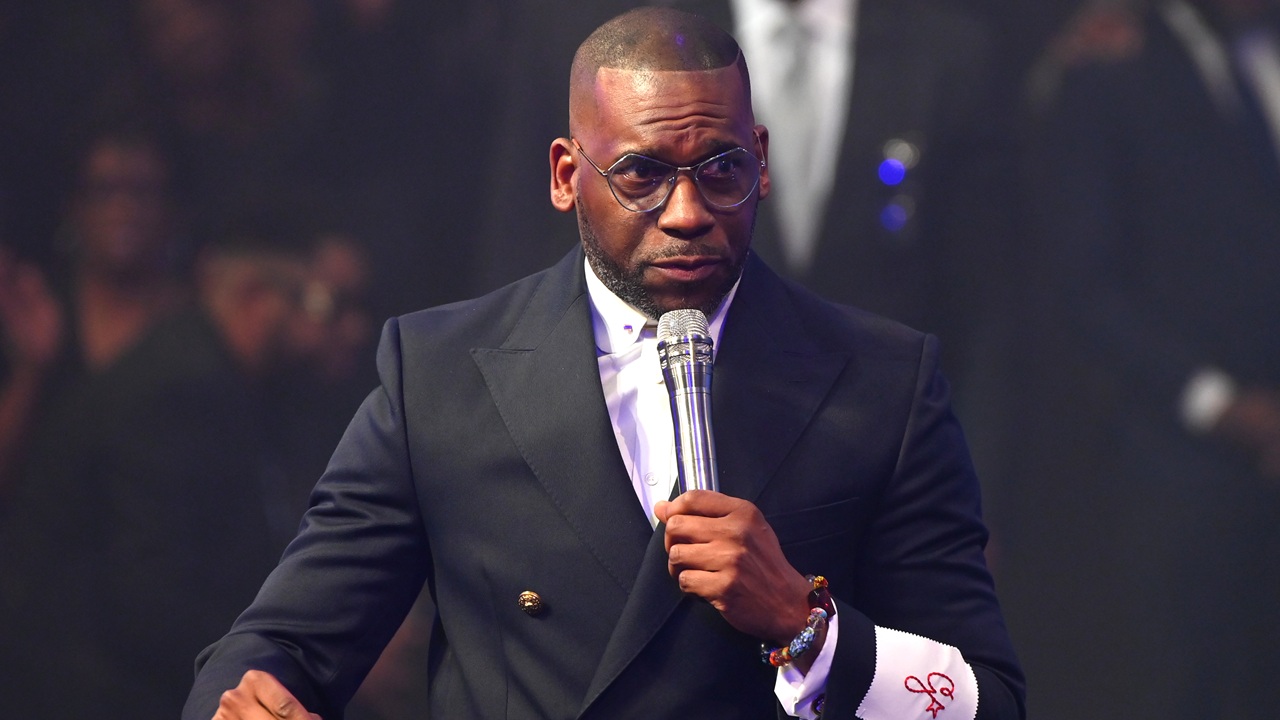
In an announcement on YouTube in March, Atlanta pastor Jamal Harrison Bryant said that he and his fellow progressive Target boycotters were declaring victory and going home—or back to Target, as the case may be. “This fight, for us, has now reached its conclusion,” he said.
There was only one problem: No one told the rest of the boycotters that they had won. Indeed, many of them disagreed—vehemently—with Bryant. They didn’t see any signs of the victory he claimed for DEI. More to the point, they had no intention of calling off their boycott of Target, the seventh-largest retailer in the country.
Two days later, Bryant took to the airwaves again, this time to apologize to the mob and to recant his earlier claims of victory. “I was reading from a different sheet of music,” Bryant told his listeners. “I wanted to apologize to you for being a leader that was out of touch with what it is that the community … were demanding.”
The story of the Target boycott is interesting and informative. In a very narrow sense, that story began last year—during Lent—when Bryant and other activists from around the country decided that the Minneapolis-based retailer had gone too far in its decision to roll back various discriminatory DEI and black community outreach programs, in line with demands made by the Trump administration.
In a broader sense, the story began more than 65 years ago, in 1960, when Douglas Dayton, then the vice president of branch stores for Dayton’s, his grandfather’s company, launched Target to serve as an “upscale” discount store, a “classier” competitor to Kmart.
In large part because of the Dayton family’s influence, and Douglas Dayton’s influence in particular, Target has long been known for its philanthropic spirit and its social activism. In 2015, when Douglas died, The St. Paul Pioneer Press wrote that he had “helped others through activism with social justice, education, arts and nature-preservation groups.”
No doubt, Douglas Dayton saw his social activism as his way of “giving back” to the community that had been so good to his family. And in a way, it’s admirable that he would want to do so, to be generous with his blessings.
Unfortunately, Dayton’s activism wasn’t his alone. It was the company’s activism as well, which created two massive and largely intractable problems.
First, since the company was involved in that activism, Douglas Dayton wasn’t being generous with just his blessings. Rather, he was being generous with shareholder resources as well. “Dayton’s” became the Dayton Corporation—a publicly traded corporation—on Oct. 18, 1967, when it held its initial public offering.
Today, the family does not own a recognized block of shares, meaning that it quite likely holds very little of the company, certainly less than the SEC’s 5% disclosure threshold. Insiders hold a grand total of one-tenth of one percent of the stock. In other words, any Target activism done today is done almost entirely with other people’s money.
Second, by using the company to engage in social activism, Douglas Dayton and his successors conditioned activists to expect special treatment and to see the failure to provide special treatment as treachery.
For example, when Target merely aligned itself with federal law—like thousands of other companies—some of its customers took it personally and felt betrayed. And so, they boycotted. When Jamal Harrison Bryant tried to lift the boycott, they fought back, insisting that they had not been placated.
It is likely important to note three additional points here.
First, the special treatment being sought by DEI proponents and apologists can quite literally be described as nothing short of racist neo-Marxism that demands redistribution based on race, sex, and other intersectional markers of marginalization, as opposed to jobs and promotions being allocated on the substance of one’s character and merit. This is immoral, unethical, and illegal—not to mention an attack on workforce competence.
Second, by dividing employees, applicants, and customers on the basis of race, sex, etc., in the name of DEI, companies like Target pay a high opportunity cost because they could be allocating all the associated resources to efforts that lift all boats on a colorblind basis, such as supporting school choice or apprenticeship programs. This would necessarily improve diversity outcomes and avoid the cost of well-deserved criticism for what is essentially racism in the name of antiracism, as well as avoiding the cost of having to explain the absurdity of Oprah Winfrey and Michelle Obama getting hiring preferences because they are apparently oppressed victims of systemic racism.
Finally, once a company embraces the pendulum of social activism, it’s hard to get off, as exemplified in this case by Target apparently circling right back to arguably illegal discrimination to appease the boycotters.
This is not a new phenomenon. It is well established and largely unfailing.
As even the socialist journalist Heywood Broun noted, condensing more than two millennia of collective wisdom: “Appeasers believe that if you keep on throwing steaks to a tiger, the tiger will become a vegetarian.”