Russia is trying to turn the Black Sea into a “second Strait of Hormuz,” Ukraine’s acting foreign minister warned as attacks on Ukrainian ports and commercial vessels are prompting shipowners to halt calls through the country’s main maritime export corridor.
Moscow has not restored the naval blockade it imposed at the beginning of the invasion, when Russian warships operated close to Ukraine’s coast.
Instead, it is using missiles and drones to make the route so dangerous, expensive and unpredictable that shipowners and insurers pull back on their own.
The shift threatens one of Ukraine’s most important wartime successes and a vital source of foreign currency as the country grows increasingly dependent on outside financial support.
The changing nature of the threat was visible during a recent patrol off Odesa. A Ukrainian sailor stood at the stern of a small patrol boat, wearing a helmet and body armor as he scanned the gray horizon through binoculars.
He was not looking for Russian warships, as those have largely been pushed farther from Ukraine’s coastline. He was watching for drones.
“Our main goal is to ensure the safety of merchant ships so they can keep working, and so Ukraine can continue earning money through exports,” said Mykola, the vessel’s pilot and a former merchant sailor. “And, of course, we protect our citizens from the sea, where we can intercept drones before they reach the coast.”
The boat carries several machine guns, including a turret mounted at the bow. One sailor displayed a phone video of a Russian naval drone drifting disabled on the water.
“We intercepted it,” he said.
A naval victory under pressure
Russia appeared to hold a near-stranglehold over Ukraine’s Black Sea coast in the first months of the war. That advantage began to unravel in April 2022, when Ukrainian Neptune missiles sank the Moskva, the flagship of Russia’s Black Sea fleet.
Ukraine later recaptured Snake Island and expanded its arsenal of coastal missiles, long-range strike weapons and explosive naval drones. Repeated attacks on Russian vessels, dry docks and headquarters in occupied Crimea forced much of the fleet away from the western Black Sea.
Some ships were relocated from Sevastopol to Novorossiysk, on Russia’s eastern coast.
While Kyiv never gained traditional command of the sea, it did deny Russia the freedom to operate close enough to its shores to enforce its blockade.
That opening allowed Ukraine to establish its own maritime corridor in September 2023, after Moscow withdrew from a United Nations-backed grain agreement. Ukrainian officials say the route has since carried 208.9 million metric tons of cargo, including 123.8 million tons of grain, to markets in more than 55 countries.
The corridor restored large-scale exports of grain, sunflower oil, iron ore and other goods.
But now, Moscow appears to have adjusted its tactics.
Rather than risk major warships near Odesa, Russian forces are striking the civilian system powering the route: merchant vessels, loading equipment, grain terminals, fuel storage sites, power supplies and port workers.
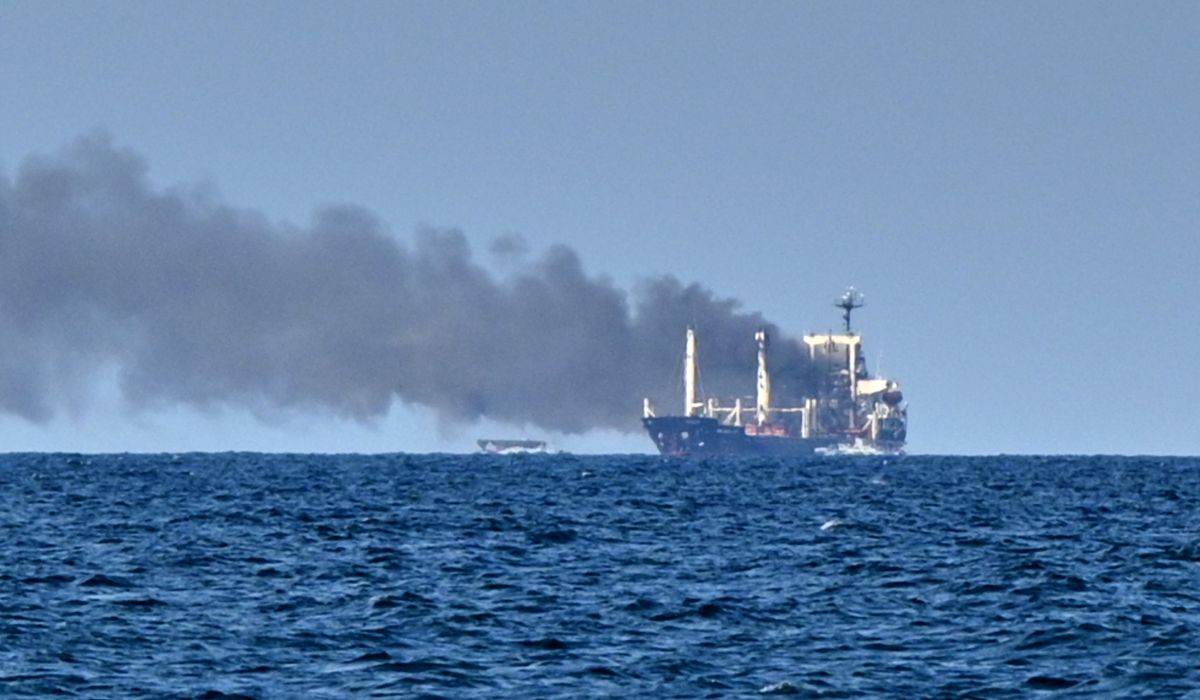
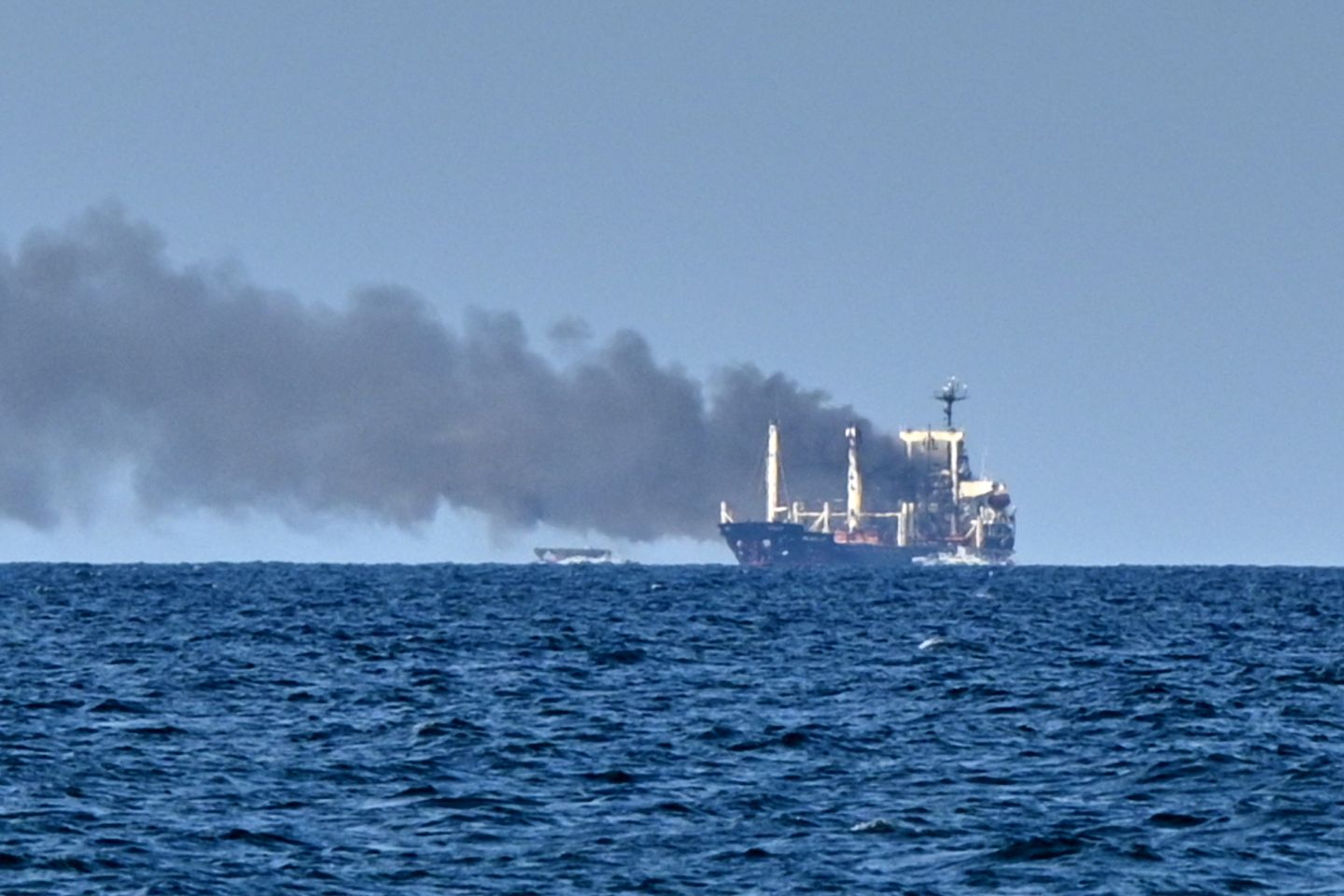
From June 20 to July 20, Russian forces struck 28 civilian vessels and killed 21 people, according to prosecutors in the Odesa region. The deadliest attack came July 19, when three missiles hit the Guinea-Bissau-flagged Golden Leo as it carried corn near Odesa. Ten people were killed, including crew members from India and Syria and a Ukrainian maritime pilot.
While Russia says it only targets ships and port facilities supporting the Ukrainian military, Ukrainian officials accuse Moscow of deliberately attacking civilian navigation and global food supplies.
On July 22, acting Foreign Minister Andrii Sybiha said no vessels had passed through the corridor at the height of the harvest season. He called the campaign “economic and humanitarian terror” and later accused Moscow of trying to turn the Black Sea into a “second Strait of Hormuz.”
A blockade imposed by risk
The strikes are already impacting corporate decision-making. Maersk suspended service through Chornomorsk Fishing Port on July 22, saying conditions prevented the feeder operator from continuing. The Danish shipping giant redirected affected cargo to Constanta, Romania.
Kernel, one of Ukraine’s largest grain and sunflower oil exporters, suspended operations at its Chornomorsk terminals after repeated attacks damaged loading equipment, electrical lines and storage facilities. The company said about 45,000 metric tons of wheat and 9,000 tons of sunflower oil were damaged, spilled or lost quality.
Ferrexpo, a London-listed mining company with its main operations in central Ukraine, offers an even clearer example of how maritime attacks can spread through the broader economy.
A Russian drone struck a vessel carrying 55,000 tons of the company’s high-grade iron ore pellets through Ukrainian Black Sea waters, killing one crew member. Ferrexpo said shipowners subsequently canceled planned vessels and that it did not expect the route to be available “for the foreseeable future.”
The company has about 189,000 tons of pellets designated for shipment, representing roughly $20 million in production and delivery costs. It warned that the disruption had materially affected its liquidity and forecast that accessible cash would last only through the end of August, although Ferrexpo was already facing other financial and legal pressures.
The cases illustrate the purpose of Russia’s strategy. It does not need to destroy every terminal or sink every cargo ship. A few deadly attacks can cause shipowners to cancel calls, insurers to raise premiums and traders to reconsider contracts.
Ukrainian officials, traders and analysts estimate that the country has already lost about one-third of its grain export capacity through Black Sea ports. More than 90% of Ukraine’s agricultural exports normally pass through the Odesa region.
Even cargo that continues to move becomes less profitable. Higher freight and insurance costs are absorbed by exporters and farmers whose margins have already been squeezed by damaged infrastructure, expensive energy, labor shortages and lost farmland.
Ukraine can divert some shipments through Danube ports, rail links and road routes into the European Union, but those alternatives are slower, costlier and cannot match the capacity of the deep-water ports of Odesa, Chornomorsk and Pivdennyi.
The consequences extend well beyond Ukraine’s borders.
Before the war, the country accounted for about 6% of global wheat exports and 11% of corn exports. Prolonged disruption would hit buyers in Africa, the Middle East and Asia through higher prices, longer and less reliable delivery times.
Ukraine has answered with attacks on Russian ships and maritime logistics in the Black Sea and Sea of Azov. The campaign has forced restrictions at Russian grain terminals and a ban on nighttime vessel movements at Novorossiysk, showing that maritime insecurity is spreading across the region.
The vulnerability, however, is not equal.
Russia has more export routes and greater economic depth. Ukraine’s access to the Black Sea remains essential to the survival of its private sector and its ability to finance the war.
While Russia may no longer be able to park its fleet off Odesa and close the coast by force, it may have found another way to tighten the same economic noose.