MONGOMO, Equatorial Guinea | Pope Leo XIV urged Equatorial Guinea on Wednesday to work for justice and to close the gap “between the privileged and the disadvantaged,” as he drew attention to the vast income inequalities and human rights abuses in the Central African country.
Leo began the day with Mass in Mongomo, an eastern city on the border with Gabon that has experienced major development since Equatorial Guinea’s oil boom in the 1990s.
President Teodoro Obiang Nguema Mbasogo, who has been accused of widespread corruption and authoritarianism during his four-decade rule, comes from Mongomo. The city has benefited from government investment and infrastructure, even though no official institutions are located here.
While more than half of Equatorial Guinea’s population lives in poverty, Mongomo boasts opulent buildings, curated gardens behind gilt-tipped gates, an 18-hole golf course and is the starting point of the lone highway in the country, linking the city to Bata on the west coast.
Mr. Obiang and his wife were on hand for Leo’s Mass, as was their son, Teodoro “Teddy” Nguema Obiang, the country’s vice president who was convicted of embezzling millions of euros by a French court, which handed him a three-year suspended sentence, a 30 million-euro ($35.2 million) fine and ordered the seizure of his luxury homes and cars in France. The country has protested the seizures at the International Court of Justice.
Last year, the United States gave the younger Mr. Obiang a temporary waiver on U.S. corruption sanctions, so that he could travel to a U.N. gathering and visit other American cities. Mr. Obiang also met with U.S. Deputy Secretary of State Christopher Landau.
The Vatican said that an estimated 100,000 people attended the Mass, most standing in the grand entryway to Mongomo’s Basilica of the Immaculate Conception. The monumental church was consecrated in 2011 and is modeled on St. Peter’s Basilica in the Vatican.
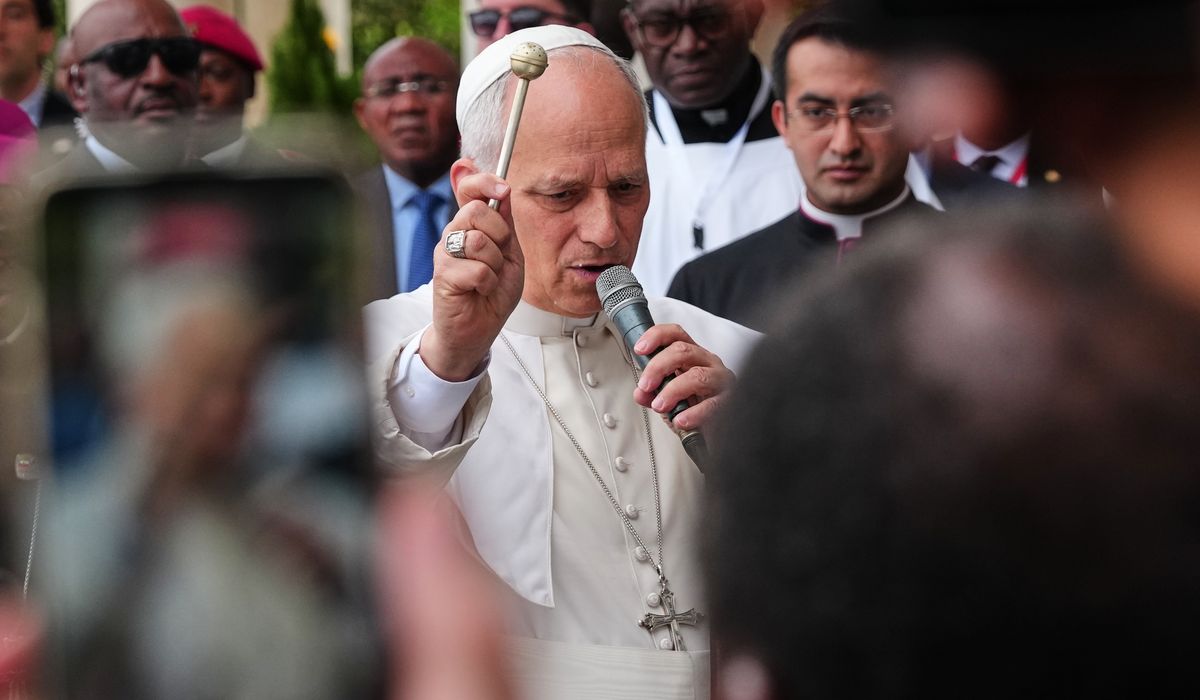
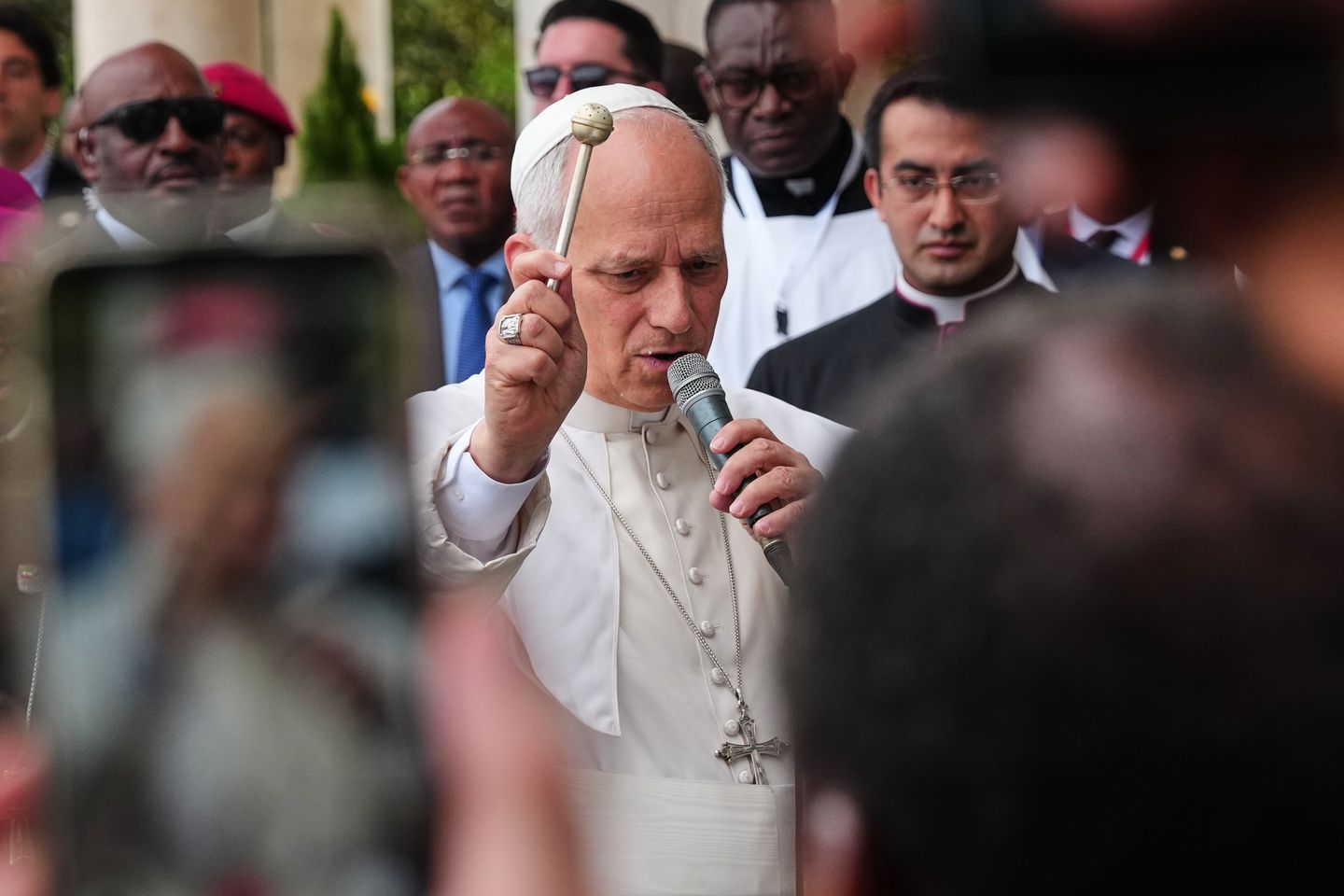
Before Mass, Leo greeted the crowd and the presidential family. With the Obiangs by his side, he blessed the cornerstone of a future cathedral to be built in the country’s new capital, Ciudad de la Paz.
In his homily, Leo urged all citizens to work together to build a society “capable of engendering a new sense of justice,” where there is “greater room for freedom” and where “the dignity of the human person always may be safeguarded.”
He urged everyone to work to “serve the common good rather than private interests, bridging the gap between the privileged and the disadvantaged.”
Leo was due to visit a prison in the port city of Bata, continuing the tradition of Pope Francis, who made such visits a priority of his pontificate.
Judicial abuses documented
Equatorial Guinea’s prisons and justice system have been repeatedly faulted by the United Nations and condemned by human rights groups and the U.S. State Department.
In its 2023 report on the country, the U.S. listed a host of abuses, including arbitrary or unlawful killings and arrests, political detentions, torture, life-threatening prison conditions and “serious problems” with the judiciary’s independence.
“Amnesty International has serious concerns about the human rights situation in Equatorial Guinea,” said Marta Colomer Aguilera, senior campaigner at Amnesty’s West and Central Africa office.
She said that torture had been used to extract confessions or to punish, human rights defenders are harassed, and the lack of judicial independence compromised the right to a fair trial.
Obiang has been in power in Equatorial Guinea since 1979. In his speech on Tuesday welcoming Leo, Obiang told the pope to make himself at home in the country, which is one of the most Catholic in Africa.
“With these feelings of love, affection and closeness shown by His Holiness toward our people, their faith will be strengthened and the inner peace that has sustained the people for more than five decades will be reaffirmed, as will the excellent relationships we maintain with the Holy See and the local Catholic Church,” he told Leo.
After sanctions were lifted on the younger Obiang, it emerged that Equatorial Guinea was one of several African nations that have been paid millions of dollars in contentious deals with the Trump administration to receive migrants deported from the U.S. to countries other than their own.
Reporting by The Associated Press shows that at least 29 such migrants with no ties to the country have been deported here.
The government has denied rights abuses and hasn’t commented when asked to respond to questions about abuses involving the U.S. migration deportation deal.
Leo has criticized the Trump administration’s overall migration deportation policy as “extremely disrespectful.”
’Very troubling disregard for human life’
On the eve of his prison visit, 70 human rights organizations published an open letter to Leo, urging him to speak out especially about U.S. deportation of migrants here and encourage African nations to not be complicit.
“These practices circumvent humanitarian protections, expose refugees to detention and coercion, and subject individuals to refoulement, in direct contravention of international law,” they wrote, referring to the legal concept that prohibits countries from sending people to places where their lives or freedoms are at risk.
In the lead-up to Leo’s arrival, the government released nearly 100 people who had been arrested in a 2022 crackdown on street violence, according to a local lawyer, who requested anonymity given the country’s human rights record.
The lawyer termed the releases one “positive outcome” of the visit, though the lawyer noted that the government still hasn’t taken action on releasing politicians such as Gabriel Nsé Obiang, who has been in jail since 2022 preelection unrest, or activists including Anacleto Micha or Joaquín Elo Ayeto.
EG Justice, a rights group which has repeatedly denounced the detention of political prisoners in Equatorial Guinea, urged Leo to use his moral authority to speak out about abuses and the detention of activists and politicians especially.
“There are individuals – prisoners of conscience, and human rights activists – in detention whose cases raise serious humanitarian and due process concerns,” said Tutu Alicante, a U.S.-based activist who runs the EG Justice group.