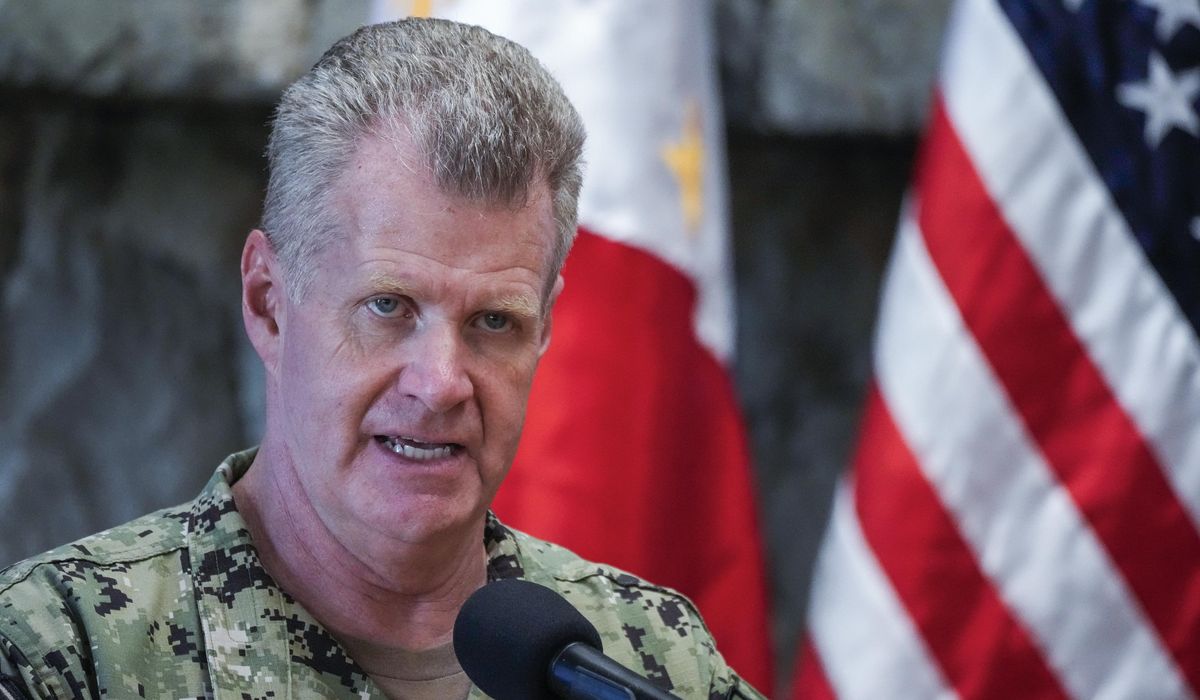
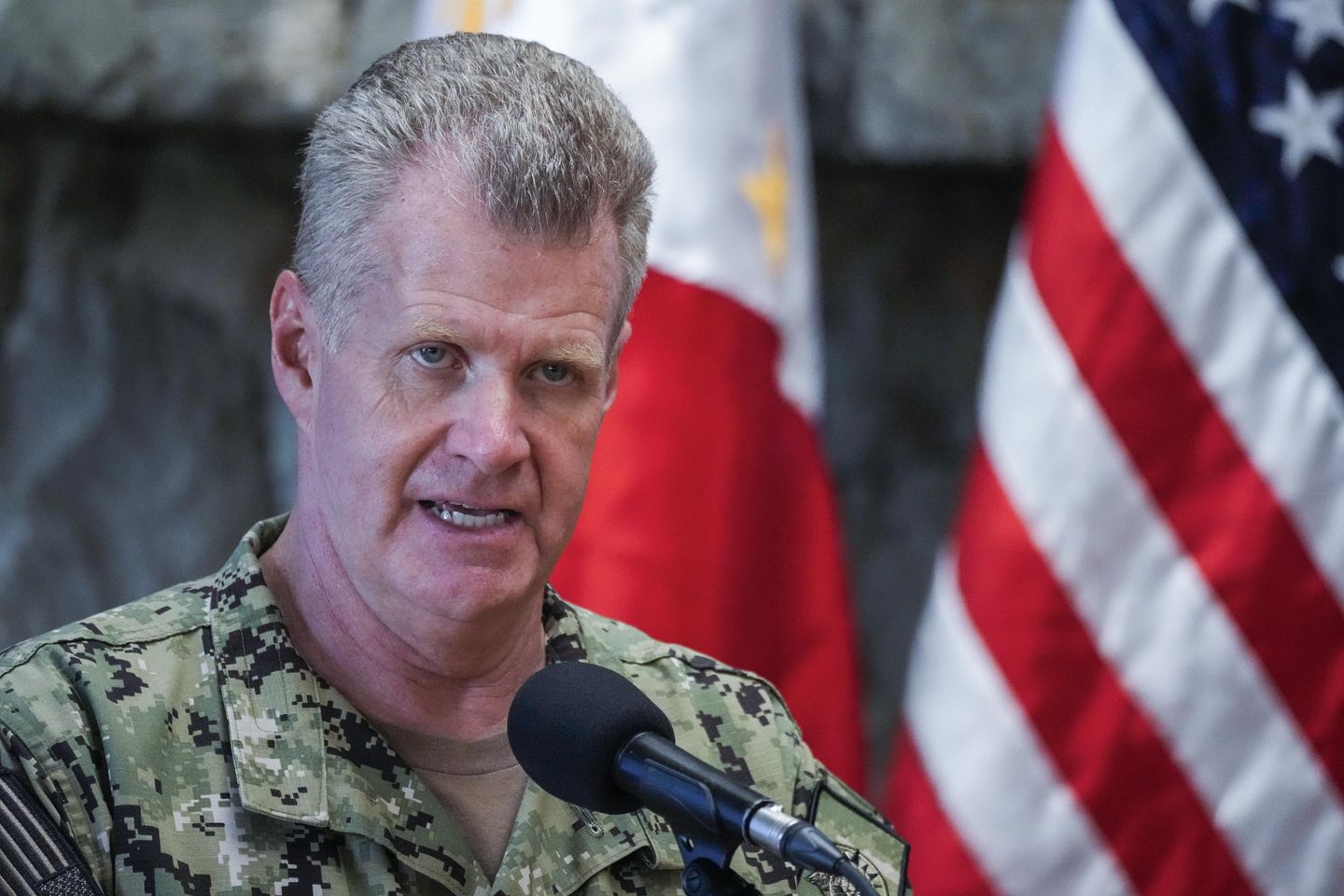
A U.S. victory in the war with Iran will help deter a Chinese military assault on Taiwan, the commander of the Indo-Pacific Command told Congress on Tuesday.
Adm. Sam Paparo, head of the Hawaii-based command in charge of military forces in the Asia-Pacific region, also revealed that China rapidly expanded both conventional and nuclear forces in the past two years. He urged the Pentagon and defense contractors to speed the development and deployment of the arms needed to deter Beijing.
“There’s no substitute for prevailing on the battlefield,” Adm. Paparo told the Senate Armed Services Committee during a hearing on the need to win the Iran war.
Indo-Pacific Command forces were directly involved in some operations against Iran, including strikes on Iranian naval vessels and the interdiction of Iranian ships, he said.
“What I want the [People’s Republic of China] to see is that the United States employs capability and will in response to aggression, and I don’t want them to doubt that in any way, and that supports deterrence, and deterrence is our highest duty,” the admiral said.
China’s military monitored U.S. and Israeli military operations against Tehran, learning from the successful use of advanced military decision-making power, he said.
And Iran’s missile and drone strikes on regional states showed China the power of small, low-cost munitions.
On China’s rapid military buildup, Adm. Paparo revealed that since 2024 China delivered 12 submarines, including nuclear attack and nuclear ballistic missile submarines, an aircraft carrier, two cruisers, 10 destroyers, seven frigates, and amphibious and combat logistics forces to People’s Liberation Army forces.
Additionally, the Chinese military will more than double the number of nuclear warheads in its arsenal in the next five years from current estimates of more than 600 warheads.
The large-scale arms buildup is for power projection, regional coercion and to enforce Beijing’s vision of a new China-led rules-based order, he said.
Adm. Paparo urged senators to increase the number of new B-21 strategic bombers and Columbia-class nuclear missile submarines, and to speed up fielding hypersonic missiles, drone aircraft and maritime systems and advanced weapons technology.
Adm. Paparo also testified that the number of new Columbia missile submarines should be increased from 12 to 16, providing an additional 64 missile tubes.
“It would enhance our ability to provide extended deterrence. It would enhance our overall readiness, not just for strategic weapons, but for tactical weapons, and I’m strongly in favor of enhancing that,” he said.
The comments came as the Pentagon on Tuesday unveiled a $1.5 trillion defense budget request for new ships, aircraft and the Golden Dome’s missile defense.
Taiwan remains a major U.S.-China flash point with Beijing refusing to renounce the use of force to annex the island and conducting nearby threatening and provocative military operations that Adm. Paparo said in the past included invasion rehearsals.