Friday, July 24, will mark a month since two major earthquakes hit Venezuela, killing thousands of people — the latest death toll I can find is around 5,400, but keep in mind that many are still missing and thousands more are injured — and causing what the World Bank is now estimating to be about $20 billion in damage.
While the results were grim, what we saw in the aftermath was inspiring. Teams from around the world, mostly from the Western Hemisphere, but also from countries in Europe and the Middle East, were able to put aside any past issues they had with the Venezuelan regime and come together to work to help the people who so desperately needed it. This was much bigger than politics.
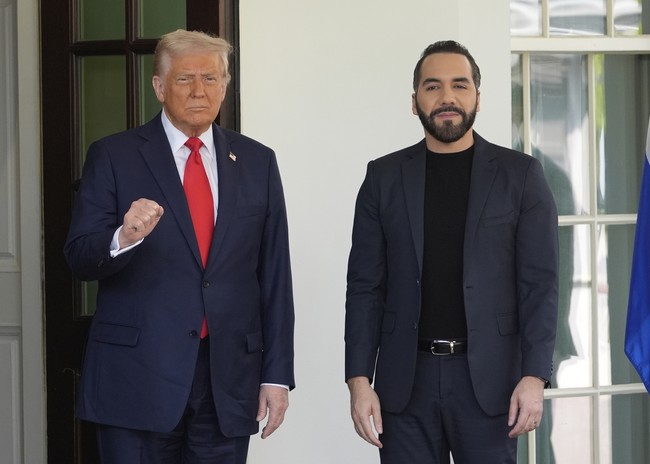
The United States, of course, had and will continue to have the biggest response and rightfully so (we’re largely running the place after all), but what really struck me and continues to amaze me has been the response from El Salvador. On the night of the earthquakes, I was on social media, watching heartbreaking videos pour in, when within maybe a couple of hours, I saw a post from President Nayib Bukele, pledging his country’s support and explaining exactly what he was sending.
“At this moment, we have offered assistance to the Government of Venezuela through our Foreign Ministry,” he wrote. “300 rescuers and paramedics, along with 50 tons of equipment, medicines, and essential supplies, are ready to depart for Caracas.”
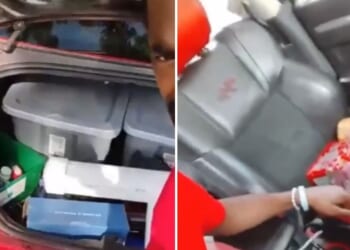
And that’s exactly what happened. Within less than 24 hours, planes filled with supplies and rescue and medical teams were on their way to Venezuela and on the ground working their way through the rubble to find people trapped alive. I know they ended up saving at least nine in those early days.
President of El Salvador Nayib Bukele announced that the first of three planes carrying personnel, equipment, and supplies is already on its way to provide aid to the people of Venezuela. pic.twitter.com/15QyNwZfZE
— Breaking911 (@Breaking911) June 26, 2026
“As it turns out, you can just do things” is one of Bukele’s favorite sayings. But he doesn’t just say it; he lives it, and this is a perfect example. While other countries were still coordinating and wondering what exactly to do given the current murky political climate, the Salvadoran teams were on the ground saving lives.
Before the U.S. even showed up or around the same time, Salvadoran rescuers were pulling people from the rubble, much of which was documented and posted to Bukele’s X feed. It was a master class in how to be the first to respond to a natural disaster… from a country that doesn’t necessarily have the resources to be the first in the world to respond to a natural disaster.
El Salvador is a tiny country. It has about 6.4 million people. To put that in perspective, Mexico has more than 20 times that. While Bukele is doing great things to grow the country’s economy, it’s still incredibly modest compared to larger countries in the hemisphere. Needless to say, its defense and civil budgets are much smaller than countries like Brazil, Mexico, Colombia, and the United States, but despite its limited resources, the Salvadoran teams made a big difference in those early days thanks to their speed, organization, hard work, and sheer determination.
In the days that followed, Bukele expanded his help to include more tons of equipment and supplies, as well as more specialized groups of people, like doctors, paramedics, psychologists, veterinarians, and firefighters. In early July, he admitted that some of his workers were exhausted, so he began rotating crews to ensure El Salvador always had 300 people on the ground to help but that they weren’t overworked.
In addition to helping pull people from the rubble, the Salvadorans opened up a field hospital in one of the hardest-hit areas to treat those who were injured. It’s been fully operational for a couple of weeks and continues serving the Venezuelan people a month after the disaster. It provides free evaluations and treatments for people of all ages and conditions and even has veterinary care for animals who were injured.
“We have established a field hospital in Venezuela to provide top-level medical care. Additionally, we have a veterinary service to care for our furry friends,” Bukele posted on X. “We will be open 24 hours a day for human care and from 8am to 6pm for pet care. We are located on the Main Avenue of Playa Grande, behind the Carlos Escarra School, across from the Rompeolas restaurant, in La Guaira.”
Hemos establecido un hospital de campaña en Venezuela para brindar atención médica de primer nivel. Además, contamos con un servicio de veterinaria para atender a los peluditos.
Estaremos abiertos las 24 horas para la atención de personas y de 8am a 6pm para la atención de… pic.twitter.com/HVEskATFty
— Nayib Bukele (@nayibbukele) July 11, 2026
Side note: I love that they included veterinary care. I know animal care is something Bukele has focused on in El Salvador, and I’m glad to see it wasn’t overlooked here. There have been so many rescues of dogs, cats, and even birds and turtles that, for some people, were the only things they had left. For example, I saw a young boy who had lost his entire family but still had his cat. The damage these earthquakes did is just as much mental as it is physical, and ensuring people’s pets are cared for is an excellent way to help maintain mental health and boost morale.
As I’m writing this on Thursday, July 23, most international teams have gone home. The odds of finding people still alive are practically zero, and the focus turns to recovery — cleaning up the damage, removing bodies, and caring for those who are injured, displaced, or have lost everything they’ve ever known.
But the small but mighty country from Central America is still there, giving the Venezuelan people as much assistance as it possibly can because that’s what people who care do when their brothers and sisters are in need.
El Salvador is still in Venezuela. Every media outlet should be talking about how @nayibbukele stepped up immediately after the earthquakes and is still there almost a month later providing critical assistance. https://t.co/0J8iofhp7m
— SarahDownSouth (@SarahDownSouth) July 21, 2026
Editor’s Note: The mainstream media continues to deflect, gaslight, spin, and lie about President Trump, his administration, and conservatives.
Help us continue to expose their left-wing bias by reading news you can trust. Join PJ Media VIP and use promo code FIGHT to receive 60% off your membership.