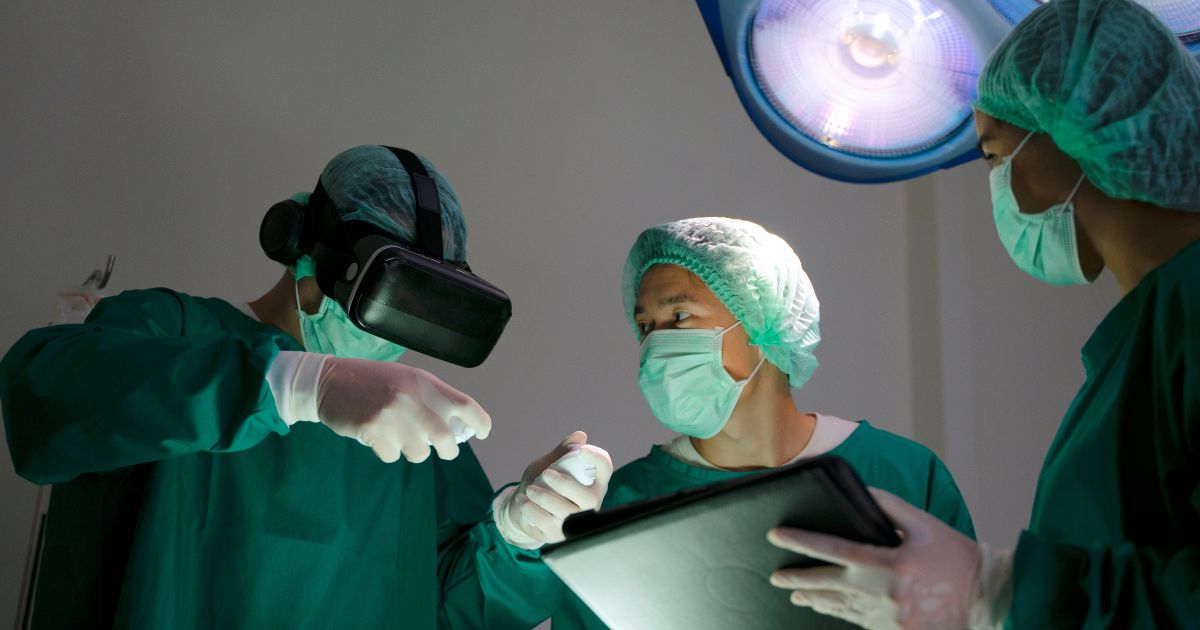
The ground has shifted under our feet in medical care. I already have patients who come to me after being diagnosed by AI. They just need me — for now — to write the prescription.
For years, people said AI would only help doctors, never replace them. The evidence now makes that hard to believe.
In one study, AI working alone got the right diagnosis 92 percent of the time. Doctors using AI got it right only 76 percent of the time — barely better than the 74 percent they got with no AI help at all. Why? The doctors trusted their own hunches over the computer’s answer, and they were wrong more often.
There’s more proof like this. Microsoft built an AI tool called MAI-DxO. It correctly solved 85 percent of difficult medical cases from the New England Journal of Medicine — four times better than the doctors who tried the same cases, and at far lower cost.
The Mayo Clinic built an AI tool to catch cardiac amyloidosis, a dangerous heart condition doctors often miss. The AI correctly identified the disease 85 percent of the time and correctly ruled it out 93 percent of the time — better than any method doctors had used before.
For colon cancer, AI scored 0.98 on accuracy tests. Trained pathologists scored 0.969. The AI won.
A Harvard study tested AI in the emergency room. It matched or beat real doctors at every step, performing best on the hardest cases: rare diseases, confusing symptoms, and situations with almost no information available yet.
Another study compared AI to doctors across four countries. AI scored between 72 percent and 96 percent on medical exams; doctors scored only 46 percent to 62 percent. The AI didn’t just beat younger, less experienced doctors — it beat the most senior ones.
This isn’t some far-off future. This is happening right now, in 2025 and 2026.
When people hear this, they raise the same points: AI works in a lab, not in real hospitals. AI lacks empathy. AI can’t hold your hand.
The first objection collapses under its own weight — AI has already been tested on real cases from Massachusetts General Hospital, some of the hardest cases in medicine, and performed at an expert level.
The empathy objection quietly gives up the real argument. When someone says “AI can’t hold your hand,” they’re admitting AI may already be better at the medical part. When you live far from a doctor, you don’t need your hand held. You need the right answer, fast, at a price you can afford.
AI makes mistakes. But doctors do too. More than 12 million Americans are harmed every year by wrong diagnoses, at a cost exceeding $100 billion. Those aren’t AI’s mistakes. They’re ours.
Some argue medicine needs a person in the room — for the exam, the touch, the hands-on treatment. New tools are eroding that argument as well.
Wearable devices now track heart rhythm, blood sugar, oxygen levels, and blood pressure around the clock, spotting dangerous problems before a patient even feels sick. AI programs can already talk with a patient, take a health history, and assess symptoms — and they’re moving quickly toward ordering lab tests and routing results to a doctor for final review.
A five-year study found that telemedicine worked just as well as in-person care for managing ongoing conditions, post-surgery follow-up, and prenatal visits.
For most routine visits — refilling a prescription, checking on a chronic illness, treating a sore throat, a mental health check-in — a person in the room adds little that a camera, a connected device, and a capable AI can’t already provide.
For patients who currently have no access to a doctor at all, this isn’t just “as good as” a doctor. It’s something instead of nothing.
Becoming a doctor takes roughly 10 years and costs nearly a million dollars. After all that, a primary care physician earns between $287,000 and $307,000 a year — before office overhead and malpractice insurance.
AI has none of those costs. It works anywhere, anytime. It doesn’t need convincing to move to a small town. It never tires, never retires, never asks for a raise — and it gets smarter every year.
For small rural hospitals already struggling to pay their bills, this isn’t a someday question. It’s one they need to face now.
None of this means a robot will walk into your exam room and treat you. It means the core work doctors do — gathering facts, identifying the problem, deciding what to do — will increasingly be done better and cheaper by AI, often delivered through a screen. What stays human are things like surgery and hands-on emergency care.
If current trends continue, the real choice for many in rural Kansas may not be between a human doctor and a machine. It may be between a machine and no care at all.
Kansas should assess whether its 82 rural hospitals are ready for AI and telemedicine. Do they have the technology? Trained staff? Reliable internet? Hospitals that fall behind need real support, not a fend-for-yourself approach.
Four steps would help prepare rural Kansas for what’s coming.
First, internet access. About 12 percent of Kansas households still lack reliable broadband, and none of these tools work without it. Kansas should treat rural internet the way it treats roads — essential infrastructure — and protect the federal funding already committed to building it out.
Second, clear accountability. If an AI diagnoses or recommends treatment and something goes wrong, who’s responsible? Without clear rules, doctors will avoid these tools altogether, and rural patients will be the ones who lose.
Third, funding for technology. Many rural hospitals can’t afford AI tools on their own. The state should help close that gap.
Fourth, insurance reform. Kansas Medicaid and private insurers should pay for AI-assisted telemedicine visits the same way they pay for in-person ones. If the payment system only rewards the old model of care, the new one will never reach the people who need it most.
This isn’t complicated. The future isn’t on its way — it’s already here. Kansas needs to rethink how it delivers healthcare for the more than 750,000 people who call rural Kansas home.
The views expressed in this opinion article are those of their author and are not necessarily either shared or endorsed by the owners of this website. If you are interested in contributing an Op-Ed to The Western Journal, you can learn about our submission guidelines and process here.
Advertise with The Western Journal and reach millions of highly engaged readers, while supporting our work. Advertise Today.