The U.S. and Iran sent contradictory signals on the status of peace negotiations Tuesday, as Israel’s assault in southern Lebanon threatened to derail the process entirely.
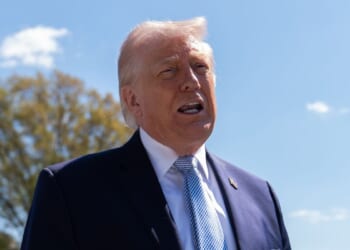
President Trump said reports that the U.S. and Iran had paused negotiations were “false and erroneous,” and reiterated that discussions were continuing despite the confusion.
“The conversations between us have been going on continuously, including four days ago, three days ago, two days ago, one day ago, and today. Where they lead, one never knows, but as I told Iran, ‘It’s time, one way or another, for you to make a Deal. You’ve been doing this for 47 years, and it cannot be allowed to go on any longer!’” he wrote on Truth Social.
Iranian state media reported earlier in the day that the exchange of messages between Iran and the U.S., through Pakistani mediators had been suspended for at least “several days.”
The exchanges aimed to reach what has been described as a preliminary memorandum of understanding, which would lay the groundwork for in-depth discussions on Iran’s nuclear program and support for regional proxy groups.
Citing unnamed senior officials, the semi-official Fars News outlet reported that the suspension was brought on by Tehran’s objection to Israel’s continued assault in southern Lebanon, which they say is a violation of the ceasefire agreement signed with the U.S. in April.
Meanwhile, other state-affiliated outlets reported Tuesday that senior officials are still considering the latest U.S. draft of an MOU, though the details of the preliminary agreement are unclear.
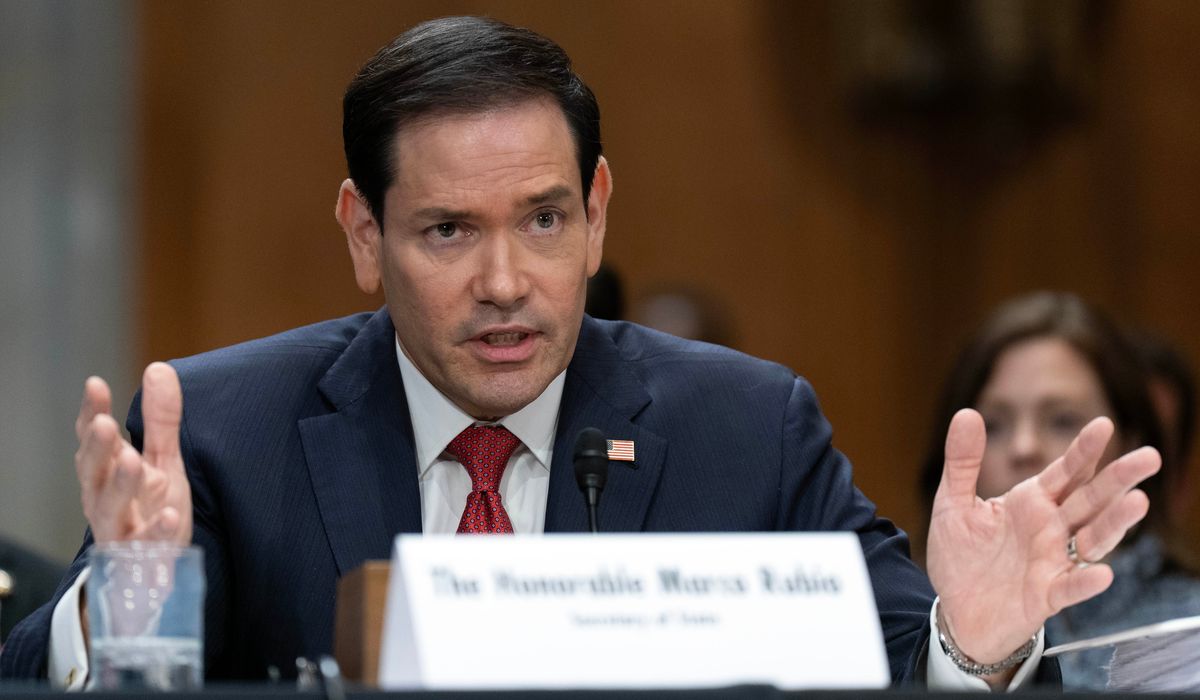
Secretary of State Marco Rubio on Tuesday also disputed that peace talks had been paused, asserting that the U.S. is working diligently on a deal to reopen the Strait of Hormuz and limit Iran’s nuclear program.
He added that Washington’s primary goal in discussions is to get Iran to break its blockade over the strait, which it has maintained for nearly three months.
“They have to announce, very clearly, that the straits are now open. We’re not charging a toll. We will help remove the mines that they put in there, and they will not fire on ships,” Mr. Rubio told members of the Senate Foreign Relations Committee.
He clarified that the U.S. would not offer sanctions relief in exchange for Iran reopening the strait, saying that such discussions had not taken place during negotiations.
Iran has kept the Strait of Hormuz effectively closed to all Western-linked ships in reaction to U.S. and Israeli strikes in late February. At least 20% of the world’s oil passes through the waterway each year, and its closure has dramatically increased oil and gas prices.
The U.S. launched its own counter-blockade of Iranian ports in April, shortly after the U.S.–Iran ceasefire was announced.
U.S. Central Command, which oversees military operations in the Middle East, said Tuesday that it has since redirected 122 commercial vessels.
Mr. Rubio added that only after Iran has agreed to reopen the Strait of Hormuz safely will negotiations move to phase two, which will focus on Iran’s existing stockpiles of highly enriched uranium.
Mr. Rubio admitted that the removal, destruction or dilution of the stockpiles would be complex and take an extended period of time.
But Mr. Rubio added that the involvement of Iran’s supreme leader, Ayatollah Mojtaba Khamenei, has slowed down progress in negotiations.
Mr. Khamenei was reportedly injured in the same strike that killed his father, former Supreme Leader Ali Khamenei, on Feb. 28, and Iran’s negotiators have had to secretly ferry messages back to his secure hiding place before moving forward, according to Mr. Rubio.
“What Araghchi and Ghalibaf take from us, they then have to run back to this council,” Mr. Rubio said.
The confusion comes as peace negotiations face fresh challenges due to Israel’s continued assault in southern Lebanon, which began after Hezbollah, the Iran-backed political party and militia group, launched rockets into Israeli territory in early March.
Iranian officials on Monday reiterated that they would quit negotiations over Israel’s bombardment this week of Beirut, the Lebanese capital. However, Mr. Trump said he reined in Israel and Hezbollah to keep things on track.
Mr. Trump reportedly held a tense phone call with Israel’s Prime Minister Benjamin Netanyahu on Monday, after which he said the Israeli leader had agreed to hold off on an assault on Beirut.
In a separate statement after the call, Mr. Netanyahu said that despite agreeing not to launch a new assault on the Lebanese capital, Israel reserved the right to resume operations if Hezbollah attacks again.
The Israeli military on Tuesday issued fresh evacuation orders for the city of Nabatieh, one of the largest cities in southern Lebanon, signaling that the ongoing bombing campaign would not cease.