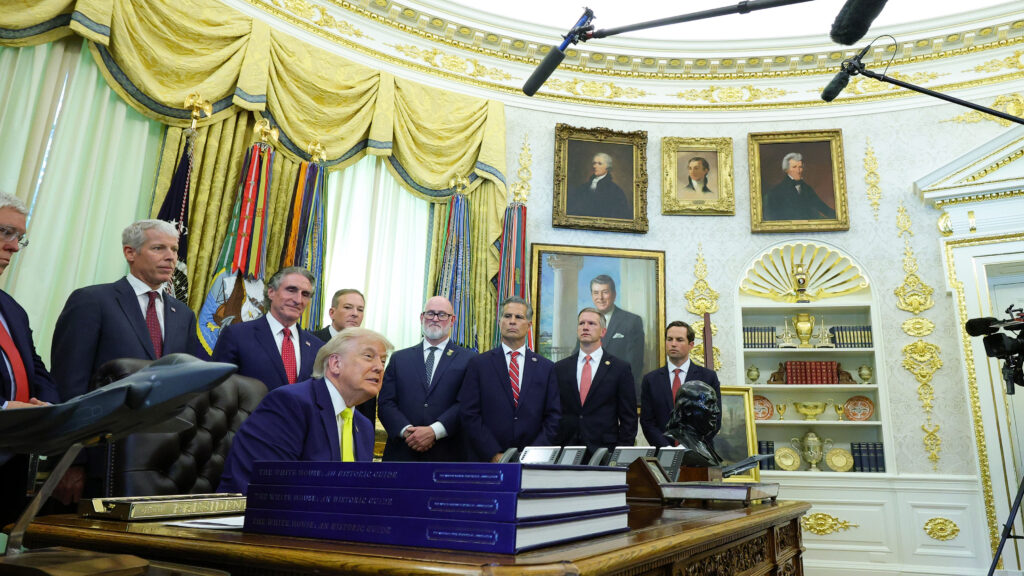
A Trump-appointed judge imposed a temporary restraining order on the White House to restore press credentials for reporters at CNN, MS NOW, and Politico in an order Thursday morning.
U.S. District Judge Timothy Kelly of the District of Columbia found that President Donald Trump’s administration likely violated the due process rights of the reporters largely because they did not receive notice before the credentials were revoked.
The question before the court was not a First Amendment matter, but rather whether news outlets that already had a pass could lose it without due process largely because they did not receive notice beforehand.
“This Temporary Restraining Order shall remain in effect for fourteen days, and the Court will set a schedule for expedited briefing on a motion for a preliminary injunction during that time. The Court will then be able to consider such a motion with additional time and on a fuller record,” the judge wrote.
Trump announced in a Sept. 18 Truth Social post that he was “banning” the three news outlets from the White House for “FAKE NEWS” and what he called “FICTION and LIES.”
Kelly later wrote, “It is further ordered that Defendants (except for President Trump) and their agents, representatives, and all persons or entities acting in concert with them shall immediately return, reinstate, and restore the White House ‘hard pass’ press credentials held by employees of CNN, MS NOW, and POLITICO that were revoked on or about September 18, 2026, until further Order of the Court or the expiration of this Temporary Restraining Order.”
Kelly also ruled in November 2018 that the White House did not provide due process in revoking then-CNN reporter Jim Acosta’s White House pass.
During the Biden administration, the White House purged 442 White House hard passes under new press credential rules. The purge was aimed at Cameroonian journalist Simon Ateba.
Ateba sued to restore his pass. In that case, D.C. District Judge John Bates ruled in favor of the Biden White House, finding that the administration’s rules were uniform and constitutional. Primarily, the rule applied to news outlets that did not have press passes for Capitol Hill, which at the time included the Daily Signal.