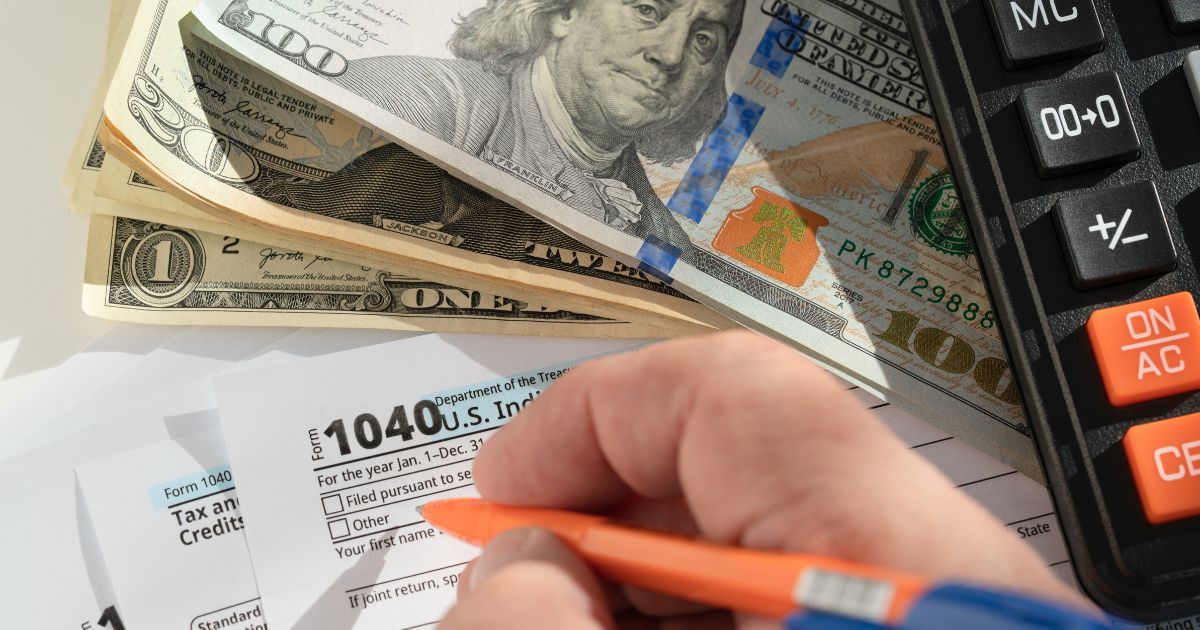
This past Wednesday was April 15 — the notorious day on which most federal income tax returns are due.
But as millions of Americans received tax refunds, some received bigger payouts than others, according to a report from travel and personal finance company Upgraded Points.
The report noted that federal tax refunds have usually ranged between $2,800 and $3,000 over the past 15 years, setting a record by surpassing $3,200 during the 2022 filing season.
But 2026 may have broken that benchmark, since the average refund is expected to be nearly $3,600 following the passage of President Donald Trump’s “Big Beautiful Bill” last summer.
Florida taxpayers are expected to see the largest refunds in the country, with the typical amount surpassing $4,400.
There were 11.1 million federal returns filed in Florida, and 7.5 million are projected to receive a refund.
Texas, which had the second-highest filing volume as more than 13.6 million returns were submitted, was next with a $4,300 average refund.
Residents of Wyoming, Nevada, and Louisiana were also likely to receive higher refunds than the national average — ranging between $4,200 and $4,100.
While many taxpayers look forward to a refund, Upgraded Points noted that a large check is not “necessarily a financial win.”
“A sizable refund often means that too much was withheld from paychecks throughout the year — essentially providing the federal government with an interest-free loan,” the company noted.
“For households aiming to optimize their finances, adjusting tax withholdings to better match actual tax liability can free up money for savings, investments, or everyday expenses throughout the year,” Upgraded Points advised.
Based on preliminary data, Upgraded Points also noted that wealthier taxpayers receive larger average refunds, but are less likely to actually receive a refund in the first place.
While 68 percent of those making between $50,000 and $100,000 can expect an average refund of $3,200, only 35 percent of those making over $200,000 can look for a refund, though they average nearly $18,000.
However, the United States has the most progressive tax system in the developed world, meaning such households pay an outsized share of their income to the federal government.
As of tax year 2022, the top 1 percent of earners were paying 40 percent of all income tax revenue, while the bottom half were paying only 3 percent, according to an analysis from the Tax Foundation.
As noted by the Cato Institute, a libertarian think tank, progressive income tax systems “make each additional hour of work or investment less rewarding, weakening incentives to work longer hours, take entrepreneurial risks, start new ventures, or invest in continuing education.”
“Over time, these effects compound, slowing economic progress and material well-being for everyone,” the organization said.

Advertise with The Western Journal and reach millions of highly engaged readers, while supporting our work. Advertise Today.