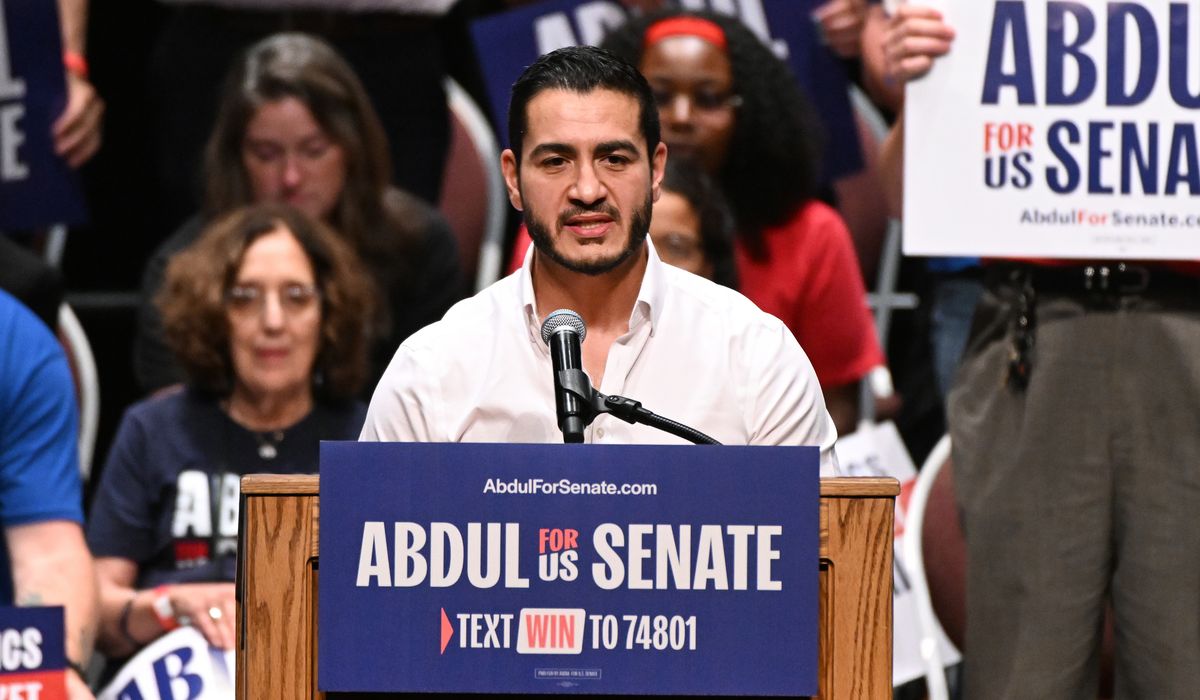
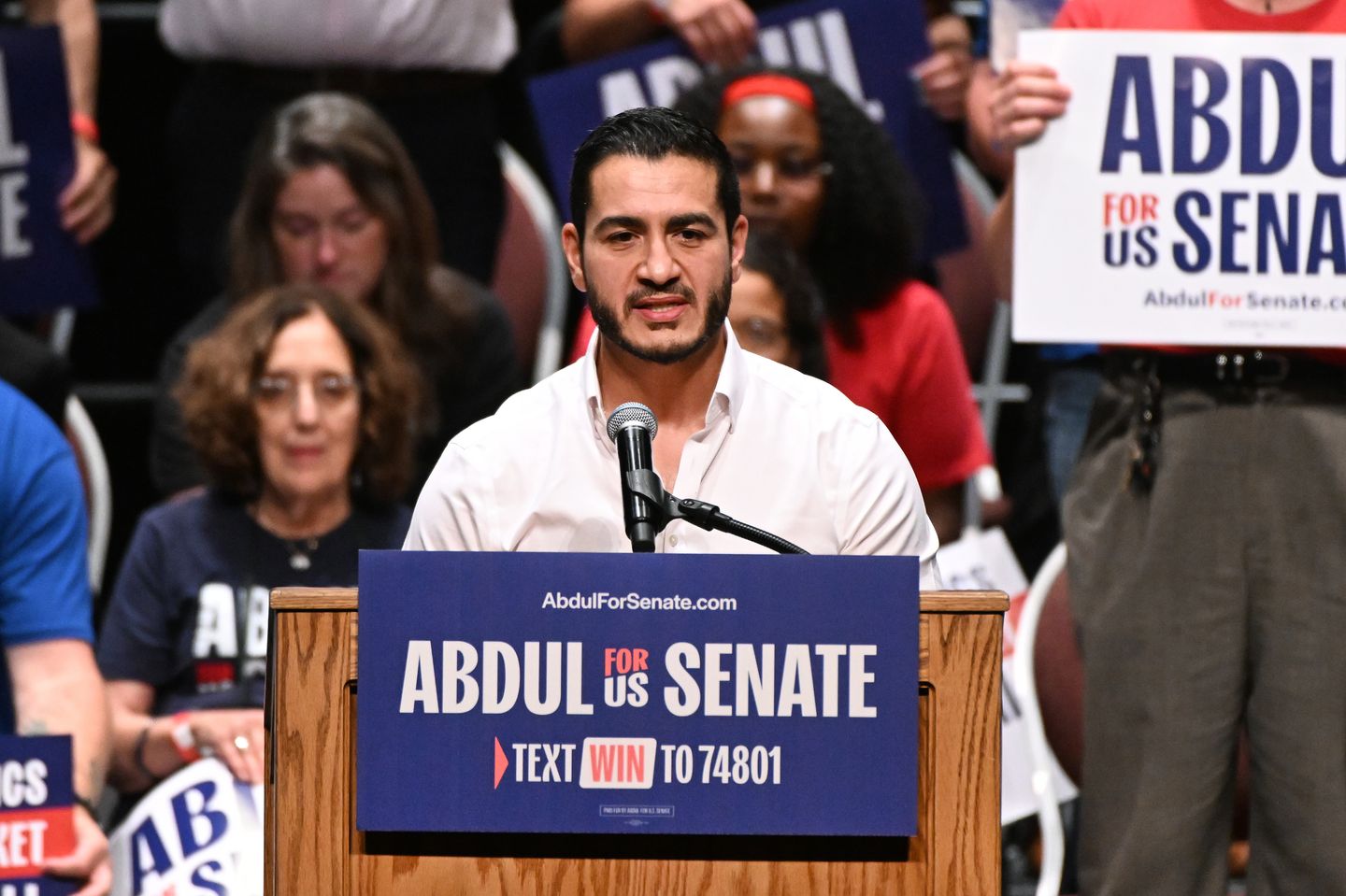
Abdul El-Sayed said Friday that more outside money has been spent against him in Michigan’s Democratic senatorial primary “than ever” has been spent against a candidate, warning that allies of Israel, Big Pharma and AI are trying to buy the Senate seat.
Just over a week before his Aug. 4 primary showdown with Rep. Haley Stevens, Mr. El-Sayed is hammering home his argument that the race is boiling down to the “money versus the many.”
He said more than $58 million has been spent on behalf of Ms. Stevens, with the lion’s share coming from the American Israel Public Affairs Committee, the most powerful pro-Israel lobby in Washington.
“We have withstood more outside spending against us in a Democratic senatorial primary than has ever been spent against any candidate in the history of candidates, and if that doesn’t drive a contrast, I don’t know what does,” Mr. El-Sayed said at the Detroit campaign rally. “These special interests and corporations know exactly what it is that they’re trying to buy. They are trying to buy a vote in the U.S. Senate.”
AIPAC and its affiliated groups have sunk close to $30 million into backing Ms. Stevens — their largest investment in a single race.
AIPAC says its mission “supports pro-Israel Democratic and Republican candidates for Congress” and provides its members a platform to “help pro-Israel candidates defeat anti-Israel challengers.”
Mr. El-Sayed has become symbolic of a growing divide inside the Democratic Party over U.S. support for Israel, a split that has sharpened during the war in Gaza.
There also has been a more gradual shift among the broader electorate. Gallup polling found earlier this year that political independents now say they sympathize more with the Palestinians than the Israelis, breaking with “all prior years.”
It’s a major reason the race between Mr. El-Sayed and Ms. Stevens is widely viewed as the biggest proxy fight left on the primary map between the party’s insurgent left wing and its more centrist forces. And it’s drawing extra attention because it’s unfolding in a perennial battleground state with a large Arab American and Muslim population — a dynamic that could shape the 2028 Democratic presidential primary, where the party’s left wing wants to show its message, including on Israel, resonates beyond deep-blue enclaves.
The winner of the primary will face former Republican Rep. Mike Rogers, and the victor in November will replace retiring Democratic Sen. Gary Peters.
Ms. Stevens has argued her politics are more reflective of Michigan as a whole, making her the most electable Democrat in the race.
Mr. El-Sayed insists that is a bogus argument, saying she would not need so much outside help if it were true. He also says AIPAC, its allies and corporate America will be happy as long as Ms. Stevens or Mr. Rogers wins the seat.
“You know why?” he said Friday. “Because either of them would be a reliable vote on all of their priorities.”
Mr. El-Sayed said Michigan voters deserve a senator who will stop corporate stock buybacks that divert money away from wages and “guarantee its own people healthcare rather than send our money somewhere else to drop bombs on other people and their schools and their infrastructure.”
Ms. Stevens has endorsements from Mr. Peters, Senate Minority Leader Charles E. Schumer of New York and Rep. Jim Clyburn of South Carolina, the longtime Democrat whose support helped revive President Biden’s embattled primary bid in 2016.
Mr. El-Sayed is backed by Sen. Bernard Sanders of Vermont, Rep. Alexandria Ocasio-Cortez of New York and the United Auto Workers.
Polls show the race is tight.