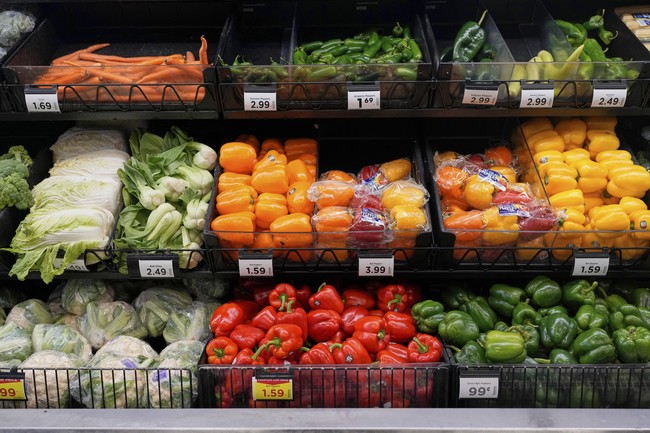
On July 25, 2026, seven Save A Lot stores closed on Chicago’s South and West Sides. These were not ordinary stores. In 2022, the city gave the operator, Yellow Banana, $13.5 million in taxpayer money to renovate and reopen them in neighborhoods labeled “food deserts.” Yellow Banana agreed to keep the stores open for 10 years.
Four years later, the stores are gone. The company faced multiple problems, including the death of its CEO earlier this year and a 26% drop in SNAP and EBT sales that wiped out nearly half its revenue. Whether the city will recover any of the public money is uncertain. Whether “food deserts” are the crisis they are made out to be is also worth questioning.
What is a food desert?
Government agencies and the media usually describe a food desert as a low-income area where residents, especially the elderly, disabled, or those without cars, cannot conveniently reach a full-service grocery store with healthy, fresh food. Specific numbers are rarely mentioned in public discussion.
Officially, the USDA defines a food desert (more precisely, a low-income, low-access census tract) as an area that meets both of the following:
- Low-income: a poverty rate of 20% or higher, or a median family income at or below 80% of the surrounding area’s median. (This means a solidly middle-class neighborhood next to a wealthier one can still be labeled low-income simply because the comparison is relative.)
- Low-access:
- In urban areas, at least 500 people or 33% of the population lives more than one mile from the nearest supermarket, supercenter, or large grocery store.
- In rural areas, the same population thresholds apply, but the distance is 10 miles.
If those distance numbers strike you as low, you are not alone. Most Americans already travel farther than one mile for groceries by choice. The average preferred grocery store sits about 3.8 miles from home. Even lower-income households frequently travel five miles or more. Rural families treat longer drives as routine.
Even if you don’t have a car, this is not an insurmountable problem. When I was raising my two young sons before inexpensive grocery delivery was widely available, I sometimes went without a car. Once a week I loaded the boys into a stroller, walked two miles along a route that had sidewalks only part of the way, bought groceries, packed them into the stroller and my arms, and walked the whole load home. It was hard. It was inconvenient. It was not impossible. This is a life problem, not a food desert.
The official thresholds were chosen for statistical convenience, not because they mark the boundary between hardship and deprivation. They turn ordinary life issues, like distance, weather, kids in tow, or the absence of a car for a stretch of time, into a systemic emergency that must be managed with our tax money. A census tract can be labeled “low-income” even when most of its residents are not poor. A two-mile walk with a stroller and bags of food is demanding, but it is still within the range of what people manage when they must. Hardship is real. Absolute lack of access is a different claim. The current definition confuses the two.
An outdated problem
Since COVID forced the rapid expansion of grocery delivery, the old framing has become even less convincing. Services such as DoorDash, Instacart, Walmart+, and Amazon can put a full cart of groceries on a doorstep in most American cities and many suburbs. What once required a long walk, a bus transfer, or a car that might not be available can now be handled remotely, via a computer or a smartphone. The technology and logistics networks that make this possible scaled dramatically during the pandemic and have not gone away.
Delivery is not free. There is usually a service fee and a tip. Yet those costs are often offset by the convenience, the time saved, and the money not spent on gas or even the necessity of owning a car. Some services already reduce the barrier further: Walmart+, for example, cuts its ~$100 annual membership fee (which provides free delivery among other perks) in half for people on government assistance. For many households, especially those without reliable transportation or with young children, this service is invaluable.
If the real concern is that some people struggle with distance, transportation, or mobility, the practical response is no longer limited to building government-subsidized physical stores. Those projects are capital-intensive, slow, and vulnerable to the same problems that closed the Save A Lot locations in Chicago, including theft. A better approach to addressing easy availability of food is to expand pilot programs that subsidize grocery delivery for eligible low-income residents, rather than continuing to treat new or renovated stores as the default solution for so-called food deserts. Such pilots would be cheaper to test, faster to scale, and far less dependent on a single operator’s survival. They build on systems that already exist instead of requiring cities to underwrite retail operations that may fail in four years instead of ten. And by running pilot programs like this, metrics can be gathered to identify and address other problems, like senior access or theft issues.
Social support should keep people from starving. It does not need to erase ordinary inconvenience, like having to walk a mile. And once groceries can reliably and inexpensively be delivered to your doorstep, the geographic case for the old model weakens considerably.
Editor’s Note: Thanks to President Trump’s leadership and bold policies, America’s economy is back on track.
Help us continue to report on the president’s economic successes and combat the lies of the Democrats. Join PJ Media VIP and use promo code FIGHT to receive 60% off your membership.