Every March and November, Americans dread the notification in their inbox or on the news to “Remember to change your clocks!” Most of us rely on the adage “Fall back in fall—spring forward in spring” to sort out the confusion of which way the clock is moving. But you’d be hard pressed to find anyone who gets excited about the biannual shift.
However, many Americans do love the later hours of sunlight daylight saving time affords. With equal fervor, others, particularly older people, dislike the thought of getting up in the dark that accompanies it.
It is this lack of consensus, as well as significant pushback from health experts, that has stalled the “Sunshine Protection Act” (H.R. 139) in the House Energy and Commerce Committee since the beginning of 2025. The broader effort to pass similar versions of the bill has been ongoing since 2018.
Now, it looks as if the sun will rise again on an amendment to make DST permanent for all states, and without much notice.
The House Committee on Energy and Commerce late Tuesday night announced a markup meeting for Thursday, May 21 at 10 a.m. On the agenda was a proposal to fold the language of the Sunshine Protection Act into the Motor Vehicle Modernization Act (H.R.7389).
This latest attempt would mandate permanent daylight saving time in all states that don’t self-exempt before its effective date, and it would prevent self-exemption after its effective date.
The debate is not whether to stop changing the clocks every March and November. Most people, including members of Congress and Secretary of State Marco Rubio, despise the biannual switch. It’s which “version” of time to keep.
The issue doesn’t fall along traditional party lines. It’s not a right or left issue. It’s more of a “north vs. south” battle.
Both aforementioned politicians who want to “lock the clock” on daylight saving time are from states below the Mason-Dixon line, as are many of the supporters of the act. States such as Florida, South Carolina, and Alabama, feel the warmth of sun for more time every day in the winter months.
Although the disparity is flipped in the summer because of the earth’s tilt, Northern states would really bear the brunt of permanent daylight savings time in winter, with the sun not rising in winter until 9 a.m. in some locations. That’s brutal for school-aged kids and anyone who does not have the luxury of sleeping in until the sun rises, and many Northern state legislatures, including Massachusetts, New York, and Alaska, oppose the change.
This is not merely a geographic issue—it is a fundamental tradeoff between public health and commercial interests.
Congress expanded daylight saving time in two phases: first in 1986, when it moved the start from late April to early April, and again in the Energy Policy Act of 2005, which shifted the schedule beginning in 2007 to run from the second Sunday in March through the first Sunday in November.
These decisions were not based on human health, grassroots demand, or even policy to save energy, as some claim. They were made as concessions to the candy and golf industries.
Both major extensions of daylight-saving time were driven by targeted lobbying. In the mid‑1980s, a coalition of commercial interests—retail and Chamber of Commerce groups, outdoor recreation industries, and tourism businesses—pushed Congress to extend DST beginning earlier in April to make more money during the evening hours.
The 2005 expansion was heavily backed by the golf industry as well as retail and outdoor recreation groups. The National Confectioner’s Association also supported pushing the DST calendar past Halloween because its members stood to benefit from an extra hour of trick-or-treating—and candy consumption.
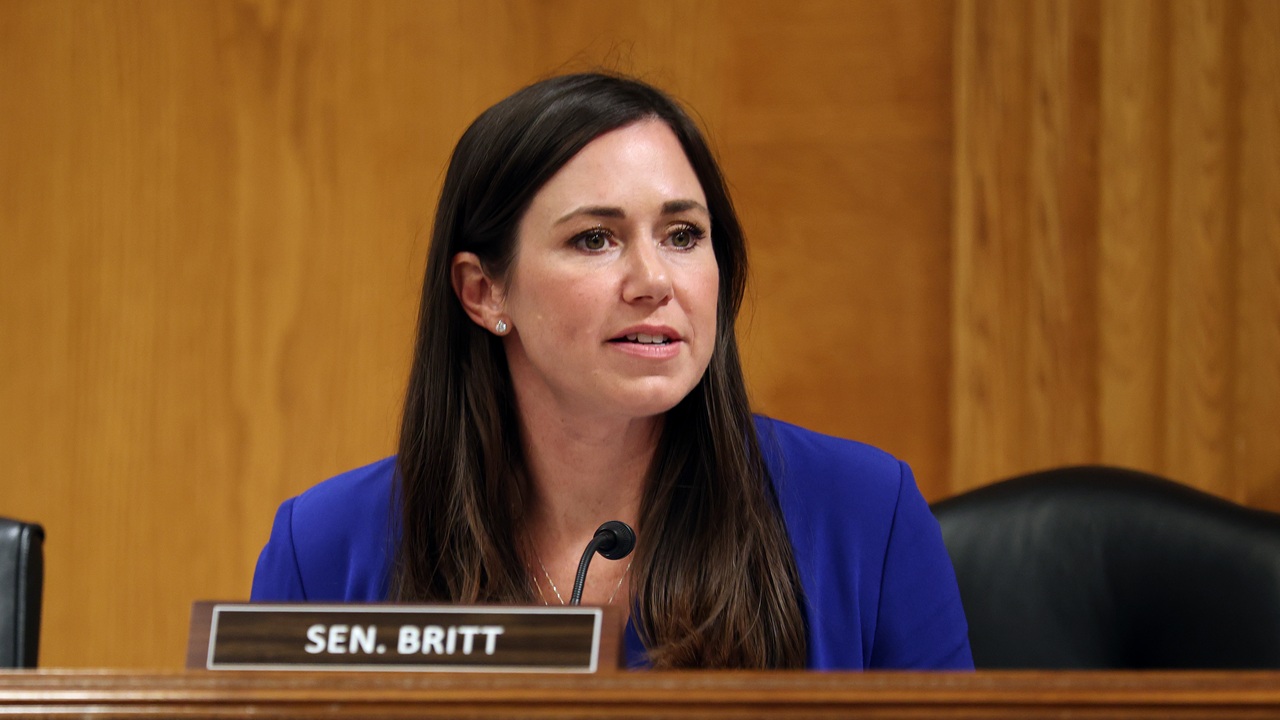
Politicians like Sen. Katie Britt, R-Ala., claim that it is “better for our physical and mental health” to have more sunshine in the later hours. This is consistently proven false by medical experts. In fact, the data points to the exact opposite.
Misalignment of clocks from the sun’s natural position in the sky has been estimated to decrease sleep duration by an average of 19 minutes every night throughout the duration of the DST observation, per a 2019 study. Such misalignment has been found to decrease productivity and earnings up to 4.5%, per a 2015 study. Even worse, this misalignment has also been observed to increase fatal vehicular accidents significantly, by 21.8%, resulting in an average loss of $1.8 billion annually, per a 2022 study.
According to a position statement from the American Academy of Sleep Medicine, permanent standard time should replace daylight savings time due to “evidence [that] supports the distinct benefits of standard time for health and safety, while also underscoring the potential harms that result from seasonal time changes to and from daylight savings time.”
Despite the testimony of experts, many in Congress have unabashedly claimed it is great for communities’ bottom line with “more business” to “boost the economy.” However, one study shows that worker productivity decreases during the transition to daylight savings time. Plus, the MAHA movement has made clear that sacrificing Americans’ health to boost consumption (particularly candy!) and line industry pockets is not a tradeoff politicians should make.
Jay Pea, founder of “Save Standard Time,” a non-profit organization based in Arizona (one of only two states that does not recognize daylight savings time), says standard time is aligned with long-held wisdom.
“When I was a child, my great grandfather, a farmer, taught me to tell time from the sun’s position in the sky,” Pea says. “Standard time approximates solar time, but daylight savings time works against our circadian rhythms and natural health.”
The push to standardize what is not standard—or healthy—is a mistake, particularly for certain geographic areas that will suffer the most. Public policy should reflect the natural order—not manipulate it for profit.