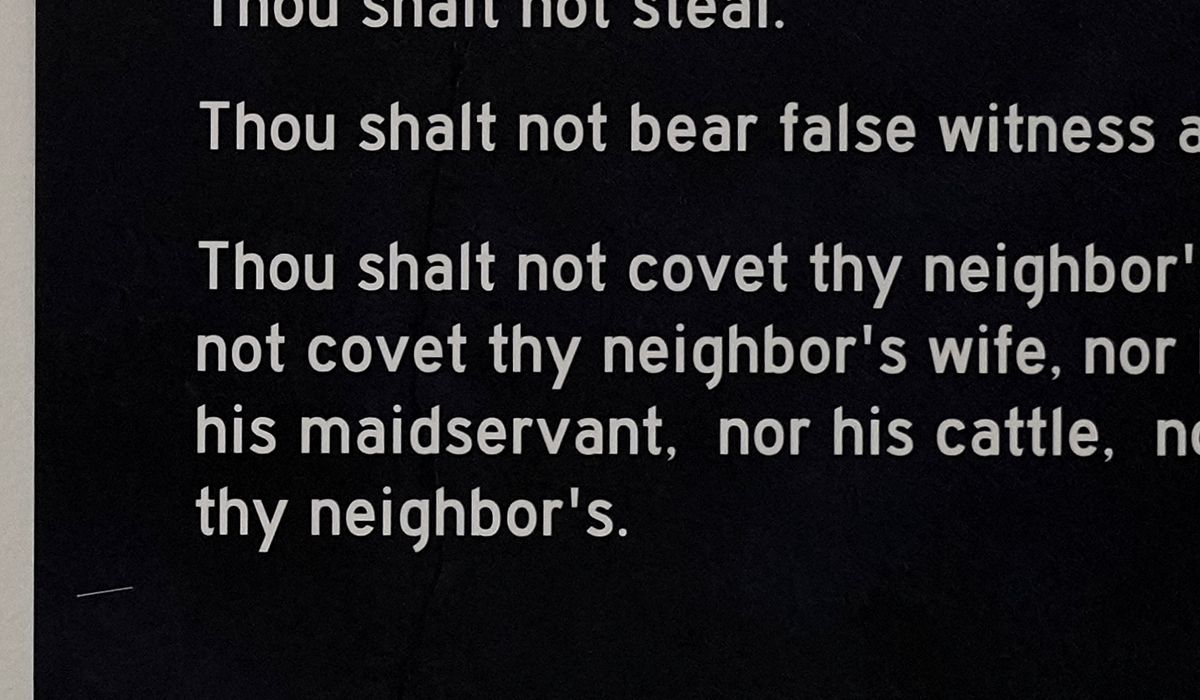
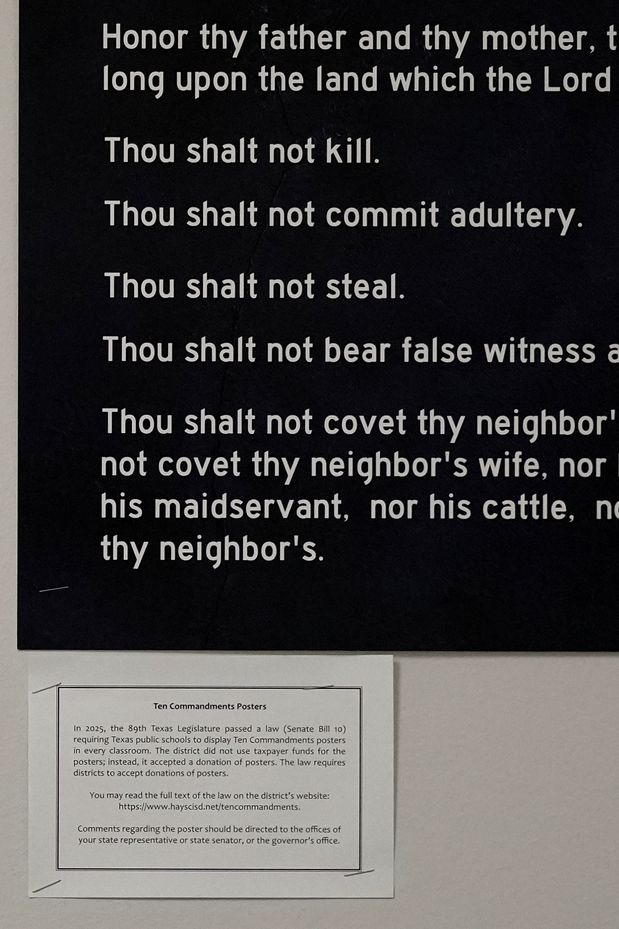
Texas public school classrooms must now display the Ten Commandments — and the federal ruling that makes it happen rewrites the legal playbook that blocked such laws for decades.
The 5th U.S. Circuit Court of Appeals upheld Texas’s law Tuesday in a 9-8 decision, finding it does not violate the Constitution’s Establishment Clause. The ruling junks the old “Lemon test” — a complicated 1971 framework that courts used for years to strike down religion-in-schools laws — in favor of a simpler question: would the Founders have seen this as government-imposed religion?
Judge Stuart Kyle Duncan, a Trump appointee writing for the majority, said the answer is no. “S.B. 10 looks nothing like a historical religious establishment,” Mr. Duncan wrote.
Schools must post the commandments prominently in every classroom. They can use taxpayer funds or accept donations to cover the cost.
Dissenters — including three judges appointed by Republican President George W. Bush — warned the ruling edges toward creating “a religious orthodoxy in the classroom.” The ACLU vowed to appeal to the Supreme Court, pointing to a 1980 high court ruling that struck down a nearly identical Kentucky law that was never officially overturned.
Texas adopted the law last year.
Read more:
• Appeals court upholds state law requiring posting of Ten Commandments in classrooms
This article was constructed with the assistance of artificial intelligence and published by a member of The Washington Times’ AI News Desk team. The contents of this report are based solely on The Washington Times’ original reporting, wire services, and/or other sources cited within the report. For more information, please read our AI policy or contact Steve Fink, Director of Artificial Intelligence, at sfink@washingtontimes.com
The Washington Times AI Ethics Newsroom Committee can be reached at aispotlight@washingtontimes.com.