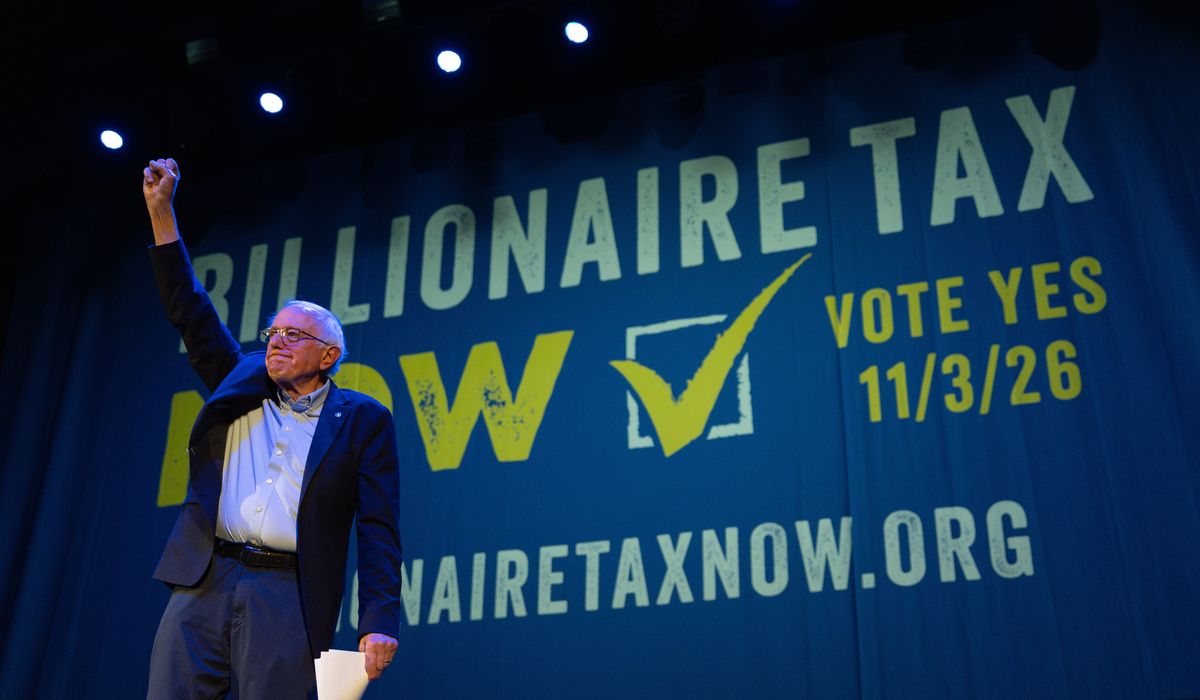
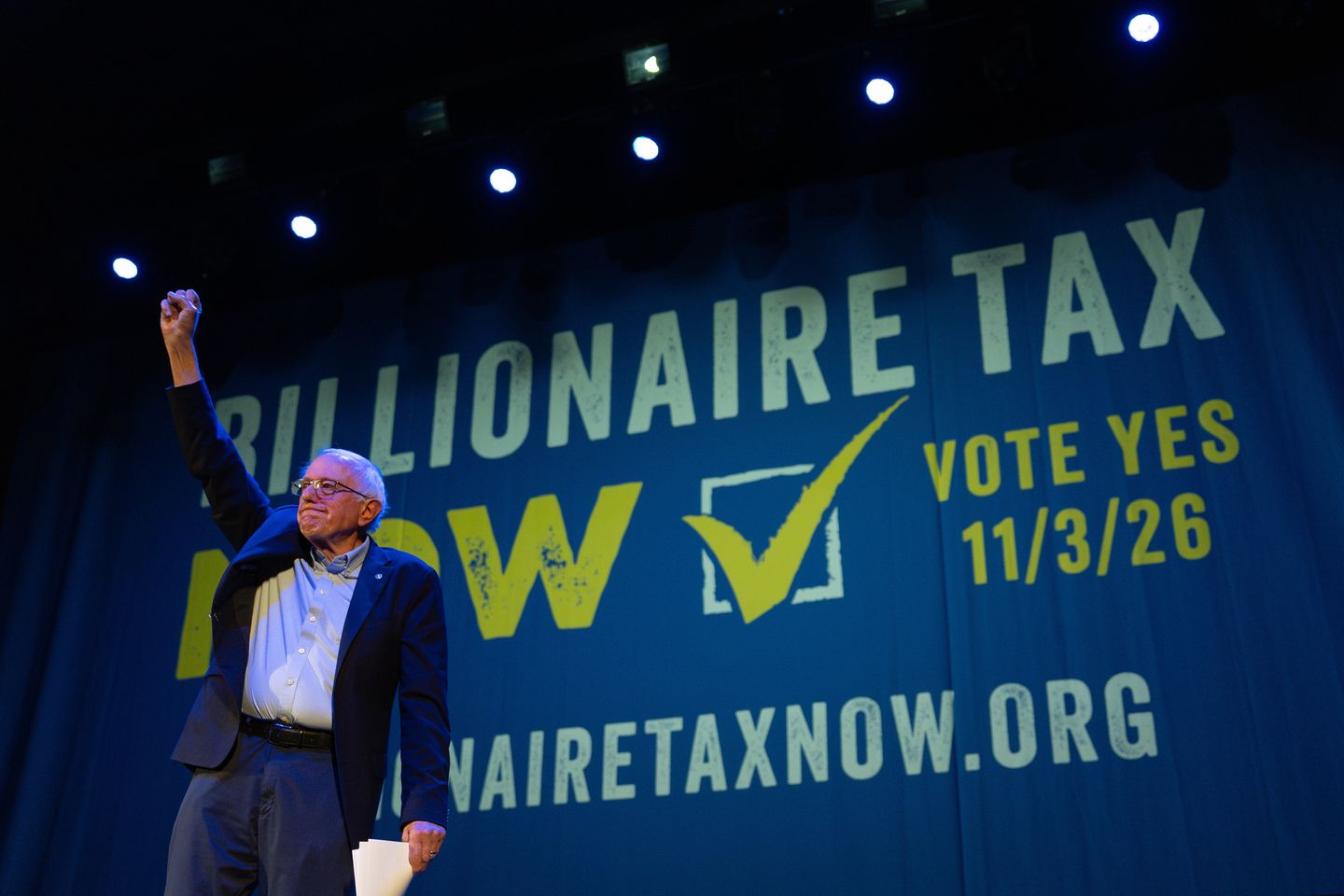
Sen. Bernard Sanders may be 84, but he’s campaigning like a man decades younger as he looks to add to the ranks of “true progressives” willing to embrace his attack on what he sees as the dual-party oligarchy that controls Washington.
The Vermont independent will be in the Midwest next weekend, stumping for Senate candidates Abdul El‑Sayed in Michigan and Lt. Gov. Peggy Flanagan in Minnesota and Brian Poindexter, a union ironworker running for the House in Ohio.
They are part of a new generation of Sanders-aligned contenders — a cohort that also includes Graham Platner in the U.S. Senate race in Maine and some House challengers taking on sitting Democrats — who he hopes will reshape their party.
Over the years, he has been remarkably successful in defining the contours of the political battleground. Medicare for all, his universal health care plan, has become a litmus test for many Democratic voters. Same with his rejection of money from the pro‑Israel American Israel Public Affairs Committee.
He also has recently zeroed in on the impact that artificial intelligence, including data centers, could have on the working class.
And Mr. Sanders, who introduced many average voters to the concept of a democratic socialist politician, has succeeded in getting reinforcements in the likes of Reps. Alexandria Ocasio-Cortez and Ilhan Omar in Congress and Mayor Zohran Mamdani in New York.
“A revolution takes the things that were revolutionary and makes them first part of the discussion and then just part of everyday life,” said Pete D’Alessandro, a longtime Iowa strategist and senior adviser on both Sanders presidential campaigns.
Nina Turner, another top campaign adviser, said Mr. Sanders “shook the foundation of the Democratic Party and caused the Democratic Party itself to question who it is.”
Now he is trying to leave behind an army of officeholders who will keep pushing for the agenda he has spent 40 years building.
“The system is hard, and it takes generations to penetrate it,” Ms. Turner said. “You might not see the deeper-seated visions or policy measures you’re pushing for — but you got to push nevertheless. It’s not over until it’s over.”
David Sirota, who worked in Mr. Sanders’ congressional office in the late 1990s and helped his campaigns, sees echoes of Barry Goldwater, who was crushed in the 1964 election, then watched 16 years later as Ronald Reagan won the White House on a similar conservative agenda.
“You can’t win the policy victories you want without first winning the policy agenda of one of the two parties,” Mr. Sirota said. “Then that party has to win power. That was Goldwater’s theory. I think that’s Bernie’s theory.”
Mr. Sanders’ weekend campaign swings are central to that long game. Candidates who believe a Sanders-style formula got them elected, he argued, are far more likely to govern that way.
“If you think you got to office by campaigning against oligarchy, raising grassroots money, and being a populist, then once you’re in office, you’re going to think, I better keep doing that if I want to get reelected,” Mr. Sirota said.
It’s been just over a decade since Mr. Sanders called for a “political revolution to transform our country economically, politically, socially and environmentally” — a 2016 presidential bid that exposed the gulf between the Democratic establishment and the party’s grassroots base, and created real headaches for Hillary Clinton.
“Not only will I fight to protect the working families of this country, but we’re going to build a movement of millions of Americans who are prepared to stand up and fight back,” he said back then.
His message hasn’t changed much — and his allies say that consistency is the point.
“If you don’t yell loud about it and keep working and organizing, you don’t move the Overton window,” Mr. D’Alessandro said. “And that’s what he’s been doing — every single day.”
He argues that Sanders’ decade of repetition has paid off in ways that are easy to miss: the party’s language has shifted around him. Lines like “the wealthy need to pay their fair share” — once dismissed as fringe class warfare — now appear routinely in Democratic mailers and stump speeches.
“I see establishment Democrats putting out mailers about affordability, about the idea that we need an equitable tax system so the richest Americans pay their fair share,” he said. “Those are common Democrat arguments now. They weren’t 10 years ago.”
Republicans say Democrats will regret letting Mr. Sanders dig his teeth deeper into the party.
“Bernie Sanders has reshaped the Democrat Party in his communist image, pushing it further left and out of step with working Americans,” said RNC spokesperson Kiersten Pels, adding that he has boosted “extremist voices.”
Mr. Sanders has been staunchly loyal to his candidates, even as they have come under fire.
When Mr. Platner faced scrutiny over a Nazi‑related tattoo, Mr. Sanders defended him, saying everyone goes through dark periods in their life and there are more important issues to focus on.
He has taken the same approach in Michigan, where Mr. El‑Sayed has drawn criticism for appearing alongside Hasan Piker, a far‑left streamer whom pro‑Israel groups have accused of antisemitism.
As he approaches his 85th birthday this fall, some wonder who would take over the leadership of his movement.
Ms. Ocasio‑Cortez, an electric figure for the Sanders crowd, is frequently mentioned as a natural heir, though Rep. Ro Khanna, who can profess Sanders‑style economic populism while representing Silicon Valley’s wealthiest district, is also a potential contender.
Mr. Sirota, though, called Mr. Sanders “the Energizer Bunny.”
“I don’t think we’re done with Bernie Sanders at all,” he said.
He suggested that Mr. Sanders is poised to play the role of kingmaker, as the late Sen. Edward M. Kennedy did in the 2008 Democratic presidential primary, delivering a crucial endorsement to Barack Obama at a pivotal moment.
“A well‑timed, truly decisive move — that is still potentially very much in front of us,” Mr. Sirota said.