NEW YORK — Wall Street is recovering some of its sell-off from Friday, as stocks swept up in the artificial-intelligence boom bounce back on Monday. Oil prices, meanwhile, are higher following fighting between Israel and Iran, but they have come off their peaks from overnight.
The S&P 500 rose 0.8%, coming off a drop of 2.6% from Friday that was its worst since October. The Dow Jones Industrial Average was up 150 points, or 0.3%, as of 10:30 a.m. Eastern time, and the Nasdaq composite was 1.3% higher.
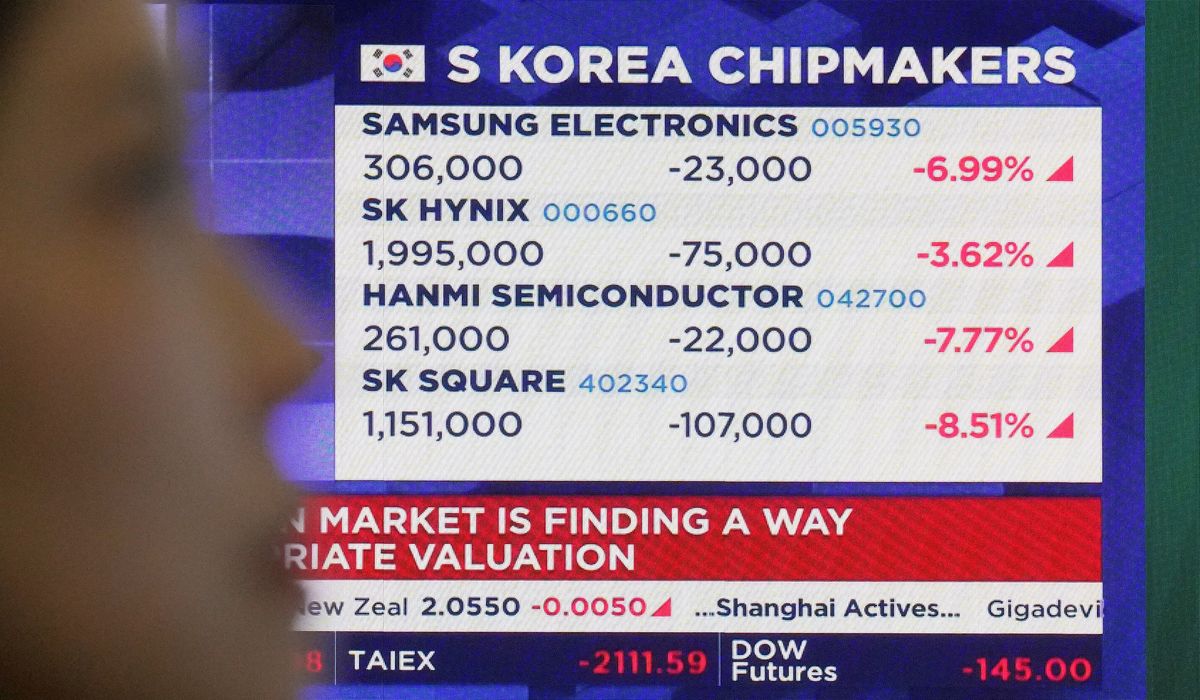
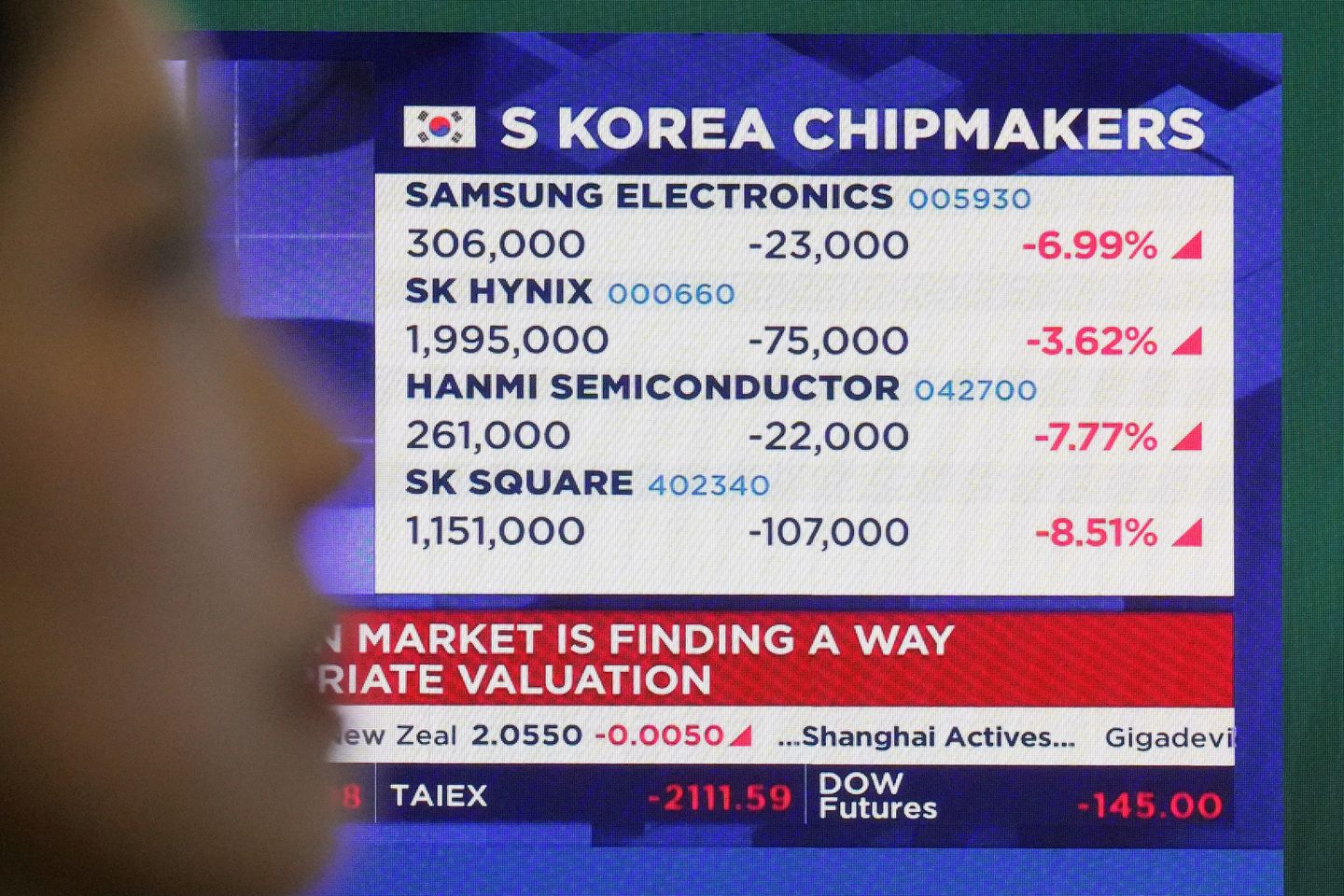
Some of the best performers were companies that sell computer chips, memory and other products fueling the AI boom. They had plunged Friday amid worries that their prices had shot too high due to AI euphoria. Such worries dragged South Korea’s Kospi index down 8.3% early Monday, pummeling tech stocks there like Samsung Electronics and SK Hynix.
But prices recovered as trading moved westward through Europe to New York. Micron Technology rose 8.6% after sliding 13.3% Friday for the largest loss in the S&P 500. That resumed a run where its stock has more than tripled so far in 2026.
Marvell Technology climbed 11.9% in its first trading after S&P Dow Jones Indices said the semiconductor company’s stock has grown enough to join its widely followed S&P 500 index. Marvell’s stock has also more than tripled so far this year, aided by a 32.5% surge in one day last week. That was its best day since it began trading in 2000, and it came after Nvidia’s CEO, Jensen Huang, suggested at a conference in Taiwan that Marvell could be “the next trillion-dollar company.”
That such a comment could add billions of dollars to a company’s value in an instant suggests to critics that AI stocks are running too hot. Chip and memory companies are indeed reaping big growth in revenue and profit because of the AI boom, but their stock prices have been soaring at astounding speeds. A widely followed index of semiconductor stocks surged nearly 85% for the year so far through Thursday, for example.
Now, the question is whether Friday’s drop is the start of a downturn or just a pause that shakes out excessive optimism.
Michael Wilson, a strategist at Morgan Stanley, is relatively optimistic. “Markets rarely move in a straight line at the pace seen since the March lows,” he wrote in a report. “In our view, a correction was inevitable and ultimately healthy if this bull market is going to extend into year-end” and pull the S&P 500 to his baseline target of 8,000. That would be an 8.3% rise from Friday’s close.
Corning climbed 7.6% after Amazon announced a multibillion dollar deal where Corning will produce optical fiber, cable and other products for its data centers across the country.
That helped offset a 0.6% dip for Campbell’s, which reported a stronger profit for the latest quarter than analysts expected but also a worse decline in revenue. The company’s stock is also set to drop out of the S&P 500 index when Marvell Technology’s stock joins it.
In the oil market, prices jumped after Israel and Iran launched strikes against each other, threatening to drag the region back into full-scale war. The price for a barrel of Brent crude oil, the international standard, briefly topped $98 overnight.
But it later eased back after the Iranian military said that it was halting offensive operations. Brent’s price was most recently at $94.29 per barrel, up 1.3% from Friday.
High oil prices caused by the war with Iran have already sent inflation higher, which increases not only bills for households but also yields in the bond market. High yields worldwide recently have threatened to slow economies and undercut prices for stocks and all kinds of other investments.
On Monday, Treasury yields eased a bit following a jump on Friday. The yield on the 10-year Treasury edged down to 4.54% from 4.55%
In stock markets abroad, indexes edged lower Europe following sharp losses in Asia.
Japan’s Nikkei 225 dropped 3.8% after the Japanese government revised the country’s annualized economic growth rate to 1.8% for the first quarter this year, down from an earlier estimate of 2.1%.
Stocks also fell 1.7% in Shanghai and 1.2% in Hong Kong.
___
AP Business Writers Yuri Kageyama and Matt Ott contributed to this report.