Senior U.S. District Judge Emmet Sullivan stepped between President Donald Trump and another election integrity fight Wednesday, blocking the U.S. Postal Service from moving ahead with proposed mail-in ballot safeguards tied to Trump’s March executive order.
The ruling didn’t settle the larger argument over election security; it just froze one of the tools meant to bring ballot mail under tighter review before the 2026 midterms. From Reuters:
Sullivan’s ruling prevented the Postal Service from implementing the proposed regulations, which stemmed from Trump’s March executive order directing the Department of Homeland Security to compile a list of confirmed U.S. citizens eligible to vote in each state and requiring the USPS to only deliver ballots to voters on each state’s approved mail-in ballot list.
In a separate decision on June 25, Boston-based U.S. District Judge Indira Talwani blocked Trump from implementing the entire executive order ahead of the midterms.
The judge sided with a coalition of Democratic-led states in ruling that Trump had exceeded his authority in trying to overhaul procedures for elections, which since the republic’s founding in 1789 have been run by states and local governments.
The Postal Service proposal would’ve required states to provide voter lists and adopt new mail-in procedures before USPS delivered ballots. States that refused could’ve seen ballots left undelivered.
The rule grew from Trump’s March 31 executive order, which directed the DHS, working with the Social Security Administration, to help states verify eligible voters and strengthened mail-in and absentee ballot procedures.
VERIFYING ELIGIBILITY IN FEDERAL ELECTIONS: Today, President Donald J. Trump signed an Executive Order to strengthen election integrity by ordering citizenship verification for Federal elections and modernizing and securing mail-in and absentee ballot procedures through the United States Postal Service (USPS).
- The Order directs the Secretary of Homeland Security, in coordination with the Social Security Administration, to compile and transmit to each State a State Citizenship List of confirmed U.S. citizens who will be 18 or older at the time of the next upcoming Federal election and reside in that State.
- The lists will be updated and transmitted no fewer than 60 days before each regularly scheduled Federal election and individuals and States will be allowed to access, update, or correct records.
- The Order directs the Postmaster General to initiate rulemaking to require all mail-in and absentee ballots transmitted by USPS to be placed in secure ballot envelopes marked as Official Election Mail with unique Intelligent Mail barcodes that facilitate tracking.
- The Order requires the USPS to transmit ballots only to individuals enrolled on a State-specific Mail-in and Absentee Participation List, ensuring that only eligible absentee or mail-in voters receive absentee or mail-in ballots.
Sullivan, who was appointed to the federal bench by President Bill Clinton and now serves as a senior judge on the U.S. District Court for the District of Columbia, said the USPS plan violated the 2021 settlement with the NAACP.
That agreement required the Postal Service to take special steps to move election mail quickly through 2028. The legal problem, for Sullivan, wasn’t Trump’s concern over ballot integrity; it was the Postal Service’s earlier promise to deliver election mail without the new gatekeeping role.
Here is where the country keeps running into the same wall. President Trump tries to drag a shadowed corner of election administration into the light. Democratic officials and their allies use a judge to freeze the move; then Americans are told the real concern isn’t loose systems, late ballots, weak verification, or public doubt.
The real issue is anybody asking why the system keeps resisting a closer look.
Mail-in voting has become one of the most protected shrines in modern Democratic politics. Any effort to tighten it gets branded as suppression before voters can even ask what the rule would do. Requiring lists, barcodes, or confirmed ballot-mail procedures shouldn’t scare a healthy election system.
Clean systems survive inspections.
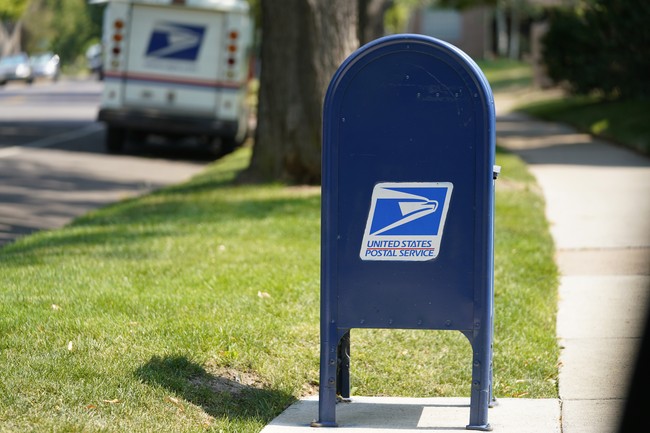
Postmaster General and CEO David Steiner leads the Postal Service, an agency Americans depend on for bills, medicine, letters, packages, and ballots. USPS already handles election mail as a public trust; Trump’s order tried to add another layer of accountability by connecting ballot delivery to state-approved lists and voter eligibility checks.
Critics call it a threat to access, while supporters see a basic question: why should any ballot system fear verification?
The ruling also followed a June 25 decision from U.S. District Judge Indira Talwani of the District of Massachusetts, who blocked key parts of Trump’s election order in a separate challenge brought by Democratic-led states and the District of Columbia.
Two rulings in less than a week tell us plenty about the battlefield. Election integrity fights are no longer just fought in legislatures; they’re routed through friendly courts before voters ever see the rules tested.
America has every right to make voting easy for eligible voters. America also has every right to make cheating hard, mistakes rare, and ballot handling visible enough for ordinary people to trust.
Those goals should live together, and the left treats them like enemies because loose systems help their politics, while scrutiny threatens their habits.
Sullivan’s ruling may stand on a settlement, but the political message is larger. Every time Trump pushes for stronger checks, the same coalition races to court and calls the sunlight dangerous.
The country deserves better than a ballot system defended by panic. If mail-in voting is as secure as Democrats insist, it should welcome verification.
Not fear it.
PJ Media is holding a New America 250 sale! 74% off with the promo code AMERICA250. If you want the stories, context, and sharp analysis legacy outlets keep trying to bury, now’s the time to join us and help keep independent conservative journalism alive.