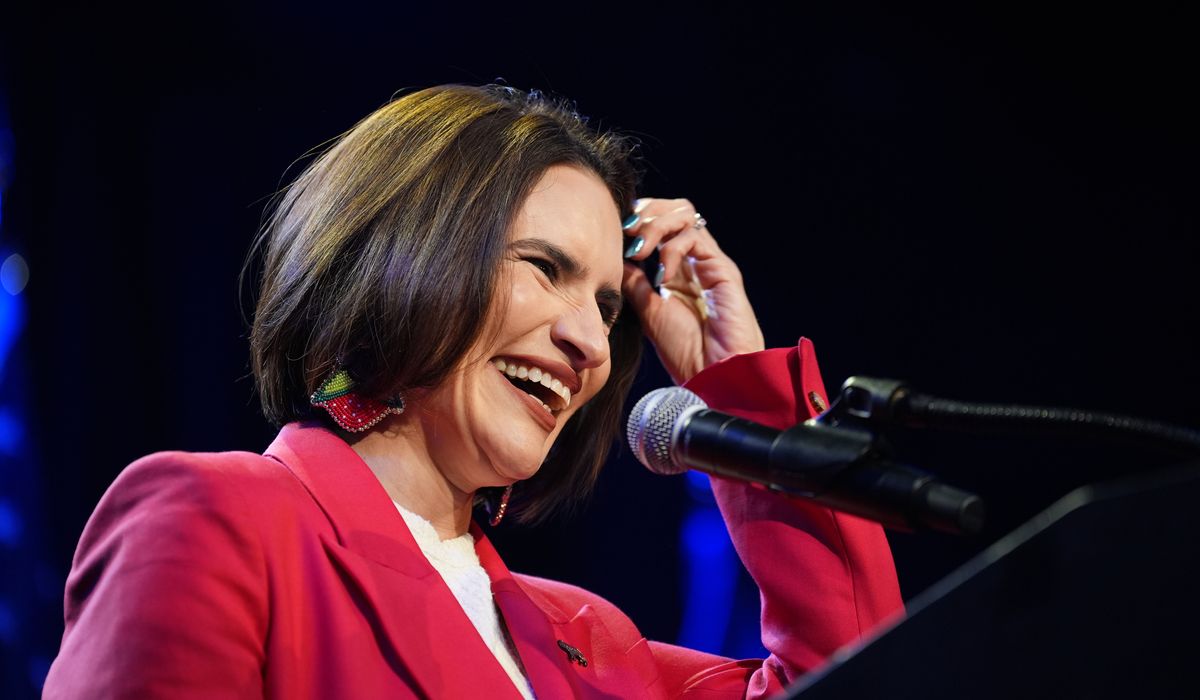
Lt. Gov. Peggy Flanagan easily defeated Rep. Angie Craig in the Minnesota Democratic Senate primary, delivering another win for the insurgent, left wing of the Democratic Party.
But next door in Wisconsin, the marquee Democratic primary for governor remained too close to call early Wednesday.
State Rep. Francesca Hong, a self-described democratic socialist, and Milwaukee County Executive David Crowley were essentially tied in the race for the party nomination.
The winner, which might not be decided for days, will face Rep. Tom Tiffany after he won the GOP nomination with President Trump’s support.
Ms. Flanagan’s victory marks the second win for the party’s left flank in a week, following Abdul El-Sayed’s narrow victory over Rep. Haley Stevens in Michigan’s Senate primary.
“For months now, I’ve been telling you this campaign has been about the many versus the money,” Ms. Flanagan said at her election night party. “Well, guess what? The many just won.”
She added: “You said Minnesota is not for sale, not now, and not ever!”
With 86% of the vote counted, Ms. Flanagan had a 19-point advantage over Ms. Craig — a gap that grew throughout the night after close early returns.
Ms. Flanagan had the support of retiring Sen. Tina Smith, as well as such left-wing icons as Sens. Bernard Sanders of Vermont and Elizabeth Warren of Massachusetts.
She is set to face off against former NFL sideline reporter Michele Tafoya after she easily won the GOP nomination contest.
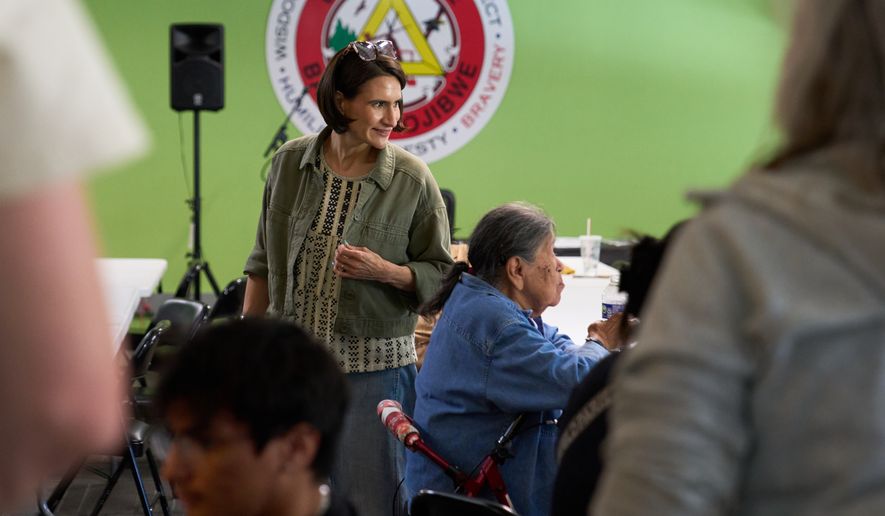
Minnesota Lt. Gov. Peggy Flanagan, a …
more >
But the muddled outcome in Wisconsin complicates any narrative of a liberal wave, underscoring how divided Democrats remain over the party’s direction heading into November.
With 86% of the vote counted, Mr. Crowley held a narrow edge of less than half of a percentage point, or about 2,800 votes.
If the final gap is less than a percentage point, a candidate can request a recount.
In a speech to supporters, Ms. Hong acknolwedged that the result would not be known on this night and looked forward to November in terms that didn’t necessarily assume she would win.
She pledged that her movement’s “fight continues no matter what. Because no matter who wins this primary, we’re going to continue to fight for each other. We are going to collectively reject despair, and we are going to unite.”
The closeness of the count in Wisconsin, a perennial battleground state, underscored how evenly matched — and unpredictable — the Democratic party’s factions have become in this cycle.
The tightness already sharpened doubts about the reliability of political polling, especially after Mr. El‑Sayed’s closer‑than‑expected win in Michigan last week.
Ms. Hong had held double-digit leads in the polling for her race before she became nationally notorious over social-media posts from the COVID era.
The Minnesota gubernatorial primary was far more clear-cut.
Sen. Amy Klobuchar easily secured the Democratic nomination for governor.
Lisa DeMuth, speaker of the Minnesota House, won the Republican gubernatorial nod in a race that also featured Mike Lindell, the MyPillow founder and election conspiracy supporter who had Mr. Trump’s support.
Ms. Klobuchar and Ms. DeMuth are running to replace Gov. Tim Walz.
The Democrat opted against seeking re-election amid a massive welfare fraud scandal and after an uneven performance as the party’s most-recent vice presidential nominee.
In the Democratic Senate race, Ms. Flanagan built her campaign around a sharp contrast with Ms. Craig regarding Mr. Trump and the party establishment.
The issue of immigration loomed large over the race after the Trump administration’s immigration enforcement efforts sparked violent protests and led to the deaths of U.S. citizens Renee Good and Alex Pretti at the feds’ hands.
Ms. Flanagan ran to Ms. Craig’s left on immigration by vowing to dismantle Immigration and Customs Enforcement, while pushing a Medicare for All plan and calling for a halt to offensive weapons sales to Israel.
It echoed the same themes Mr. El-Sayed rode to victory in Michigan, when he campaigned on that same basic portfolio of issues.
Ms. Craig, for her part, leaned on her record of winning tough races in a competitive House district.
She had the backing of national party leaders including House Minority Leader Hakeem Jeffries and former House Speaker Nancy Pelosi, along with Minnesota first lady Gwen Walz and former Transportation Secretary Pete Buttigieg.
The result also lands as a fresh data point in Sen. Chuck Schumer’s fight to keep his grip on Senate Democratic leadership.
Ms. Flanagan ran as a change agent, and said Mr. Schumer must step down from his leadership post.
In Wisconsin, Ms. Hong had led in polling for much of the race on the strength of an energetic grassroots operation and a signature policy proposal — a moratorium on new AI data center construction — that played into a broader populist, economic message.
Mr. Crowley countered that a statewide moratorium would strip communities of the choice to make their own decision.
His own path to the primary was anything but smooth: he suspended his campaign July 8 and endorsed Lt. Gov. Sara Rodriguez.
But he relaunched his bid about 10 days later, on July 18, this time with Gov. Tony Evers’ endorsement, after Ms. Rodriguez abruptly exited the race amid a campaign finance scandal in which her campaign manager was accused of misreporting hundreds of thousands of dollars in her filings.
Mr. Trump had also branded Ms. Hong a “communist” this month over social media posts that, among much else, called for Thanksgiving to be canceled as a disease super-spreader event that celebrated colonialism.
She also advocated for getting rid of the U.S. Senate and defunding the police. She backtracked last week, saying Thanksgiving was her favorite holiday.
Washington Democrats also got a bit of good news from Wisconsin after Rebecca Cooke won the party’s nomination in Wisconsin’s 3rd Congressional District.
Her victory puts their preferred candidate on a collision course with incumbent Republican Rep. Derrick Van Orden in what handicappers rate as a “tossup” race.