There are moments in history that become so infamous they take on a life of their own. Mention the Titanic and people think of hubris. Mention Watergate and they think of political corruption. Mention Tuskegee and most Americans remember one of the darkest chapters in the history of American medicine.
Or at least they think they do.
The Tuskegee Syphilis Study has become shorthand for government betrayal, but the story is often remembered only in broad strokes. It is taught as though it were a terrible anomaly—a relic from another era, committed by people who somehow fell outside the moral boundaries of modern medicine. That version of history is comforting. It allows us to believe the lesson has already been learned.
The historical record tells a more complicated story.
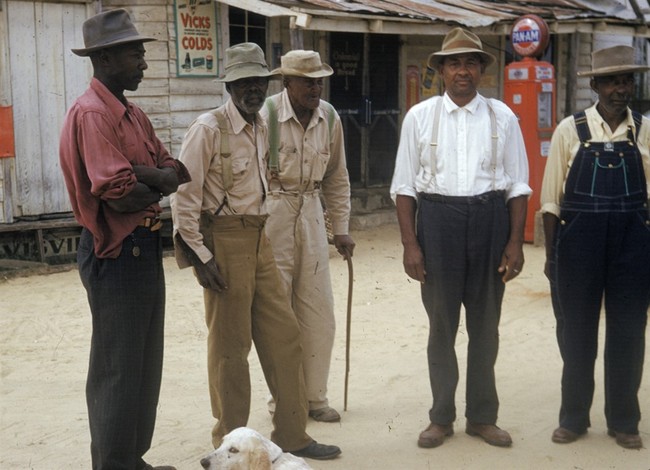
In 1932, the United States Public Health Service began what was officially called the “Tuskegee Study of Untreated Syphilis in the Negro Male.” Six hundred black men from Macon County, Ala., most of them poor sharecroppers, were recruited into the study. Of those, 399 already had syphilis, while 201 did not and served as a comparison group. The men were never given the information that would have allowed them to make an informed decision about their participation. They were told they were being treated for “bad blood,” a vague local term that could describe everything from fatigue to anemia. Many believed they were receiving medical care. In reality, researchers were documenting the natural progression of untreated syphilis.
The study continued for 40 years.
When penicillin emerged as the accepted treatment for syphilis in the 1940s, the men were not systematically offered the cure. Researchers continued to observe the disease instead. As the years passed, some participants suffered blindness, neurological damage, cardiovascular complications, and death. Some wives contracted the infection. Some children were born with congenital syphilis. The study finally ended only after details were leaked to the press in 1972, prompting national outrage and congressional scrutiny. Twenty-five years later, President Bill Clinton formally apologized on behalf of the United States government.
Most Americans know how that story ends.
Far fewer know what comes next.
Because Tuskegee was not the beginning of this history, and it was not the end.
As government archives were opened, classified files were declassified, court records became public, and investigative journalists began digging through forgotten reports, another story slowly emerged. It was not a story about one unethical study or one rogue group of researchers. It was a story about how easily institutions can convince themselves that extraordinary circumstances justify extraordinary departures from ordinary ethics.
That story stretches across continents. It crosses political systems, wars, and generations. It reaches into hospitals, universities, military laboratories, prisons, orphanages, psychiatric institutions, and intelligence agencies.
It is not a conspiracy theory.
It is history.
In Guatemala, between 1946 and 1948, American government researchers deliberately exposed prisoners, psychiatric patients, soldiers, and others to sexually transmitted diseases without meaningful informed consent. The experiments remained largely unknown until 2010, when a historian uncovered government records documenting what had occurred. The United States apologized. No criminal prosecutions followed.
Around the same time, another secret chapter was unfolding in American hospitals. During the earliest years of the atomic age, physicians working with federal researchers injected hospital patients with plutonium to learn how radioactive materials moved through the human body. The patients generally did not know they were part of an experiment. Those injections were only one piece of a much larger network of human radiation experiments involving children, pregnant women, prisoners, military personnel, and cancer patients. Many participants never understood exactly what had been done to them until decades later, when presidential commissions began reviewing records that had remained buried for years.
The Cold War introduced another rationale for secrecy: national security.
The CIA’s MKULTRA program funded experiments involving LSD, hypnosis, sensory deprivation, sleep manipulation, and other techniques intended to better understand interrogation and human behavior. Some participants volunteered. Others did not know they had become research subjects. Much of the documentary record disappeared when agency officials ordered files destroyed in 1973, leaving congressional investigators to reconstruct the program from surviving financial records and scattered correspondence. The destruction of evidence became part of the story itself.
Elsewhere, children with intellectual disabilities at New York’s Willowbrook State School were intentionally exposed to hepatitis as researchers sought to better understand the disease. Elderly patients at the Jewish Chronic Disease Hospital were injected with live cancer cells without being fully informed of the nature of the experiment. At Holmesburg Prison in Philadelphia, incarcerated men participated in decades of pharmaceutical and chemical research under conditions that continue to raise difficult questions about whether consent given inside a prison can ever be entirely free.
Beyond the United States, the historical record becomes no less troubling. British servicemen were exposed to nerve agents at Porton Down. Indigenous children in Canada became subjects of nutritional research while already suffering from malnutrition. French nuclear testing exposed soldiers and civilians to radioactive fallout in Algeria and the South Pacific. Imperial Japan’s Unit 731 conducted biological warfare experiments of staggering brutality during the Second World War, while Nazi physicians carried out atrocities that ultimately led to the Nuremberg Code, establishing voluntary informed consent as one of the defining principles of ethical medical research.
Each case has its own facts. Each deserves to be understood on its own terms. They are not morally or legally identical, and they should not be treated as though they are. But taken together, they reveal something larger than any individual scandal.
They reveal patterns.
The names change. The countries change. The political leaders change. The scientific objectives change. Yet the institutional behavior often looks remarkably familiar. Information is withheld in the belief that the research serves a greater good. Oversight fails or is circumvented. Questions are discouraged until someone outside the institution forces them into public view. Years later, investigations begin. Reports are written. Policies are rewritten. Apologies are issued.
Justice, however, often proves more elusive than acknowledgment.
Outside of exceptional cases such as the prosecution of Nazi physicians after World War II, many of the modern democratic scandals ended not with criminal convictions but with congressional hearings, civil settlements, ethics reforms, compensation programs, or official apologies. Those responses mattered. They changed research standards and strengthened protections for future participants. Yet they also left many victims with an unavoidable question: if profound ethical failures occurred, why were so few decision-makers held personally accountable?
That question has found new life in the years since the COVID-19 pandemic.
The pandemic generated fierce debates over emergency public-health powers, informed consent, transparency, vaccine policy, adverse-event reporting, access to underlying data, and the treatment of dissenting scientific viewpoints. Those debates remain unresolved, and people continue to reach different conclusions about many aspects of the pandemic response. But one thing is beyond dispute: millions of people began revisiting chapters of medical history they had never previously encountered.
They discovered Tuskegee, Guatemala, MKULTRA and Willowbrook. They discovered stories that had been buried in archives, discussed in congressional hearings, or preserved in medical journals but that rarely entered the public consciousness.
History has a way of resurfacing precisely when societies begin asking old questions again.
Perhaps the most enduring lesson is not that governments have sometimes failed, or that scientists have sometimes violated ethical boundaries. Human institutions are capable of extraordinary achievements and extraordinary failures. The same scientific enterprise that eradicates disease also depends on public confidence, and confidence cannot be demanded. It must be earned.
Trust has never been built by asking fewer questions. It has always been strengthened by allowing more of them.
Every safeguard that governs modern medical research, from informed consent to institutional review boards to independent ethics oversight, exists because someone, somewhere, was once told that secrecy was necessary and later discovered it was not.
History’s greatest value is not that it allows us to judge those who came before us. It is that it gives us the humility to recognize that every generation believes it has finally solved the ethical problems of the last one. Nearly every generation has been wrong.
The measure of a free society is not whether it makes mistakes. Every nation does. The measure is whether it welcomes scrutiny while those mistakes can still be corrected, whether it protects the people willing to ask uncomfortable questions, and whether accountability reaches those with power as readily as those without it. When trust is treated as something to be earned rather than assumed, history becomes a teacher. When it is treated as a substitute for transparency, history has a way of becoming prophecy.
Editor’s Note: Help us continue to report the truth about corrupt politicians.
Join PJ Media VIP and use promo code FIGHT to receive 60% off your membership.