Eleven U.S. scientists connected to America’s nuclear and space programs have died or disappeared over the past three years — and the Trump administration still doesn’t have answers.
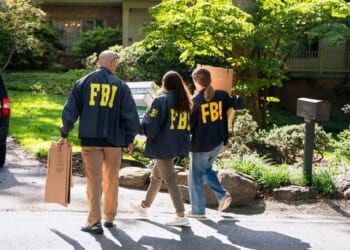
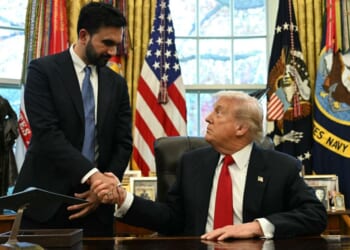
The FBI, Pentagon and Department of Energy are all investigating the cases. President Trump, who told reporters he had just left a meeting on the situation, called it “pretty serious stuff.”
“I hope it’s random,” Mr. Trump said. “Hopefully, coincidence, whatever you want to call it. But some of them were very important people.”
The cases span three years and include two NASA Jet Propulsion Laboratory researchers who died suddenly, a JPL aerospace engineer who vanished on a hike, two Los Alamos National Laboratory employees who disappeared, and a nuclear physicist fatally shot on his front porch by a stranger.
Suspicious details have sharpened concern. One missing woman’s phones were wiped to factory settings, her purse and keys left behind. Another researcher died with no autopsy conducted. A retired Air Force general vanished, his wallet and revolver missing.
Several scientists had ties to UFO and related research, fueling theories that a foreign adversary may be involved.
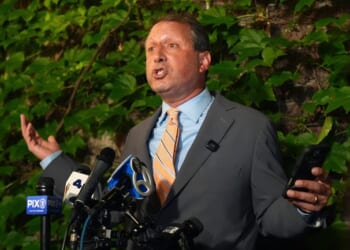
House Oversight and Government Reform Committee Chairman James Comer, Kentucky Republican, admitted he initially thought the matter was “some kind of crazy conspiracy theory” — until he examined the details. His committee has demanded briefings from the Defense and Energy departments, NASA and the FBI by April 27.
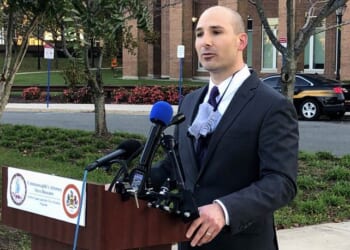
Kenneth Gray, a criminal justice professor at the University of New Haven, cautioned that connecting the cases remains difficult.
“There is enough reason to believe they are connected,” Mr. Gray said, “but it’s hard to draw conclusions.”
White House press secretary Karoline Leavitt vowed on X that “no stone will be unturned.”
Read more:
This article was constructed with the assistance of artificial intelligence and published by a member of The Washington Times’ AI News Desk team. The contents of this report are based solely on The Washington Times’ original reporting, wire services, and/or other sources cited within the report. For more information, please read our AI policy or contact Steve Fink, Director of Artificial Intelligence, at sfink@washingtontimes.com
The Washington Times AI Ethics Newsroom Committee can be reached at aispotlight@washingtontimes.com.