The only question is, ‘Is it in time?’
The warning bells were clanging like crazy back in 2024 when immigrant numbers had reached 20% of the general population, and the gentle rhythms of Scandinavian life seemed to be slipping rapidly away forever.
…After staying out of World War II, Sweden had evolved into a high-performing export-oriented economy, based on a stable parliamentary democracy and social consensus. The country had top-notch health care and education. It enjoyed social and gender equality, had low crime rates and little ethnic conflict. While grounds remain for optimism about some of these indicators, especially in the industrial sector, most have been transformed beyond recognition.
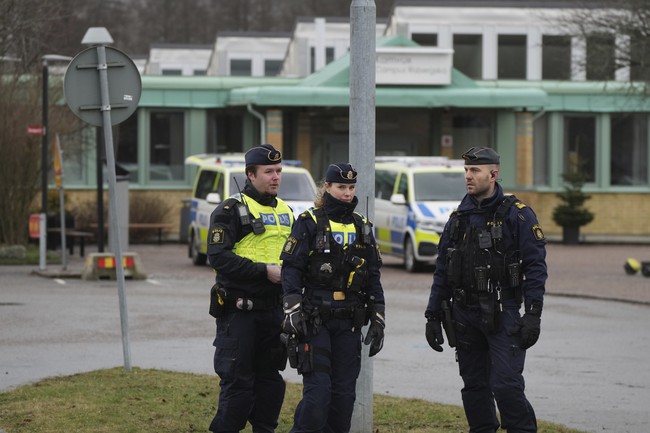
Present-day Sweden carries the dubious distinction of having the highest rate of gangland killings in Europe. It boasts the lowest average age of serious offenders, with children in their low teens being arrested for murder. Increasing segments of suburbs are officially classified as “especially vulnerable areas,” where it is “hard, bordering on impossible” for the police to operate. In layman’s terms, these are no-go zones, where local clans rule and where first responders will not enter without flak jackets and police escort.
An early warning was provided in 2017 when United States President Donald Trump made a quip about rioting in Sweden: “You look at what’s happening last night in Sweden. Sweden, who would believe this!” Who indeed? At the time, such comments were met with disdain and ridicule. Today, it is not so funny anymore.
Sweden has transitioned from being a model of inspiration to becoming a warning example. As gangland violence is spreading across borders, its Scandinavian neighbors experience growing fears of ending up in what is known in Denmark as the “Swedish condition.”
Defying an old taboo, the Swedish government has called on the military to assist the police. It has even come to the point where the governor of the Bank of Sweden, Erik Thedeen, tells the Financial Times that the growing problem of shootings and bombings is so serious that it risks damaging the country’s long-term economic growth. Given the negative impact that a statement of this kind will have on markets, it is not to be taken lightly. Central bank governors weigh their words very carefully.
Swedish people were directed to ‘open their hearts’ to the flood of newcomers and did so in the best tradition of Scandinavian welfare states – that sense of community that permeated their culture.
…That reputation for acceptance and tolerance was manifest in 2014 when asylum-seekers started to arrive en masse in Sweden and elsewhere in Europe from war-torn areas of the Middle East, particularly Syria.
At the time, Sweden’s then-Prime Minister Fredrik Reinfeldt implored citizens to “show tolerance,” telling the public: “I know that this will cause friction. I therefore call on the Swedish people to show patience and open their hearts.”
Within three years of this incredibly destructive social experiment, Sweden was experiencing ‘no-go’ zones and explosions.
Oddly enough, 2017 is also the year my very favorite, oft-referenced Katie Hopkins story about ‘a bomb-in-a-bin’ happened in Sweden.
…I saw it in action when I ran to the scene of an unexploded hand grenade in a bin outside the police station of a no-go area of town, near a mosque. I asked the police who the target was.
They said they didn’t know. I asked the Muslim leader at the mosque. He said he thought it was the police.
Then two women grabbed me and told me not to make this about the mosque, not to make this a Muslim issue. This was about the police — nothing to do with migrants. I wondered if they weren’t missing the point. A bomb in a bin.
So it’s taken barely a decade for the Swedish lifestyle and standard of living to be swallowed by the hostile cultural tsunami that unfettered immigration brought with it.
But it didn’t start in 2014. Sweden’s been swallowing up refugees for humanity’s sake for longer than that. Iraqi refugees who came in during that war are now on the business end of the revamped immigration regulations, and a fierce wind-down of formerly welcoming Swedish asylum rules, and they are in an uproar of anxiety.
Keep in mind that there is no birthright citizenship in Sweden, as there is here.
As early as last year, the Swedish government had begun cracking down on families living in government housing whose kiddies were associated with gang violence in punitive fashion, and police had finally been given ‘stop and search’ powers.
…For many decades, Sweden occupied a near-mythical position in the global imagination: a small Nordic nation where equality was not an aspiration but a fact of life. Women and men lived under some of the most egalitarian conditions in the world, and Sweden has routinely topped the EU’s Gender Equality Index since it was introduced in 2013. It was held up as a model society, politically, socially and culturally, a place where transparency, democracy and universal welfare formed a coherent moral project.
Those who remember the darkest years of the Iraq war will recall how Sweden stood almost alone in Europe. At the height of the crisis, in 2006 and 2007, the country received close to half of all Iraqi asylum applications lodged within the EU, in an extraordinary act of humanitarian openness from a country with a population that was then just under 9 million. This generosity became part of the national brand: Sweden as the moral superpower, the state that opened doors when others slammed theirs shut. Today, Sweden still sells the world the image of a progressive, democratic utopia: flat-packed, minimalist, friction-free. But at home, the story has changed, and laws that once would have been politically unthinkable have become ordinary.
In the new Sweden, a family that lives in public housing risks eviction if one of its children commits a crime. The police have been granted sweeping new powers, including “stop-and-search zones” that allow officers to search anyone, even if they have no demonstrable reason for targeting that individual. Insulting an officer during an arrest can lead to heavy fines or even prison.
At the same time, the government has tightened migration policy to an unprecedented degree. Sweden has slashed its refugee quota from 5,000 people per year to a maximum of 900.
In late December, the government also told asylum seekers to leave and reapply to return later.
The Swedish government has announced tougher immigration proposals to limit the ability of rejected asylum seekers to reapply without first leaving the country.
Under the new rules, rejected asylum seekers must leave Sweden before trying for acceptance again and they will have to wait five years before they can submit a new asylum claim.
Those whose applications are denied will be required to exit Sweden before submitting a new claim or they will not be allowed to make the claim.
The screws have been tightening.
Today, the Swedish government released even stricter controls on its immigrant population by releasing new regulations governing those who would become naturalized Swedish citizens.
First and foremost, starting June 6, applicants will have to demonstrate that they have made the effort to become Swedish, i.e., assimilated, and are already a contributor to Swedish society.
There’s a thought.
🇸🇪🔴Sweden just released tough new rules to obtain citizenship — a major reversal of the country’s history of open borders.
🔴Foreigners must now reside in Sweden for 8 years instead of 5.
🗣️They must speak Swedish.
💶They must be able to support themselves without unemployment… pic.twitter.com/6vq5z7dWDI— Remix News & Views (@RMXnews) May 4, 2026
🗣️They must speak Swedish.
💶They must be able to support themselves without unemployment benefits or subsidized employment.
✅They must fit in with Swedish culture, including an “honest and orderly lifestyle.”
These rules take effect on June 6, says Migration Minister Johan Forssell.
An applicant also has to have behaved themselves and know what being a Swede means. I’m sure they’re hoping this cuts down on the no-go zones somewhat.
Longer residence period – eight years becomes the new main rule instead of five
The Government proposes increasing the main rule for residence when applying for citizenship from five to eight years. Exceptions are proposed for various groups of applicants: Nordic citizens and former Swedish citizens will need to have lived in Sweden for two years, stateless persons for five years, and refugees (those with formal refugee status), as well as those married to or cohabiting with a Swedish citizen (with durability requirements), and young adults under 21 years of age will need a residence period of seven years. For spouses and cohabitants, the relationship must have lasted for at least five years and the Swedish partner must have been a Swedish citizen for at least five years.
Stricter conduct requirements – from “honorable” to “orderly and honorable”
The Government proposes requiring that an applicant has had, and can be expected to have, an orderly and honorable way of life. The current requirement of “honorable conduct” is proposed to be changed in the law to “orderly and honorable conduct.” In practice, this means the assessment should consider not only any crimes committed in Sweden but also indebtedness inside or outside Sweden, involvement in an organization responsible for systematic abuse, or being subject to restraining orders. The Government also believes that the waiting periods — the time after crimes, etc., before citizenship can be granted — should be extended and provides updated guidelines. For children who have reached the age of 15, orderly and honorable conduct will also be required when applying for naturalization (i.e., through application, not by birth or adoption in Sweden).
…Knowledge requirements – citizenship tests in Swedish and civics
The Government also proposes introducing requirements for sufficient knowledge of the Swedish language and Swedish society to obtain citizenship. These requirements will apply to those aged 16 to 67. Knowledge can be demonstrated through a passed result on a special citizenship test. The Swedish test will assess reading and listening comprehension at a functional level, as well as writing and speaking skills at a basic level. The Swedish Council for Higher Education (UHR) has been tasked with developing the test with support from Stockholm University and the University of Gothenburg. The different parts of the test will be rolled out in stages and the full version should be possible to complete by 1 October 2027. Until then, the Government proposes that language skills can be shown through alternative approved Swedish qualifications from grade 9 in Sweden or another Nordic country, upper secondary school, Swedish for Immigrants (SFI), municipal adult education (Komvux), or an approved result on a language test used by universities to assess Swedish proficiency required for higher studies. It will be up to the deciding authority (the Migration Agency) to assess what corresponds to an approved language test.
The civics test will assess basic knowledge of Swedish society and be designed in Swedish at a functional level. The law also provides alternative ways to demonstrate knowledge, such as through a passing grade in civics or social sciences (e.g., from grade 9, upper secondary school, or Komvux). Exemptions may be granted if, due to disability or other personal circumstances, it is not reasonable to require the applicant to demonstrate the knowledge.
There are 100,000 pending applicants that these new rules affect immediately and, naturally, all the future ones going forward. Of course, there is much caterwauling about ‘unfairness’ to be heard, but there are also many, many people wishing the government had gone further.
More than 20 bystanders killed in Sweden gangland shootings in three years, police say
The innocent victims include people hit by stray bullets, cases of a mistaken identity by the shooter and relatives of targeted gang members, according to police statistics.
Twenty-three innocent bystanders have been killed and 30 wounded in gangland shootings in Sweden in the past three years, according to statistics released on Monday that highlighted its battle to rein in violent crime.
The country has struggled for more than a decade to contain gang violence linked primarily to score-settling and battles to control the drug market.
The innocent victims include people hit by stray bullets, cases of a mistaken identity by the shooter and relatives of targeted gang members, according to police statistics.
Alexander Wallenius, operations coordinator at the Swedish police’s department of national operations, told news agency TT that one reason for the number of bystanders injured was that many of the shooters were young.
There wasn’t a single word about deportations, and it is remarkably difficult to find anything about them.
Svenska folket är inte glada bara för att en illegal snylltare utvisas. Det krävs att över en miljon återvänder till sina hemländer i mellanöstern och afrika för att stanna där permanent.
— Dan Park (@Danpark23Park) May 3, 2026
…The Swedish people are not happy just because one illegal slob is deported. It requires that over a million return to their home countries in the Middle East and Africa to stay there permanently.
It doesn’t matter how much Swedish you make these foreigners learn if they’re criminals and you make no effort to remove them.
Start putting them on planes home and see what happens.
Editor’s Note: We voted for mass deportations, not mass amnesty. Help us continue to fight back against those trying to go against the will of the American people.
Join HotAir VIP and use promo code FIGHT to receive 60% off your membership.