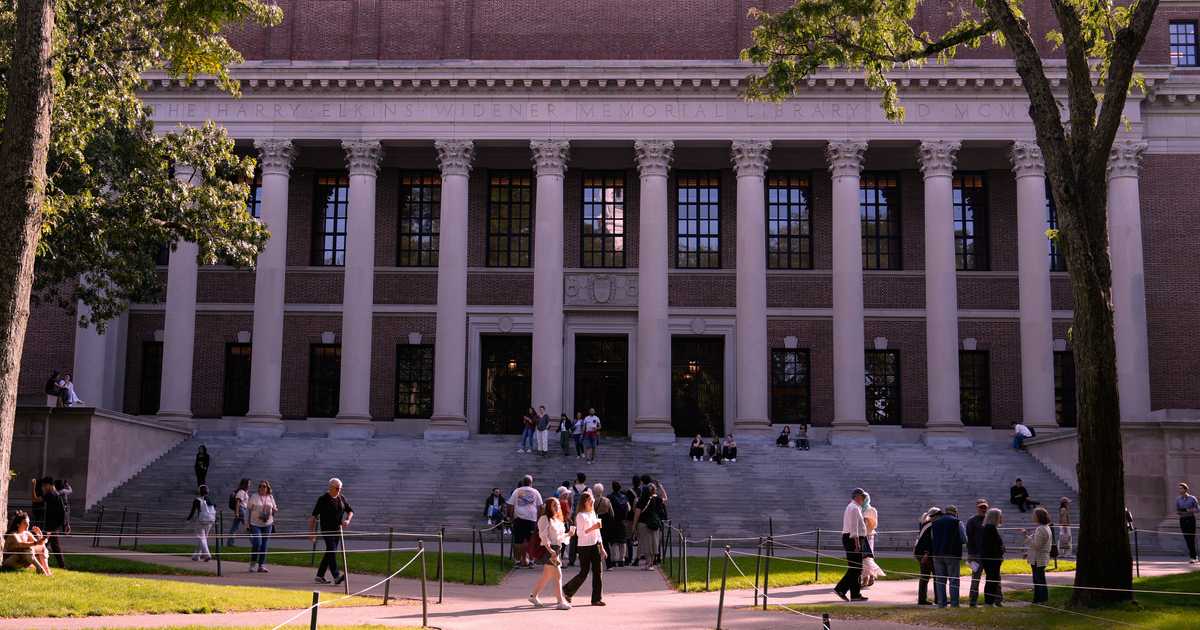
Harvard University says it hires and promotes faculty based on merit and qualifications, not race or sex. The Equal Employment Opportunity Commission has a fairly straightforward response: show us the hiring files.
The EEOC went to federal court in Massachusetts this week seeking enforcement of a subpoena for records tied to an investigation of Harvard’s employment practices. Chair Andrea Lucas filed the underlying charge alleging that, since at least 2018, Harvard may have engaged in systemic discrimination against white, Asian, male, or heterosexual employees, applicants, and participants in training programs.
Harvard has turned over some material. The university has resisted broader requests that include information about faculty applicants dating to 2018, hiring procedures, diversity programs, and records that could show how employment decisions were actually made. The EEOC now wants a judge to make Harvard comply with the subpoena.
Harvard calls the investigation part of a broader government retaliation campaign (of course) and says the agency isn’t acting in good faith. The university has described the demand as overbroad while maintaining that race and sex don’t determine who gets hired or promoted.
From Reuters:
In an exhibit included with the lawsuit, Harvard’s lawyers argued the agency “is not engaged in a good-faith investigation but rather is part of the whole-of-government retaliation against Harvard.”
The university has already secured rulings from other judges rejecting the administration’s efforts to terminate over $2 billion in grants, block the school from hosting international students and sue it for allegedly failing to protect Jewish and Israeli students from harassment.
A federal judge during a Friday hearing appeared skeptical of a separate lawsuit the US Department of Justice filed seeking to force Harvard to turn over records for an investigation into the extent to which it considers race in its student admissions.
There is one point that sounds fair: changing demographics don’t prove discrimination. The EEOC points to Harvard’s own figures showing white men fell from 64% of tenured faculty in 2013 to 56% in 2023. Among tenure-track faculty, their share reportedly fell from 46% to 32% over the same period. Those numbers alone tell us who occupied the jobs, not why individual hiring decisions were made.
Harvard hasn’t exactly hidden its desire to alter the demographic makeup of its faculty. Its own publications have celebrated increased representation of women and minority professors and described efforts to develop recruiting practices aimed at building a more diverse faculty. In 2017, Harvard highlighted training and guidance designed to reduce implicit bias during faculty searches while noting significant demographic changes among new hires.
From the Harvard Gazette:
Harvard University has made steady progress in diversifying its faculty over the past decade, with the percentages of women and minorities who are tenured and tenure-track professors at all-time highs, according to the annual report of the Office of Faculty Development and Diversity.
The proportion of female ladder faculty has increased by 13 percent since 2008, from 26 to 30 percent this year, the report said. In that same period, the proportion of underrepresented minorities has increased by 25 percent, from 7 to almost 9 percent.
“Because tenured faculty tend to stay here a long time, change is necessarily incremental,” said Judith D. Singer, senior vice provost for faculty development and diversity. “However, if you look at how the percentages have changed over the last decade, we can see that our efforts are having a meaningful impact on diversity. Much remains to be done in developing a diverse faculty, but it is worth taking stock of what we have accomplished to date.”
None of those efforts automatically violates federal law. Employers can broadly recruit, expand applicant pools, and attempt to reach candidates they previously overlooked. Title VII becomes relevant when race, sex, or another protected characteristic affects the employment decision itself.
The EEOC, therefore, wants something more useful than a diversity brochure. It wants the applicant information, hiring records, procedures, and other material that could show whether Harvard’s stated commitment to demographic change remained legal outreach or became disparate treatment of applicants because of who they were.
Harvard may ultimately be able to demonstrate that its hires were selected individually on merit, while the investigation may also uncover employment practices that crossed a line.
Neither conclusion can fairly be drawn from a chart showing the racial and sexual composition of the faculty.
But Harvard’s position creates an awkward problem. The university spent years measuring demographic outcomes, publishing those results, and describing greater faculty diversity as an institutional objective.
When the federal agency responsible for enforcing employment discrimination law asks to examine how those outcomes were produced, Harvard says the government is reaching too far.
A federal judge will first decide whether the EEOC gets the records, not whether Harvard discriminated against anybody. If Harvard’s hiring system works exactly as the university says it does, the files could provide the strongest evidence Harvard has.
The EEOC wants to see them.
So far, Harvard would rather argue about the subpoena.
Elite institutions make plenty of promises about fairness, merit, and equal treatment. PJ Media VIP helps us keep following the paper trail when government investigators start asking whether the records match the promises. Join today and get 60% off with promo code FIGHT.