It has been a year since I wrote about the film version of Wicked. I called it a mixed bag because while the art direction and songs were fun, the heavy-handed political message of the movie really sucked.
So when the sequel came out a few months ago, I noticed that reviewers were saying it was even more political than the first one (with fewer good songs to offset the pain) and I stayed home. This just didn’t sound like fun to me:
The ostensibly deep messages and themes come at you like baseballs gone wild in a batting cage. Respect animals! Be wary of doing good deeds just for attention! The pretty blond white girl may always seem to get ahead in the world, but not really! Or, actually, maybe yes! By the end of Wicked: For Good, I couldn’t be sure what, exactly, it was trying to say.
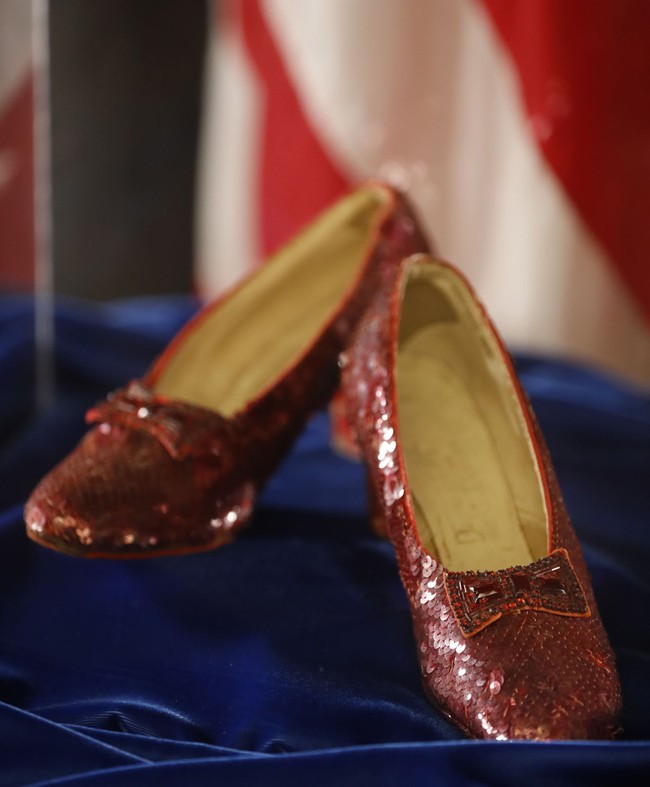
However, over the holidays I did go on a little adventure to a faraway land full of strange creatures and experience yet another version of the Wizard of Oz. I’m talking of course about Wizard of Oz at the Sphere in Las Vegas.
If you’ve somehow missed it, the idea was intriguing. Take a beloved film made in 1939 and reinvent it so it can be shown on the largest screen in the known universe with a resolution that dwarfs even IMAX. And, for fun, add in a bunch of extra touches of realism like howling winds during the tornado scene and falling apples or real bursts of flame in other scenes.
I read a bunch of reviews and some people were really offended by the whole idea of doing this. Some even considered it a crime against art. On the other hand, the people behind this were trying to do something brand new with an old movie. I decided I wanted to judge for myself if it was truly an artistic crime or really the first step toward the future of movie-going on immersive 16K screens.
So I’ll give you the short version first and then flesh it out below. Wizard of Oz at the sphere was a bit of both. There were some moments that worked really well and made the experience worth the price and there were others that didn’t work well at all and made it clear the technology wasn’t quite ready for prime time.
What worked? Expanding the screen to the top of the sky was a pretty amazing gimmick. And it was an impressive way to see a film. Sort of like IMAX only the screen wraps around 180 degrees and over your head as well. It’s impressive tech.
The tornado scene where Dorothy is transported to Oz seems to have been given the most attention. As the winds began on screen, huge fans began blowing paper leaves through the theater. And as the intensity built up, the scale and volume possible in the sphere really did feel like an experience, not just a movie. There was a lot of applause when that scene ended. Kids and adults loved it.
There were other clever things too. When we first arrive in Munchkinland, the screen has been filled with a vast array of towering plants and half a dozen remote controlled butterflies had been launched into the space in front of the screen, lending a 3d effect. Something similar happened later with the flying monkeys.
But there were also some problems. I’m not sure everyone experienced exactly what I did when watching but there were quite a few scenes (5 or 6) where the camera would pan and to my eyes the screen appeared to be strobing a bit as if the frame rate were too low. It was uncomfortable to look at for more than a second or two and I actually closed my eyes a couple times.
Again, maybe this was a me and my brain problem but I’d bet I wasn’t the only person who saw that strobing effect. Curiously, it didn’t happen every time there was a pan, only sometimes. I’m not sure why or what caused it but it was off-putting.
But the worst artifacts came in scenes which were originally close-ups (usually on Dorothy) with other characters in the background out of focus. This works fine on a television but on a screen the size a large building, the out of focus elements seem wrong and out of place given that all the rest of the AI generated elements of Oz were always in sharp focus.
And that brings me to the deeper problems with the film which really were artistic in nature. What the creators have done here is stitch together a very old film with a bunch of new AI renderings to flesh out the size of the image. But the choices they’ve made in the process often seem…poor.
For instance, if you look closely at the backgrounds for the original film’s sets, it’s obvious they were either matte paintings or painted fabrics. Everything was filmed on a stage and the items seen in the distance usually look like faint sketches that suit the fantastical tone of the film. But the AI backgrounds generated for this version of the film look like hyper-real scenes from a video game. You can see every detail of rocky outcroppings covered in trees and vegetation. It really doesn’t match the tone of the original at all. Someone, early on, should have said that level of detail didn’t belong, but apparently no one in charge understood the problem.
And there were more minor issues like this. There were moments I caught some distortions at the edge of the original frame of the film where it didn’t quite blend correctly into the AI added portions. They were brief but hadn’t been caught. Also, because the screen is so large, you can really see the faces on the AI generated townsfolk and some of them looked bored or confused or just vacant.
So is this a crime against art? Well, yes and no.
I really don’t mind the idea of revisiting a beloved film with fresh tech, especially as that film is approaching 90. But what was clearly needed was an actual film director, someone like a George Lucas or James Cameron, who would sit and watch every completed scene and pick apart every flaw and fix it. Wizard of Oz at the sphere didn’t have that person or at least not someone with that eye for detail. So you get a lot of stuff that works and a lot that seems like no one was paying attention. That’s what I mean by a mixed bag. There really are some gems in the bag but also some careless work.
To be fair, they reportedly spent $100 million making this work and I suspect James Cameron wouldn’t have let more than 10% of what they created pass by his filter (that’s probably being very generous). Could they really afford to spend another $200 million to dial it in and make it really work to the visual standards of Avatar? They could but that would make if very difficult to make their money back (tickets were already $100-$300). The whole vision of using AI to do this was to do it cheaply and, sorry, but sometimes cheap isn’t very good.
There have been rumors that other fan favorite films might be on the agenda for a sphere re-creation. Maybe Star Wars or some other big film everyone knows. My take is that as tempting as some of those projects might be, I won’t be seeing another one of these unless they bring in a real director to make sure everything is right before I ever see it.
That said, there were a lot of kids in the audience when I saw it and they really seemed to love it. So I don’t think they failed so much as they cut a few too many corners for the more discerning viewers.
Here’s a little news piece about the project that got me interested when I saw it a few months ago. You never known if something is going to work until you try. I’m glad they tried and I hope they keep trying.
Editor’s Note: Do you enjoy Hot Air’s conservative reporting that takes on the radical left and woke media? Support our work so that we can continue to bring you the truth.
Join Hot Air VIP and use the promo code MERRY74 to receive 74% off your membership.