Tensions between the United States and Iran continue to rise after the violent protests in Iran drew global attention; demonstrators demanding change face harsh repression, with several thousand killed as security forces fire live ammunition into crowds.
Because of those actions, pressure mounted on the U.S. to act. Something unexpected happened just as a conflict seemed imminent: Leaders from Saudi Arabia, Qatar, and Oman applied urgent diplomatic pressure, shifting the moment away from war toward restraint and space for negotiation.
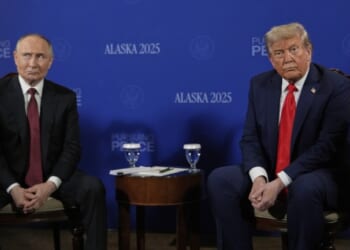
Saudi Arabia, Qatar, and Oman led efforts to talk U.S. President Donald Trump out of an attack on Iran, fearing “grave blowbacks in the region”, a senior Saudi official told AFP on Thursday.
The Gulf trio “led a long, frantic, diplomatic last-minute effort to convince President Trump to give Iran a chance to show good intentions,” the official said on condition of anonymity, adding that dialogue was continuing.
Some personnel were moved out of a major US military base in Qatar on Wednesday, and staff at U.S. missions in Saudi Arabia and Kuwait were warned to exercise caution as fears mounted of a U.S. attack over Iran’s crackdown on protesters.
President Donald Trump listened, while his team recognized that Iranian leaders signaled a stop to executions connected to the protests, encouraging the president to pause plans for military action.
This sequence of events undercuts years of the left’s simplistic portrayal of Trump as being incapable of restraint, a tyrant, or a thug.
Behind the Scenes
Saudi Foreign Minister Faisal bin Fahran followed up the Gulf discussions with phone calls to regional leaders and Tehran.
Despite the calls for calm, Iranian Foreign Minister Abbas Araghchi defended Iran’s actions, proclaiming Iran’s right to defend itself against any military threat.
The U.S. moved personnel from bases in the region as a precaution, moves designed to show there’s no desire for war.
Trump needed convincing that the executions had stopped, and needed to see if Iran’s words equaled their actions.
Obviously, the left won’t deal with the fact that Trump didn’t act on impulse, something they’ve claimed.
Strength Without Flash
The lesson to take away from this moment isn’t that conflict was halted; it’s that influential leaders can choose paths without spilling blood. Diplomacy works quietly, behind closed doors, away from cameras and social media spin.
Gulf states have borne the consequences of Middle Eastern wars for a thousand years. When they spoke with Washington, it wasn’t weakness; it may have been rooted in that experience.
On the other hand, perhaps altruism isn’t the goal. If military action occurs, people will need to get out of the way.
Just a quick question: Is this a diplomatic way of saying they don’t want the refugees?
Known for projecting strength (thank God!), President Trump listened, not ignoring powerful regional allies, but he weighed his options.
Boy, This Will Confuse the Left
Pundits on the left have been using the same script, saying Trump equals chaos and that he is a leader who acts first, thinks second, and only understands force.
Although they continually profess their hatred towards Trump, leftists need dramatic scenes, strikes, speeches, and explosions.
Sometimes, a guardrail stops military action. Leaders actively avoiding conflict save lives and preserve economic stability.
It will be fun to see how the left reacts. Dollars to donuts, Trump’s actions won’t last long as news.
Final Thought
President Trump decided to step back, for now, and revealed a kind of strength the left won’t credit, reminding us that restraint might be the most formidable form of power.
If you value analysis that cuts past hype to real leadership lessons from current events, become a PJ Media VIP and help make honest commentary sustainable.