After the Trump administration wrapped up its first news-packed year of the president’s second term, the White House will gear up for a year of addressing health care costs and other affordability concerns, saving the Republican majority in Congress, and more.
Here are four things to expect from year two of Trump 47:
1. Saving the Republican House Majority
President Donald Trump is ramping up domestic travel ahead of midterms as he sells voters on his affordability accomplishments.
The party of the president in power historically loses midterms, but Trump is fighting hard to keep the Republican majority.
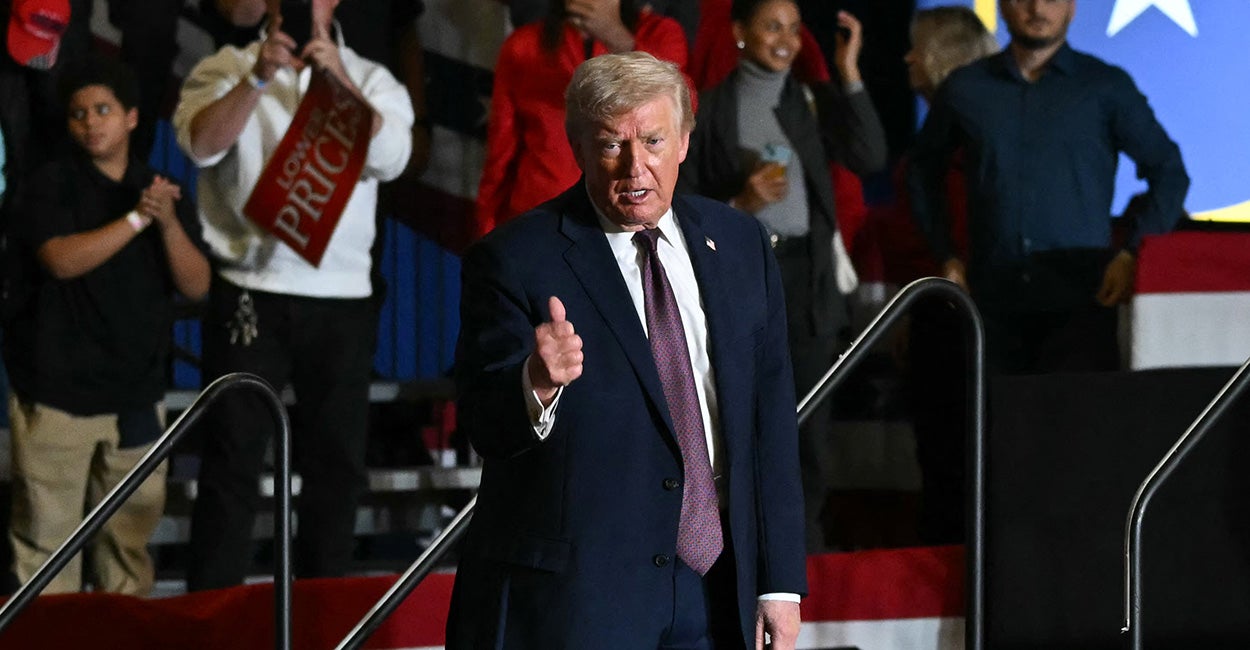
At the end of 2025, he held two rallies in North Carolina where he pitched his efforts to lower prices for Americans. He is expected to hold many more of such rallies in 2026.
Susie Wiles, White House chief of staff, said Trump will be a constant presence on the campaign trail, saying he will “campaign like it’s 2024 again.”
“Typically in the midterms it’s not about who’s sitting at the White House,” Wiles said. “You localize the election, and you keep the federal officials out of it. We’re actually going to turn that on its head and put him on the ballot because so many of those low propensity voters are Trump voters.”
After Republicans’ poor performance in the 2025 off-year elections, deputy chief of staff James Blair said Americans should expect to see the president put a great emphasis on affordability.
“The president is very keyed into what’s going on, and he recognizes, like anybody, that it takes time to do an economic turnaround, but all the fundamentals are there, and I think you’ll see him be very, very focused on prices and cost of living,” Blair told Politico.
Vice President JD Vance is hitting the campaign trail as well, starting with a trip to Lehigh Valley, Pennsylvania, where he related his own low-income childhood to the affordability concerns plaguing Americans.
In addition to campaigning to win seats, Trump has pressured state legislatures to redistrict in order to create more seats for Republicans. Indiana GOP state senators resisted the push, but other states, like Florida, plan to revisit their Congressional maps in 2026.
2. Nominating a Fed Chair
Trump has said he will likely pick the person to replace Jerome Powell as chair of the Federal Reserve Board of Governors early in 2026.
Trump recently told The Wall Street Journal he is favoring selecting either National Economic Council head Kevin Hassett or former Federal Reserve Governor Kevin Warsh.
Trump has said he expects the next Fed chair to cut interest rates. On Dec. 17, the president said he will name someone “who believes in lower interest rates by a lot.”
Previously, Treasury Secretary Scott Bessent said the short list also includes Fed Governor Christopher Waller and Fed Vice Chair of Supervision Michelle Bowman.
3. Ramping Up Deportations
The Department of Homeland Security has hired 11,751 Immigration and Customs Enforcement agents after receiving over 220,000 applications. These agents are expected to ramp up deportations in 2026.
The administration has deported over 600,000 illegal aliens since Trump returned to the White House in January, according to the Department of Homeland Security. An additional 1.9 million have self-deported, but the White House is not satisfied, sources familiar with the situation told The Daily Signal’s Virginia Allen.
“ICE is under major pressure from the White House,” a senior Trump administration official told The Daily Signal, adding, “That’s public information. A bunch of people got transferred and fired … in ICE because they’re not hitting the numbers that they want them to hit.”
The Trump administration is remaining highly focused on deportations headed into 2026 and deportation numbers are expected to grow higher. To this end, a senior Trump administration official says, the media should not be surprised when illegal aliens without a criminal record are also arrested and deported.
The Trump administration “said the ‘worst first,’ not only the worst of the worst,” the senior official noted, adding, “obviously, there’s some other category that’s going to be second and third.”
4. Addressing Health Care Prices
The House and Senate adjourned for the holidays without reaching a consensus on what to do about COVID-19-era Obamacare subsidies expiring on Dec. 31. Congress now has until Jan. 30 to pass an appropriations bill before the government shuts down again.
The House is expected to vote on Jan. 5 after Democrats passed a “discharge petition” to force a vote on a three-year extension of Affordable Care Act subsidies. The House passed Republicans’ health care proposal on Dec. 17, which does not extend ACA subsidies, but the bill is expected to be dead on arrival in the Senate.
Republicans are divided about if, and how, to extend expiring subsidies. Most conservative members have also said they will not vote for a health care deal unless it includes a provision prohibiting Obamacare from continuing funding abortions, an issue which will be a nonstarter for Democrats.
The White House has been letting Congress lead on landing on a health care deal, but if members are unable to come to an agreement, the president will likely have to step in.
So far, he has repeatedly said that he wants to see a plan that puts money in the wallets of Americans, not insurance companies.
“What we do wanna see is the money go to the people, not the insurance companies,” Trump told The Daily Signal.