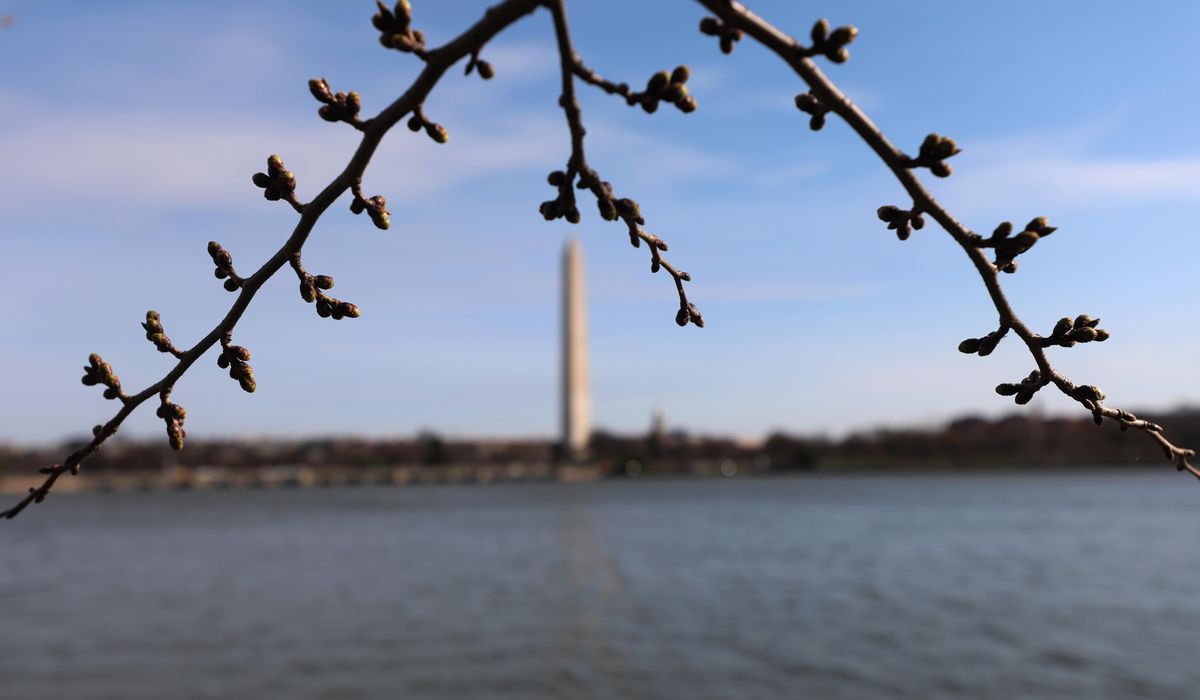
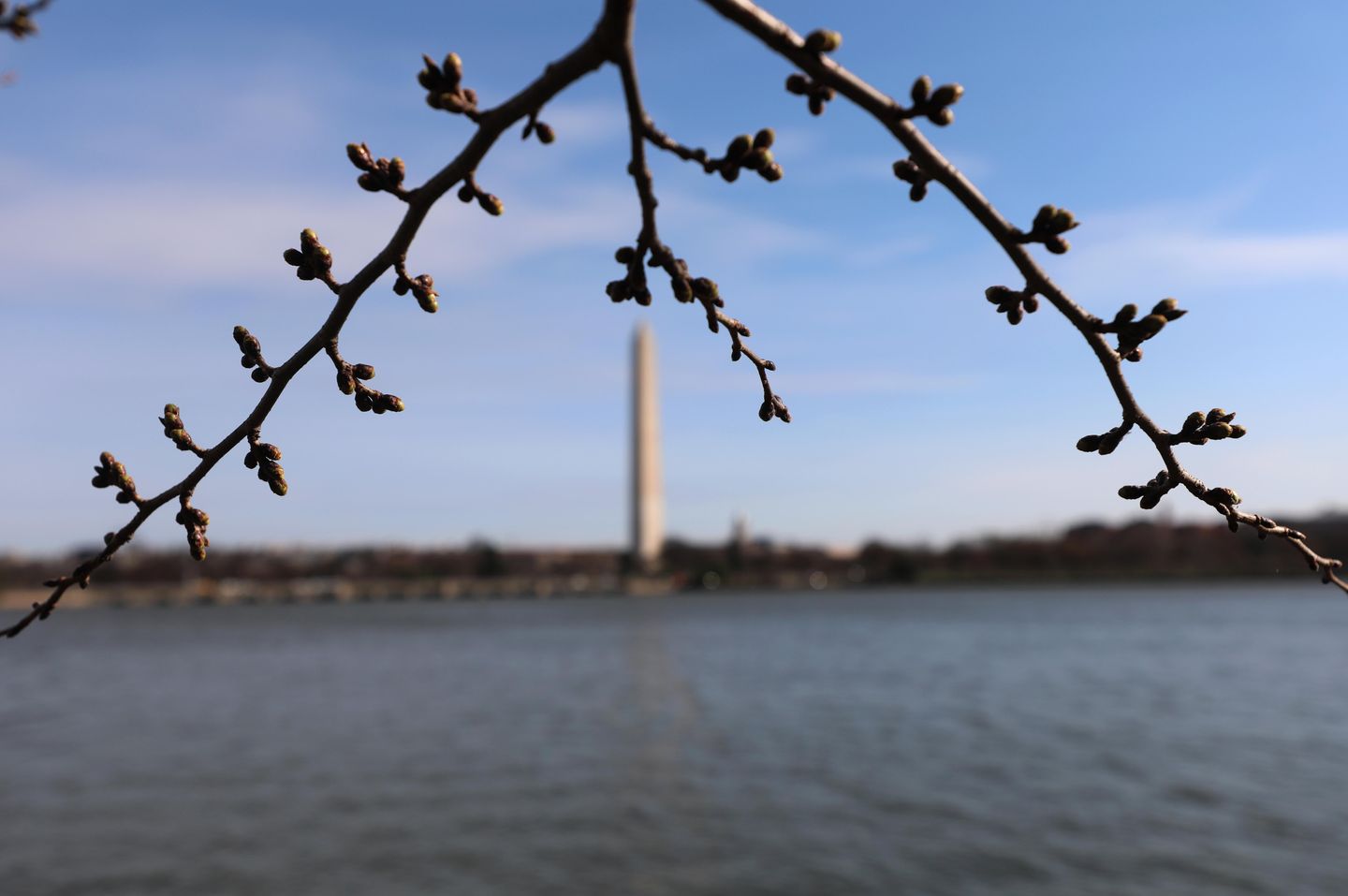
Washington’s most beloved annual spectacle is nearly here. The National Park Service has projected peak bloom for the iconic cherry trees surrounding the Tidal Basin and National Mall between March 22 and April 1, with the clock now ticking down. The trees have reached Stage Five, known as “Puffy White,” the penultimate step before peak bloom, and the NPS expects the final stage to arrive later this week.
Peak bloom is defined as the point when 70% of the Yoshino cherry blossoms are flowering at the Tidal Basin. Once the petals open, the flowers typically remain for a few days, depending on weather. Cool, calm conditions can extend the display, while rain, wind or a late frost can shorten it significantly.
The trees themselves carry more than a century of history. The National Cherry Blossom Festival honors the 1912 gift of 3,000 cherry trees from Tokyo’s Mayor Yukio Ozaki to Washington — a lasting symbol of friendship between the United States and Japan. Some of those original trees are still standing today, more than 100 years later. This year, the tradition deepens: President Trump announced during a dinner with Japanese Prime Minister Sanae Takaichi that the U.S. is honored to receive 250 additional cherry blossom trees from Japan for America’s 250th birthday, to be planted near and around the Washington Monument.
The blooming of the cherry trees coincides this year with the 250th anniversary of American independence, alongside ongoing restoration efforts to strengthen the Tidal Basin seawall — a $113 million project currently finishing eight months ahead of schedule and under budget.
The National Cherry Blossom Festival runs March 20 through April 12 and features dozens of events. Highlights include the Blossom Kite Festival, a Pink Tie Party featuring cocktails and food from local restaurants, and the National Cherry Blossom Festival Parade along Constitution Avenue.
For those ready to head out, several vantage points stand above the rest.
The Tidal Basin remains the undisputed centerpiece of the season. Its 3-mile path offers sweeping views of the blossoms with landmarks including the Jefferson Memorial, the MLK Memorial, the FDR Memorial and the Washington Monument visible in the background. The marble steps of the Jefferson Memorial provide what many photographers consider the most panoramic vantage point, with the Basin in the foreground and the Washington Monument rising in the distance.
Those looking to escape the thickest crowds have solid options. Kenilworth Park and Aquatic Gardens offers a variety of trails to take in the cherry blossoms in an area less frequented by tourists. Hains Point, surrounded by trees in bloom with views of the Potomac River, is a serene alternative whether visitors are biking in the early morning or picnicking in the afternoon. East Potomac Park is another option, where cherry blossom trees line the trails and visitors can explore on foot, bike or scooter, with a 19-hole golf course and driving range on site for those who want to extend the outing.
The U.S. National Arboretum offers yet another quieter setting, with trails and gardens where cherry blossom trees provide a stunning backdrop. Back on the Mall, the grounds of the U.S. Capitol burst with Weeping Cherry trees, pink magnolias and bright yellow forsythia bushes each spring.
Visitors planning their trip should move quickly. Peak bloom typically lasts only several days, and historically has arrived as early as March 15, in 1990, and as late as April 18, in 1958. Real-time bloom updates are available through the National Park Service. And one reminder from the NPS before heading out: Picking the cherry blossoms is against the law.
This article was constructed with the assistance of artificial intelligence and published by a member of The Washington Times’ AI News Desk team. The contents of this report are based solely on The Washington Times’ original reporting, wire services, and/or other sources cited within the report. For more information, please read our AI policy AI policy or contact Steve Fink, Director of Artificial Intelligence, at sfink@washingtontimes.com
The Washington Times AI Ethics Newsroom Committee can be reached at aispotlight@washingtontimes.com.