Virginia Democrats have spent months warning that families are stretched thin, talking about grocery bills, rent hikes, rising insurance costs, and the squeeze on working parents. Affordability has been the theme and relief the promise.
Then they decided to vote and nearly triple their pay.
Members of the Virginia General Assembly currently receive a base salary of $18,000 per year. The approved change increases that figure to $57,000, a more than 300% jump. Democratic lawmakers supported the increase, arguing that legislative work has become closer to a full-time job and that higher pay could allow more working-class candidates to serve.
On paper, the explanation sounds practical, almost thoughtful. In reality, however, the optics are breathtaking.
Virginians don’t get to vote themselves raises when eggs spike, or property taxes climb, small business owners don’t convene a special session to triple their income when inflation hits. Teachers, deputies, and mechanics don’t pass a resolution and watch their salary multiply overnight. Instead, they cut back on spending, wait, then adjust.
Republicans were quick to criticize the final budget, with the Virginia Senate Minority Caucus saying in a statement that “teachers got a 3% raise, but Democrats give themselves 300%.” The actual increase would be closer to 178%, though one could say the new salary would be 300% of the original.
“The affordability hoax just gets worse and worse,” the caucus said, adding that the chamber’s majority killed a repeal of the car tax — something GOP gubernatorial nominee Winsome Sears ran on — while increasing the state budget by $1 billion overall.
Sen. Mark Obenshain, R-Rockingham, told WVTF it is the “wrong time” to address lawmaker pay.
Meanwhile, in Richmond, affordability talk continued right up until the moment the compensation vote passed.
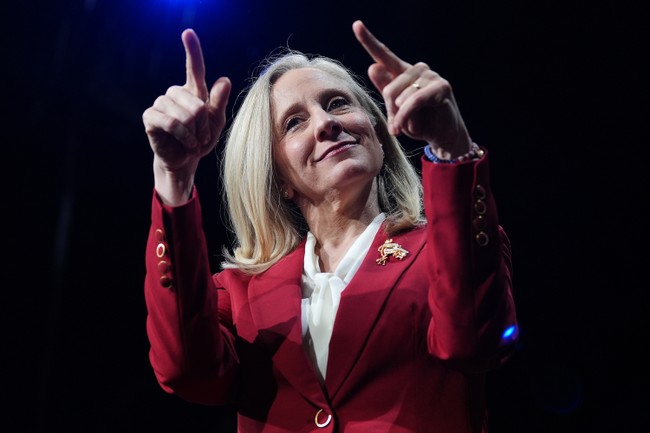
Gov. Abigail Spanberger (D) took office in January, giving Democrats the Ability to drive the legislative agenda. In that context, approving such an enormous pay increase for lawmakers doesn’t look like divided government; it looks coordinated.
She couldn’t make it far in her term without blaming President Donald Trump.
Virginia’s legislature — the oldest continuous legislative body in the New World — has been making laws since its inception as the House of Burgesses in Colonial Williamsburg, where Spanberger gave the Democratic Party’s State of the Union response.
In her speech, she claimed President Donald Trump is the one “enriching himself, his family and his friends” and said Republicans are the ones “making your life more expensive.”
Supporters in the state say Virginia’s legislative pay ranks low compared to other states, arguing that higher compensation reduces reliance on outside income and broadens the pool of candidates.
That’s the official line.
Here’s the political reality.
When lawmakers approve a raise of that size during a debate over affordability, voters notice. Confidence in leadership weakens when elected officials appear insulated from the pressures they claim to face. It’s not about whether legislators deserve fair compensation; it’s about timing and scale.
A pay increase from $18,000 to $57,000 isn’t a cost-of-living adjustment; it’s a leap.
Democrats say they’re fighting for working families, while many Virginians are fighting to keep up with the bills: It’s a contrast that writes itself.
Maybe lawmakers truly believe the raise strengthens democracy and view it as a necessary reform. But when the same voices warn that households are hurting, then approve a dramatic boost to their own income?
It’s definitely not a good look.
Affordability sounds different when you’re voting on someone else’s paycheck. It sounds even different when you’re voting on your own.
Virginians tighten their budgets every day without participating in a floor debate.
Alas, Richmond found a faster solution.
Want more sharp analysis like this? Become a PJ Media VIP member today and get 60% off with promo code FIGHT.