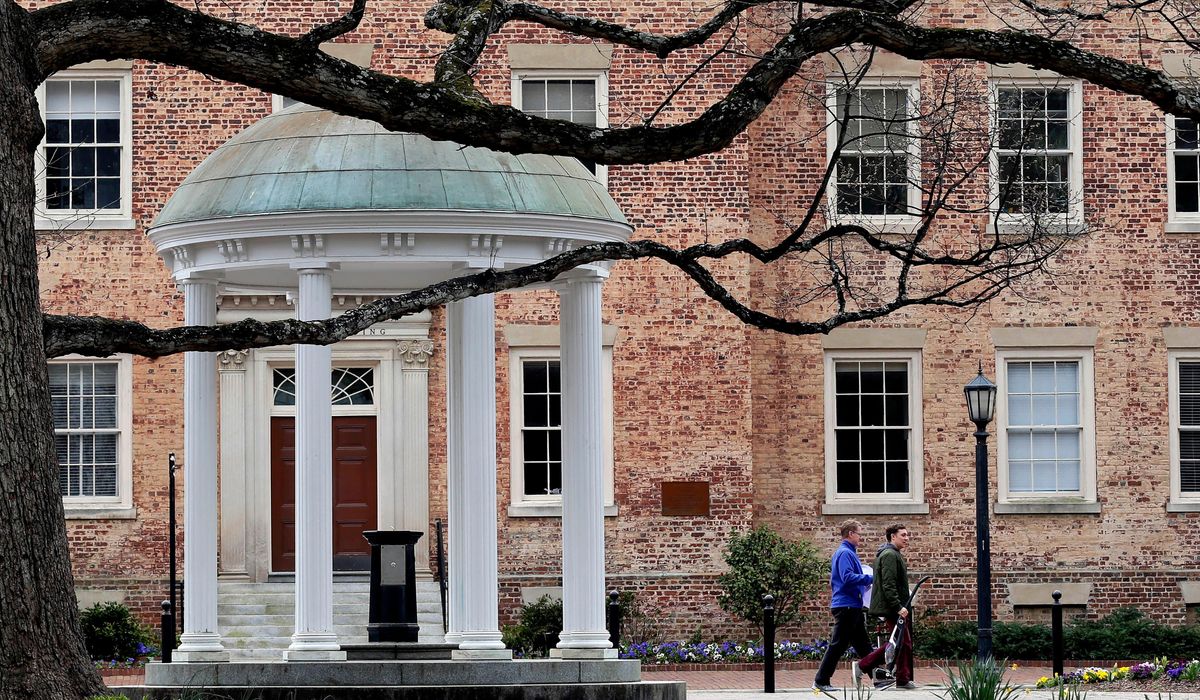
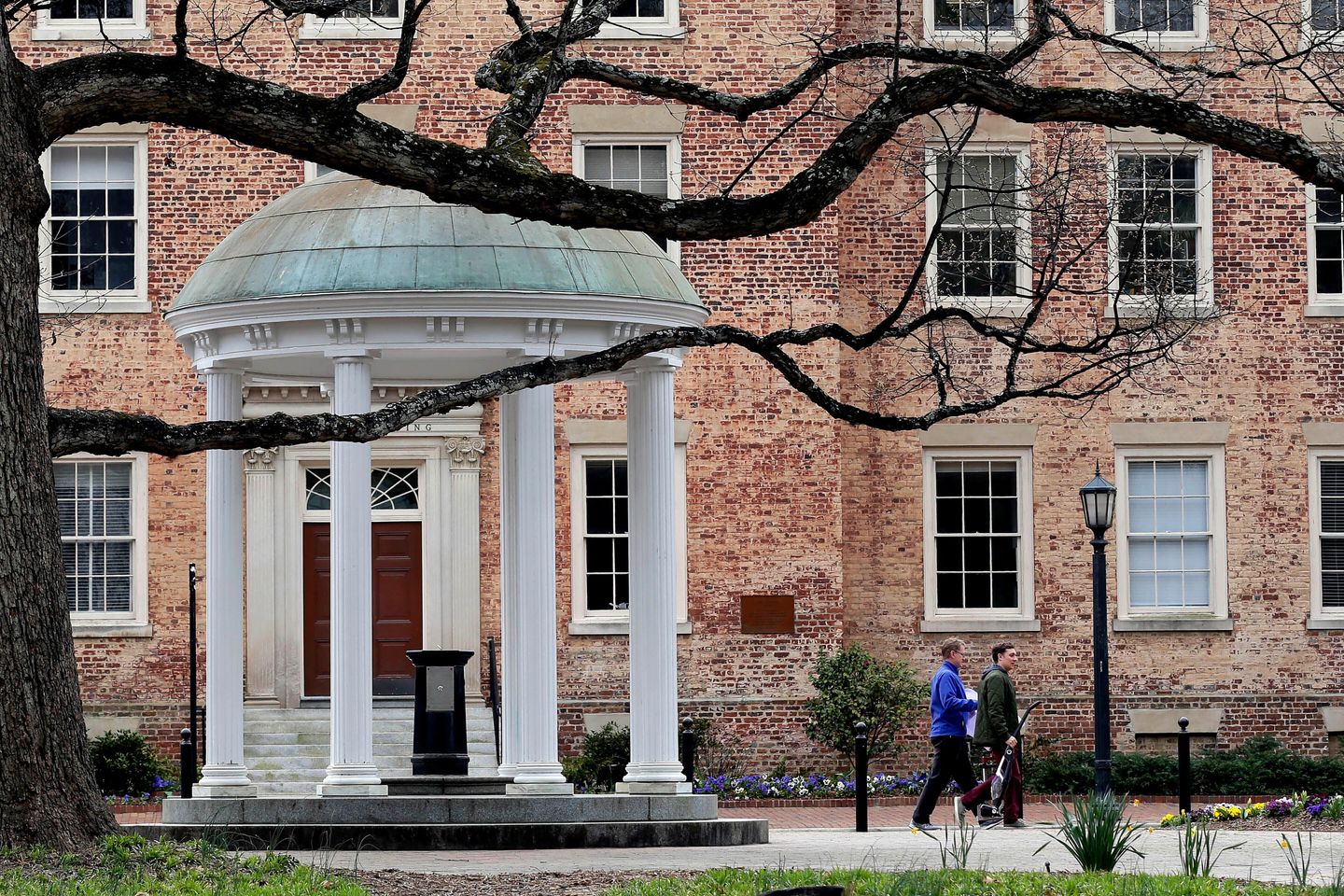
The University of North Carolina System is requiring professors to post all syllabuses in an online, searchable database, responding to a growing conservative push for transparency about gender and race coursework at public universities.
President Peter Hans wrote in a Thursday column for Raleigh’s News & Observer that his state system was implementing the policy change to address “concerns about value and a perception that some colleges and universities have drifted from their core mission.”
“Public university syllabi should be public records, and that will be the official policy of the UNC System,” wrote Mr. Hans, a former Republican political consultant.
He pledged to do everything possible “to safeguard faculty and staff who may be subject to threats or intimidation” after publishing their grading systems, reading lists and teaching goals.
Mr. Hans added in the article that “online vitriol” directed at public figures nationwide “hasn’t been good for the tenor of our public life, and it certainly hasn’t been good for the culture of free inquiry on college campuses.”
A petition against the change from the North Carolina Conference of the American Association of University Professors had over 2,400 signatures as of Friday afternoon. It noted that the policy follows similar changes in Florida, Texas and Georgia.
“This move would endanger students and instructors by inviting political actors to attack the free inquiry on our campuses,” stated the petition, which the faculty union planned to deliver to Mr. Hans on Friday.
Nir Kshetri, a business management professor at the University of North Carolina at Greensboro, warned that such policy changes that come “primarily as a response to political pressure” could chill academic freedom.
“Faculty may feel compelled to sanitize or standardize their syllabi,” Mr. Kshetri said Friday in an email. “A healthier approach is to ensure syllabi are accessible to students and internal stakeholders while protecting faculty from politically motivated surveillance.”
The UNC System has not yet published the new policy.
In a statement emailed Friday to The Washington Times, UNC-Chapel Hill Chancellor Lee H. Roberts said the change will reverse his flagship campus’ stance of “declining to release syllabi without the instructor’s permission on the grounds that they constitute the intellectual property of the instructor.”
He said the new policy includes “a carve-out for materials that are subject to copyright and reflect the faculty member’s original scholarly work” and standardizes disparate practices across the system’s 17 campuses.
“We will, of course, adhere to System policy,” Mr. Roberts said. “This decision does not alter our commitment to academic freedom, which remains a foundational principle of Carolina’s academic pursuits.”
The Daily Tar Heel publicized a leaked draft of the policy on Wednesday. It indicated that the university plans to publish an online searchable database of syllabuses starting in fall 2026.
Regan Butler, editor of the student paper, noted in a Thursday article that the draft also classifies faculty course descriptions as “works made for hire,” superseding federal copyright laws.
She said this interpretation follows a North Carolina law “that any records made ‘in connection with the transaction of public business’ are subject to release as public records.”
Some higher education insiders reached for comment said the draft policy could expose faculty who teach race and gender courses to death threats and property damage.
“UNC is making it easier to target professors like myself,” said Omekongo Dibinga, a professor of intercultural communications affiliated with American University’s Antiracist Research and Policy Center.
“Professors are not accountable to the public for their syllabi,” he added. “They are accountable to the universities where they work who read and approve syllabi.”
Jonathan Zimmerman, a professor of the history of education at the University of Pennsylvania, said course descriptions should be available for only the right reasons.
“Syllabi should be public so students can make informed choices about which courses to take,” Mr. Zimmerman said. “But the syllabi should not become a way for universities to restrain academic freedom or for citizens to harass and threaten faculty members.”
Proponents insist that public syllabus databases help hold professors accountable for violating state laws and Trump administration policies banning taxpayer funds for left-leaning racism and transgender identity lessons.
“It is easy to imagine faculty members bridling at having to post [syllabus] publicly,” said Peter Wood, president of the conservative National Association of Scholars. “But there is no valid reason why a public university professor should withhold the list of books, articles and other readings assigned in a course.”