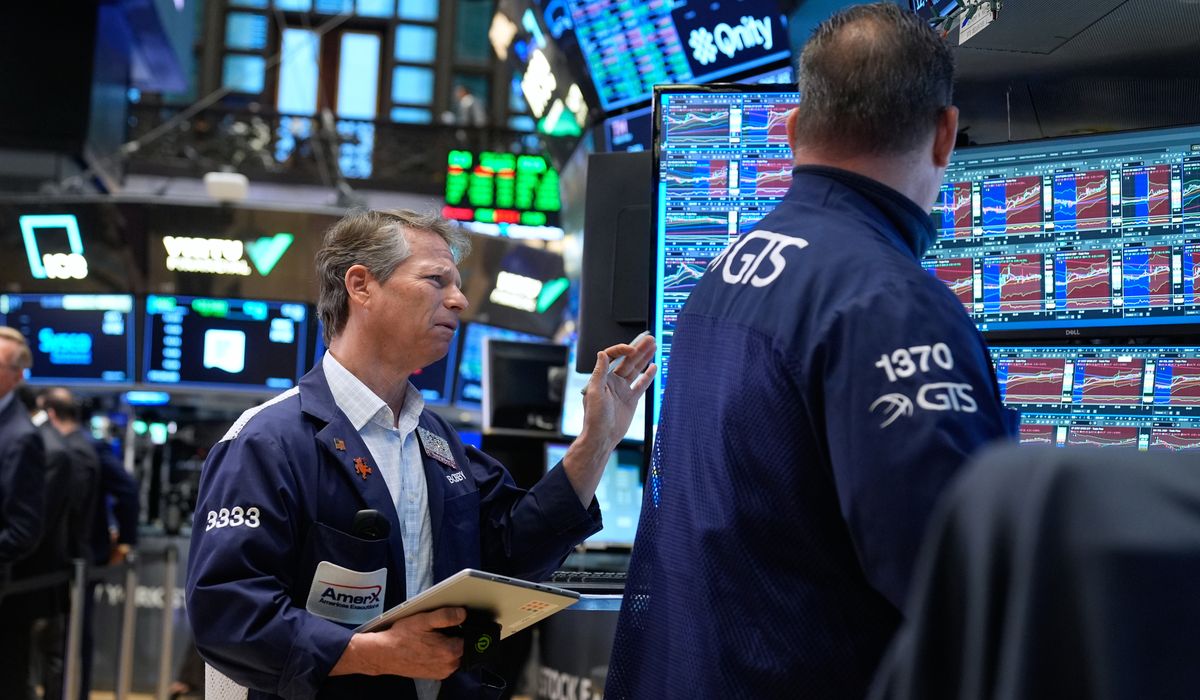
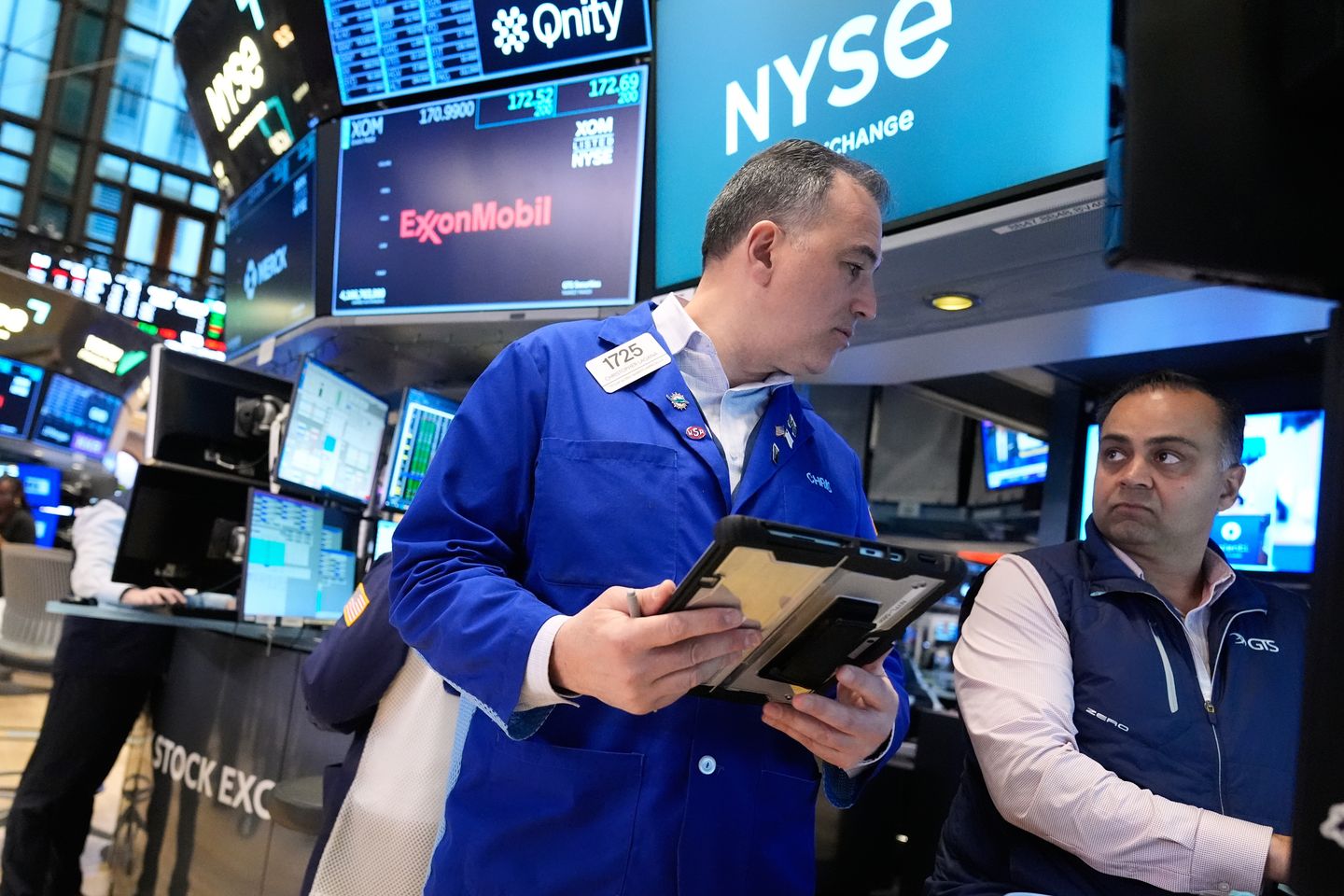
NEW YORK — U.S. stocks are swinging again Monday as oil prices keep climbing because of uncertainty about when the war with Iran could end.
The S&P 500 rose 0.2% in midday trading, coming off its worst week since the war with Iran began. The Dow Jones Industrial Average was up 290 points, or 0.6%, as of 11:15 a.m. Eastern time, and the Nasdaq composite was 0.1% lower.
That followed gains for stock markets in much of Europe, but caution was still prevalent throughout financial markets. After jumping to an initial gain of 0.9% the S&P 500 quickly erased virtually all of it before drifting back upward. Stocks in some Asian markets fell sharply, while the price for a barrel of Brent crude delivered in June rose 2.1% to $107.52.
The mixed movements followed a whirlwind of action in the war over the weekend, including an entry into the fighting by Houthi rebels in Yemen, none of which cleared up when the conflict may end. The main issue for investors is whether oil and natural gas can resume their full flow from the Persian Gulf to customers worldwide and prevent a brutal blast of inflation.
Shortly before the U.S. stock market opened for trading Monday, President Donald Trump said on his social media network that “great progress has been made” with “A NEW, AND MORE REASONABLE, REGIME to end our Military Operations in Iran.”
But he also threatened the possibility of “blowing up and completely obliterating” Iranian power plants if a deal is not reached shortly and if the Strait of Hormuz, an integral waterway for the flow of oil, is not opened immediately.
The statement fit and condensed last week’s pattern, where Trump would tout progress being made in talks and offer some optimism for the market, only for doubts to rise quickly afterward about whether the war can end soon.
All the back and forth has some investors saying they’re giving Trump’s pronouncements less weight than before. But stock prices are nevertheless cheaper than they were before the war, which has some investors waiting for an opportune time to buy.
The S&P 500 finished last week 7.4% below its all-time high, which was set in January. The Dow and Nasdaq both were more than 10% below their records, a steep-enough fall that professional investors call it a “correction.”
Taking into account how much profits are expected to grow in the coming year for companies in the S&P 500, the index looks 17% cheaper than before the war, by one measure. That’s in a similar range as where prior growth scares for the market ended, as long as they didn’t result in a recession or the Federal Reserve hiking interest rates, according to strategists at Morgan Stanley.
That’s one of the signs that the strategists led by Michael Wilson point to as “growing evidence the S&P 500 correction is getting closer to its ending stages.”
Of course, the Federal Reserve could upset that if it decides oil prices are threatening to stay high for long enough that it needs to raise interest rates. Higher interest rates would help keep a lid on inflation, but they would also slow the economy and push down on prices for all kinds of investments.
Treasury yields have been leaping in the bond market since the war began because of such worries, but they eased somewhat on Monday.
The yield on the 10-year Treasury fell to 4.33% from 4.44% late Friday. That’s a significant move for the bond market and offers some breathing room for Wall Street. But it remains far above its 3.97% level from before the war.
Easing bond yields can help the real estate industry in particular. Not only do they lower borrowing costs, they can also make real-estate stocks that pay relatively high dividends look more attractive relative to bonds.
Real-estate stocks in the S&P 500 rose 1.5% for the biggest gain among the 11 sectors that make up the index. That includes a 2.5% rise for Alexandria Real Estate, which owns megacampuses for life-sciences companies across the country.
Alcoa jumped 10.3% for one of the market’s biggest gains on speculation it could get more business after attacks damaged rival aluminum facilities in the Middle East over the weekend.
Sysco fell 11.9% after it said it was buying Jetro Restaurant Depot for $21.6 billion in cash and enough Sysco shares to value the company at about $29.1 billion.
In stock markets abroad, the FTSE 100 in London climbed 1.6%, and the CAC 40 in Paris rose 0.9%. That followed drops of 3% for Seoul’s Kospi, 2.8% for Tokyo’s Nikkei 225 and 0.8% for Hong Kong’s Hang Seng.
___
AP Business Writers Yuri Kageyama and Matt Ott and AP journalist Ayaka McGill contributed to this report.