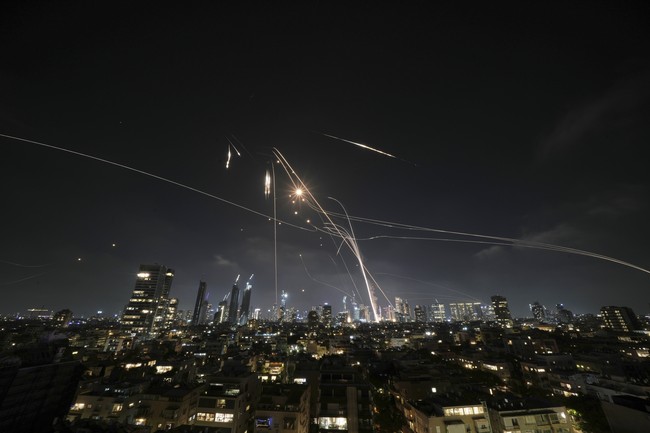
Operation Epic Fury has revealed something that defense planners have worked toward for decades. Directed energy weapons have moved beyond research programs and test ranges. They’re now stopping real missiles in combat.
U.S Space Force systems helped intercept Iranian ballistic missiles during the operation. The systems rely on high-energy laser technology designed to damage or destroy incoming missiles before they reach their targets. Years of research, billions of dollars in development, and countless engineering tests finally produced a system capable of performing under battlefield conditions.
Operation Epic Fury involved multiple branches of the United States military. The Space Force contributed missile-tracking and directed-energy capabilities designed to counter Iranian launch activity.
General B. Chance Saltzman is the chief of space operations for the United States Space Force. His service oversees space-based surveillance systems that track missile launches worldwide. Those tracking systems provide early warning data to American and allied missile defense networks.
Laser-based defense systems offer several advantages over traditional missile interceptors. Conventional missile defense often relies on firing interceptor rockets that collide with incoming threats. Directed energy systems instead focus a concentrated beam of energy onto the missile’s structure. That energy damages critical components, causing the missile to fail before reaching its target.
The U.S. military has invested in directed energy research and development for decades. Defense officials pursued the technology because laser weapons can fire repeatedly without the need for expensive interceptor missiles. Once the system generates power, it rapidly engages multiple targets.
Epic Fury presented a real-world test environment. Iranian forces launched ballistic missiles during the conflict. Space-based detection systems quickly identified the launches, and defensive systems then engaged the missiles before they could reach populated areas or military installations.
Iran’s missile arsenal remains one of the largest in the Middle East. The program operates under the command of the Islamic Revolutionary Guard Corps. Iranian missile forces include short-range and medium-range ballistic systems capable of striking targets across the region.
Iran, as we all know, has relied heavily on its missile forces to project power and threaten neighboring countries. The strategy assumes large numbers of missiles could overwhelm defensive systems. Directed energy weapons challenge that assumption because they quickly engage targets without exhausting interceptor stockpiles.
Defense leaders have long argued that missile defense requires new tech to handle large-scale launch scenarios. Directed energy systems now appear capable of filling that role. The ability to fire repeated laser bursts allows defensive systems to rapidly respond to multiple incoming threats.
Space Command integrates missile warning, satellite surveillance, and global space operations. Systems under that command track launches and help coordinate defensive responses across military services.
Directed energy systems also benefit from speed; a laser beam travels at the speed of light. Once the system locks onto a target, the energy reaches the missile almost instantly. Traditional interceptors must travel long distances before making contact.
Military planners have pursued the technology for decades because of that advantage. Operation Epic Fury may mark the first time those investments paid off in an active combat environment.
For years, taxpayers funded research into directed energy weapons while critics questioned whether the technology would ever leave the laboratory. Epic Fury suggests those investments finally produced real battlefield capability.
American missile defense now includes tools that once sounded like science fiction; they’re no longer theoretical concepts. They’re operational systems capable of protecting American forces and allied populations from missile attacks.
Support independent journalism that explores national security and defense policy. PJ Media VIP provides deeper analysis and exclusive reporting that examines the issues shaping America’s future. Join today and receive 60% off your membership using promo code FIGHT.