Rep. Sam Liccardo was a freshman lawmaker, still new to Capitol Hill last summer, when he led more than 20 colleagues in a letter warning the Pentagon not to even think about renaming the USNS Cesar Chavez.
But by Thursday, it was tough to find the letter, or the press releases, or the posts on the lawmaker’s social media accounts anymore.
New reports this week detailed how Chavez, who died in 1993, victimized women and girls who worked with his United Farm Workers movement, sending one-time defenders scurrying to erase their celebrations of the Hispanic rights activist.
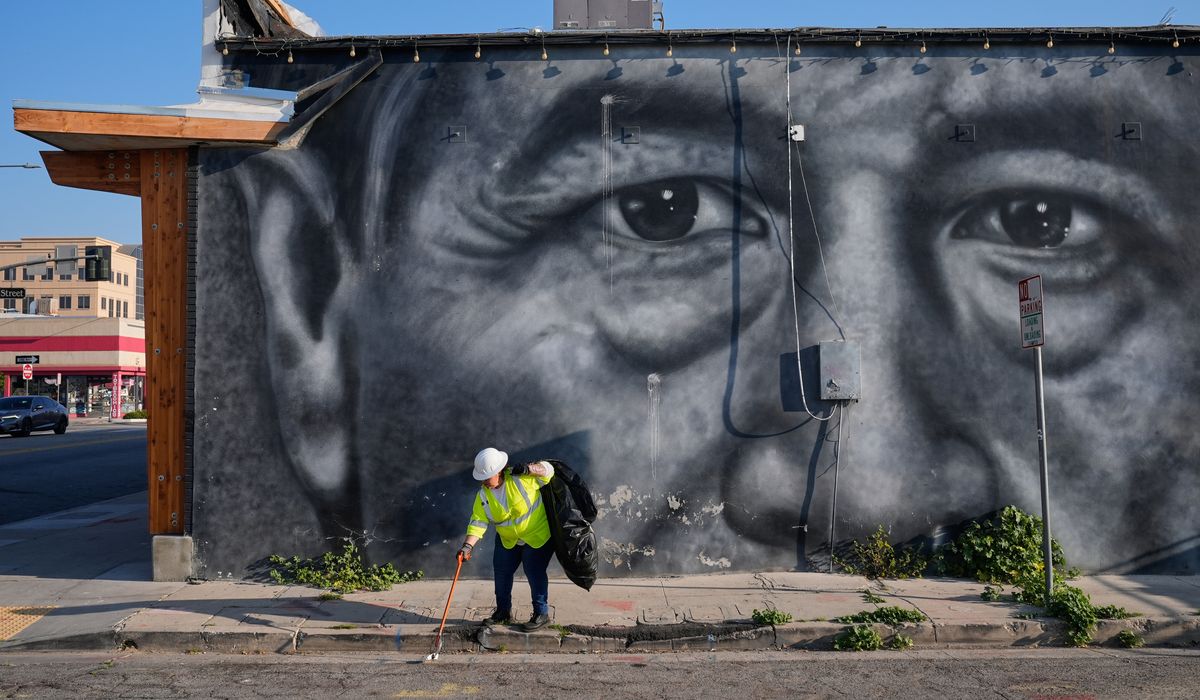
Across the country, communities are rushing to delete the memorials they spent the past three decades erecting.
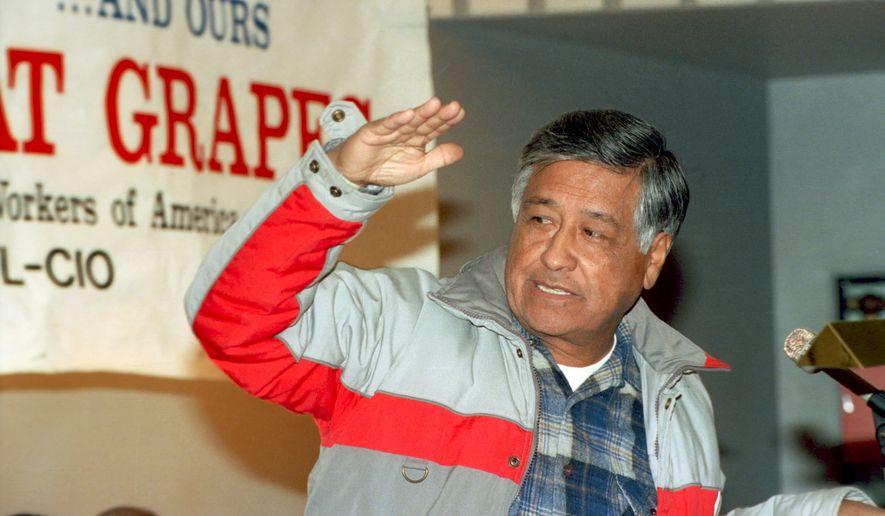
Farm labor leader Cesar Chavez speaks …
more >
“For me and my district, we’re going to look to rename the high school that’s named after him and the road that’s named after him,” said Rep. Sylvia Garcia, a Democrat who represents part of Houston. “I think every district needs to look at their what buildings, what roads and what other things are memorialized … and do what they need to do.”
In California, the only state to have an official holiday in Chavez’s name, lawmakers are already planning to strip him of the honor.
Assemblywoman Alexandra Macedo said her legislation would keep the March 31 holiday but decouple it from Chavez, and instead honor the broader migrant farmworker movement.
“The fight for dignity in the fields was never about one person — it is about the millions of workers who sweat, toil and aspire for a better life,” the lawmaker said in a statement Wednesday.
Gov. Gavin Newsom signaled he was open to signing a name change.
“The farmworkers’ movement was always bigger than just one man or one person. Given the horrendous allegations that were made public for the first time yesterday, this is a welcomed change,” he said Thursday.
In the District of Columbia, the Cesar Chavez Public Charter School for Public Policy, which covers 6th through 12th grades, called the revelations “deeply shocking and incredibly disappointing.”
“The board will thoughtfully consider changing the name of Cesar Chavez Public Charter School for Public Policy, and will engage in discussions grounded in our values and commitment to students and families,” the school said.
But it’s not as easy as just hitting delete.
Parts of the country — particularly Hispanic-heavy portions of the west — went Chavez-crazy in recent decades, slapping his name on roads and parks and buildings and, in some cases, erecting statues.
California State University, Fresno — also known as Fresno State — erected one of those statues in its Peace Garden in 1996, where it stands alongside Martin Luther King Jr., Mahatma Gandhi and Jane Addams. On Wednesday, it was shrouded in black, and The Associated Press reported Thursday that the school now plans to remove the statue entirely.
That’s relatively easy to do.
But when it comes to buildings and roads, there must be a suitable replacement. And as the recent fight over Confederate names shows, agreeing on an alternative isn’t always easy.
That’s particularly true for the Chavez memorials, where officials said they want to make sure to preserve the focus of the migrant farm-worker movement even as they erase Chavez.
“I think when people held up previously, Cesar Chavez, what they were holding up was the movement of workers and farmworkers across the country,” said Rep. Alexandria Ocasio-Cortez, New York Democrat. “I think it’s totally understandable that these marches are being canceled and people want to figure out a new way to honor the movement instead of just one person.”
Ms. Garcia, the Texas congresswoman, said the street and school in her area currently named for Chavez could be renamed to honor Dolores Huerta.
Ms. Huerta co-founded the UFW with Chavez, popularized the movement’s “Si se puede” chant, and, it turns out, was also one of Chavez’s victims.
Ms. Huerta, 95, said this week that Chavez twice pressured her to have sex with him in the 1960s, each time impregnating her. She said she had the children placed with families, but has kept a relationship with them.
“I carried this secret for as long as I did because building the movement and securing farmworker rights was my life’s work,” she said in a statement. “The formation of a union was the only vehicle to accomplish and secure those rights, and I wasn’t going to let Cesar or anyone else get in the way.”
The New York Times, which investigated the Chavez sex-abuse allegations, spoke with one woman who said Chavez molested her when she was a teen in the 1970s, and another who said she was 12 when Chavez first groped her, and 15 when he raped her. Chavez was in his 40s at the time. He was 66 when he died in 1993.
The newspaper said the two women and Ms. Huerta were “part of a larger pattern of sexual misconduct” that saw Chavez use “many of the women who worked for him and volunteered in his movement for his own sexual gratification.”
The push for de-memorializing Chavez in local communities has been widespread.
But it will also be an issue for the Trump administration, which must decide what to do about the USNS Chavez and the national park site, both of which came out of the Obama administration.
Neither the Navy nor the Park Service responded to inquiries for this story.
Nor did the two Democratic congressmen, Mr. Liccardo and Rep. Gil Cisneros, who led last year’s letter to the Navy defending the name.
At the time, Mr. Liccardo called the possibility of a name change “performative politics” and hailed Chavez as “a symbol of leadership and sacrifice.”
• Valerie Richardson contributed to this story.