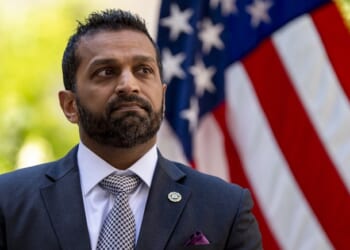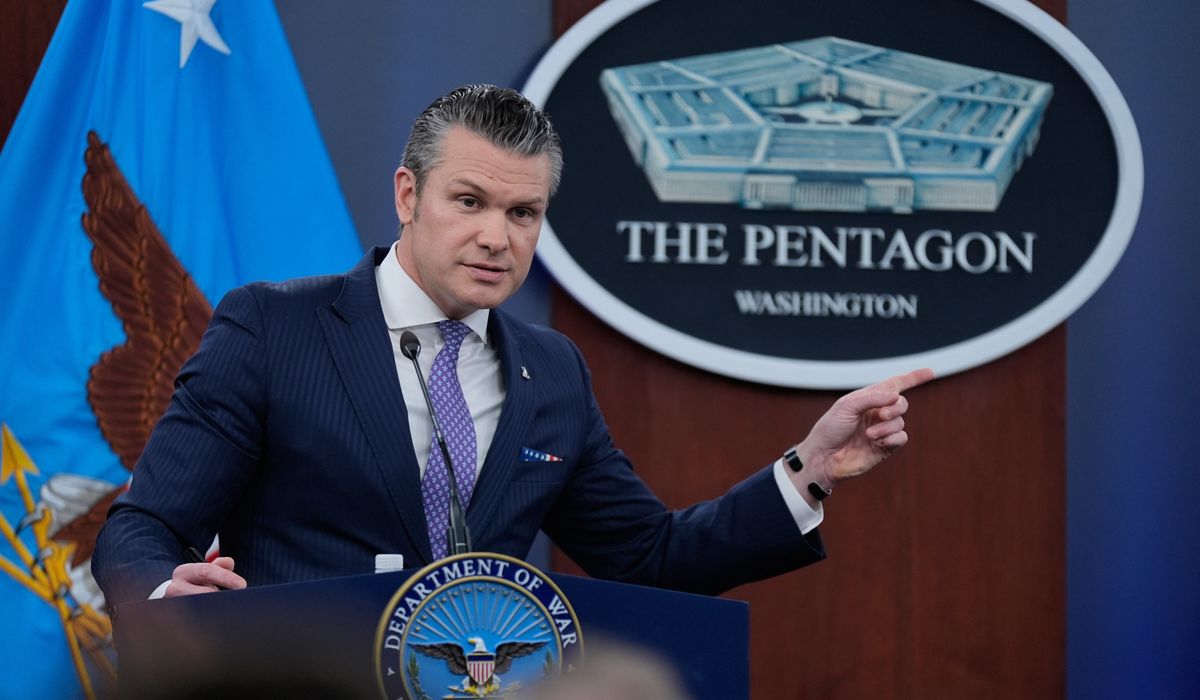
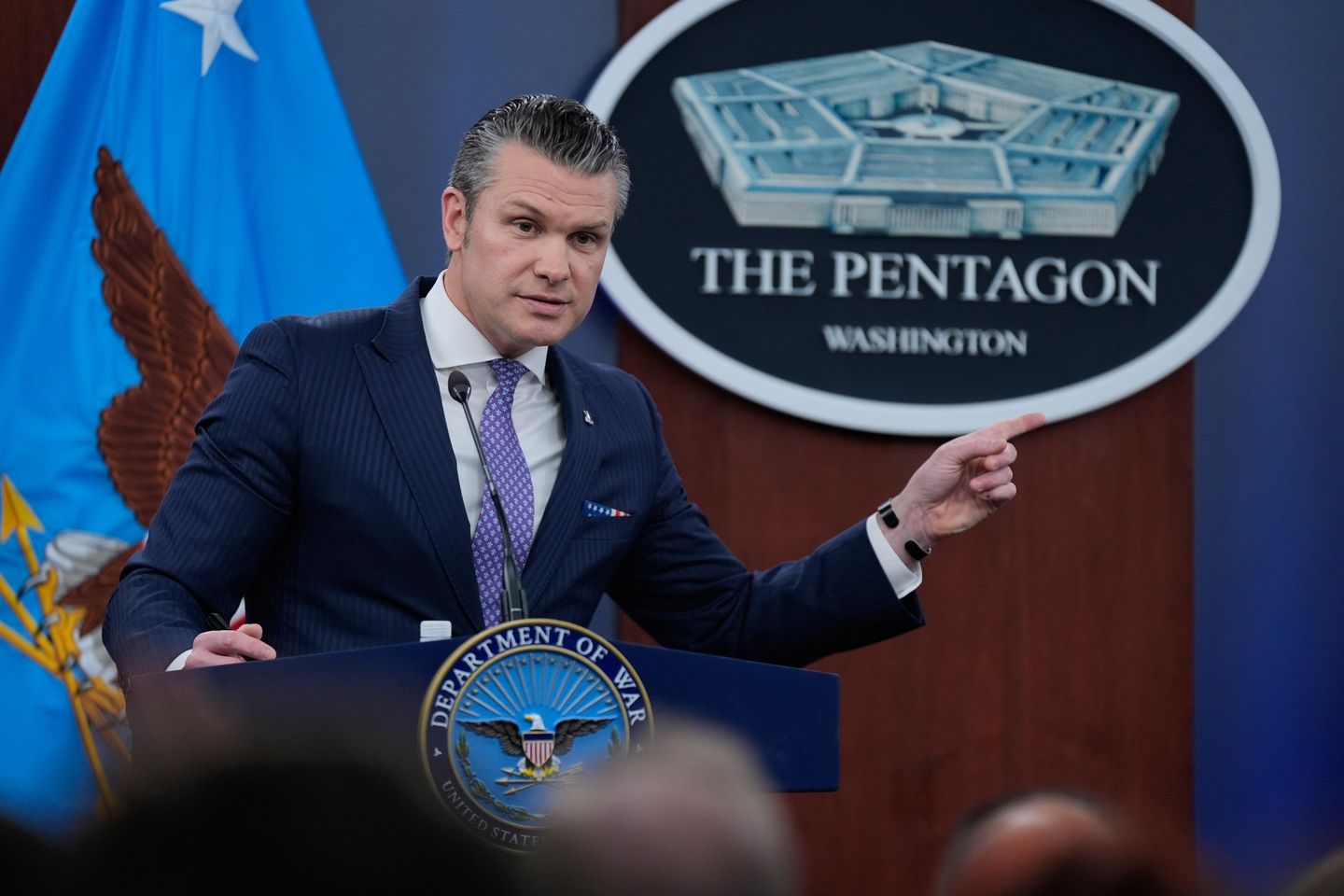
Defense Secretary Pete Hegseth and Joint Chiefs Chair Gen. Dan Caine declared victory over Iran on Wednesday and said the Pentagon is prepared to act quickly if Iran fails to uphold the terms of the newly announced ceasefire.
Speaking at a press conference, Mr. Hegseth cast Operation Epic Fury, the U.S. air campaign against Iran that began Feb. 28, as a resounding success.
“Operation Epic Fury was a historic and overwhelming victory on the battlefield,” Mr. Hegseth said. “A capital ‘V’ military victory.”
Gen. Caine added that the Pentagon, aware that a ceasefire is temporary, can still strike devastating blows against Iran.
“U.S. [Central Command] will continue to monitor that situation, will continue to have a series of response options and if need be will come to the secretary or the president for guidance and do the things they are ordered to do against valid military targets,” Gen. Caine said.
Both officials praised the work of U.S. forces. Gen. Caine confirmed that the joint force has struck more than 13,000 targets in Iran over the past 39 days, significantly destroying Iran’s defense industrial base and capacity to rebuild.
SEE ALSO: Trump says U.S. will work with new leaders in Iran for lasting peace deal, will nab ‘nuclear dust’
Mr. Hegseth said the U.S. has accomplished its three main military goals: the destruction of Iran’s stockpiles of missiles and drones, the destruction of its navy and shattering the defense industrial base.
Notably, Mr. Hegseth did not mention securing Iran’s nuclear material or reopening the Strait of Hormuz among the military objectives.
Mr. Hegseth added that the U.S. military is monitoring Iran’s stockpile of highly enriched uranium and said if Iran is not prepared to give it up, the Pentagon could launch an operation to secure it. He said it is something “the president is going to solve.”
An hour before Mr. Hegseth and Gen. Caine’s press conference, President Trump posted Wednesday on social media that under the agreement, there would be “no enrichment of Uranium, and the United States will, working with Iran, dig up and remove all of the deeply buried (B-2 Bombers) Nuclear ‘Dust.’”
Under the two-week ceasefire announced Tuesday evening, Iran will allow for safe passage through the strait, through which at least one-fifth of the world’s oil passes each year, while negotiations take place. The Iranian military will reportedly oversee the strait during this period.
The ceasefire, brokered by Pakistan, was announced just hours before President Trump’s self-imposed deadline for Iran to reopen the Strait of Hormuz or face an unprecedented assault on its power plants and bridges. International law experts and humanitarian activists assert that such attacks could be considered war crimes.
Mr. Hegseth said Mr. Trump’s threats to Iran’s oil infrastructure, power plants and bridges were a critical component of “why they came to the table.”
“He ultimately said, ‘We can take it all from you. Your ability to export energy will be taken away, and the United States military has the ability to strike those things with impunity,’” the defense secretary said. “That type of threat is what brought them to the place where they effectively say, ‘Okay, we wanna cut this deal.’”
The International Committee of the Red Cross said Monday in a statement that “any war without limits is incompatible with the law.”
“Deliberate threats, whether in rhetoric or in action, against essential civilian infrastructure and nuclear facilities must not become the new norm in warfare,” the statement read. “It is indefensible, inhumane and devastating for entire populations.”