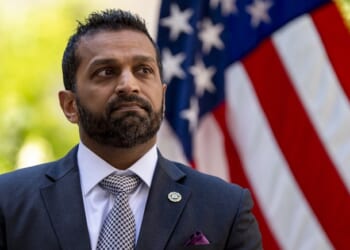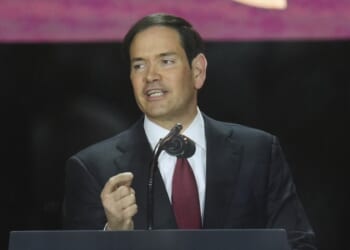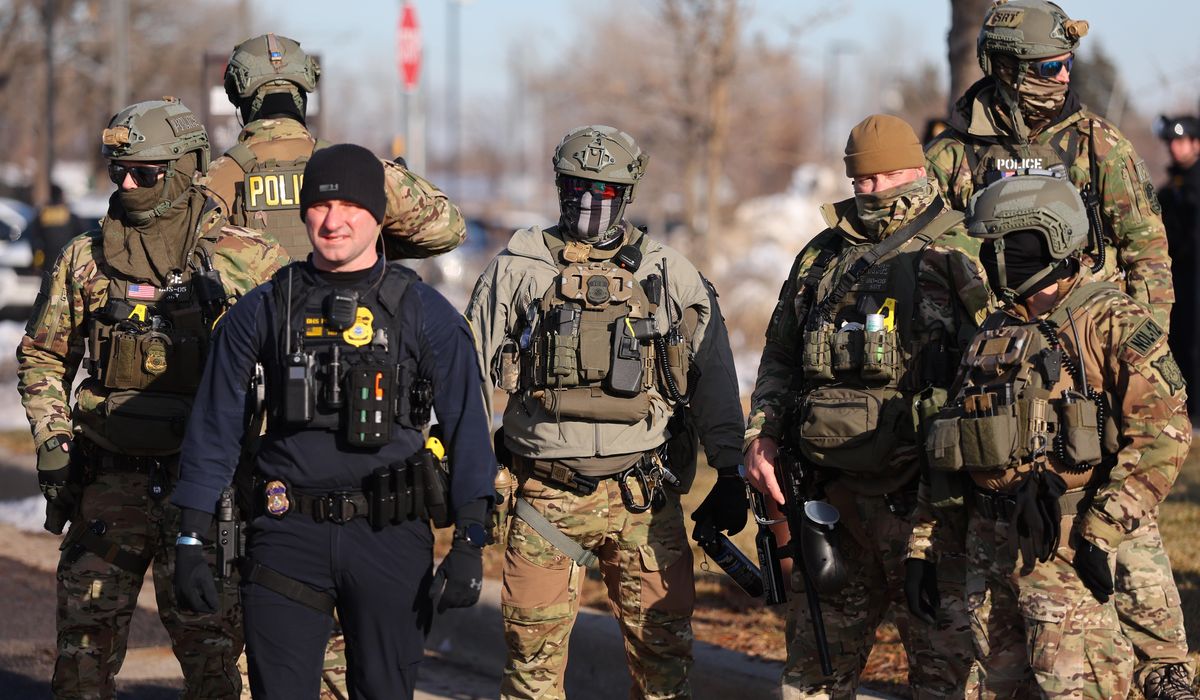

Two House Democrats are drafting legislation that would end qualified immunity for federal Immigration and Customs Enforcement agents after clashes in Minnesota and Oregon.
The bill, the brainchild of Reps. Eric Swalwell of California and Dan Goldman of New York, comes after an ICE officer fatally shot 37-year-old Renee Macklin Good in Minneapolis on Wednesday and after people were injured in a shooting that involved U.S. Border Patrol agents in Portland on Thursday.
Under the ICE OUT Act, if a civil enforcement officer acts outside of duties, he or she would not have immunity from a civil lawsuit or criminal charge, Mr. Goldman said in an episode of The New Republic’s “The Daily Blast” podcast, released Friday.
The act would remove protection against lawsuits from victims who allege that their constitutional rights were violated, and it would prevent officers from arguing they thought they were performing their duties to enforce federal law.
“So yes, civilly, this puts them into a place where they can be liable,” Mr. Swalwell said, also on the podcast. “And criminally, it knocks out a defense that they would otherwise enjoy, which would make a prosecutor think twice as they try and put forward a case that they’d have to prove beyond a reasonable doubt.”
Ms. Good’s death at the hands of an ICE officer sparked nationwide debate over whether the officer should face criminal prosecution.
Videos shared to social media showed her car stopped on a road when three officers approached, but as one tried to open the driver’s door, the car reversed. As she began to drive away, toward a third officer standing in front, he drew his weapon and fired three shots while moving out of the way.
President Trump said the officer was hit and injured, and Homeland Security Secretary Kristi Noem said the woman tried to run over the officer.
In a Friday House Judiciary Committee hearing, Mr. Swalwell described Ms. Good’s death as a “murder.”
Mr. Goldman said on the podcast that ICE’s only authority is to investigate and civilly arrest migrants for immigration violations.
“And so they should have never been in the situation they were in, where they were trying to take a woman out of a car. That was not part of what they should be doing,” he said. “They could ask her to move if they needed to. It doesn’t look like from the video that she was doing anything that was obstructing them.”
Federal law enforcement officers have broad legal protection for their official duty actions, but states can bring charges if an officer’s actions are deemed not to be “necessary and proper” to fulfill their duties.
“And because the standard is subjective and it allows for the officer’s own view to carry a lot of weight, it will be very difficult for him to be prosecuted with the current status of qualified immunity,” Mr. Goldman said.
Minnesota Attorney General Keith Ellison said that “if anyone broke the law,” he will do all he can to “ensure they are held accountable.”