ISTANBUL — All seven people aboard a Turkish military helicopter that went down in Qatari territorial waters Friday were confirmed Sunday to have been killed.
Among the dead were Maj. Sinan Tastekin of the Qatar–Turkey Joint Forces and two engineers from Aselsan, Turkey’s defense electronics firm. They had been working on Qatar’s air defense systems.
The same morning, President Trump gave Iran 48 hours to reopen the Strait of Hormuz or face strikes on its power plants.
The deaths and the ultimatum together framed in a single morning a central question of the war’s fourth week: what Turkey’s military presence in Qatar actually means when the Gulf stops being a pressure point and becomes a battlefield.
“The real trigger would not be a single symbolic strike alone, but a pattern of sustained attacks that transforms the Gulf into a permanent conflict zone,” said Murat Yesiltas, foreign policy research director at the Foundation for Political, Economic and Social Research — known by its Turkish acronym SETA.
“A direct hit on Al Udeid, repeated attacks on LNG and critical energy infrastructure, or a broader campaign threatening Qatar’s state functionality would likely push Turkey from signaling to more concrete military, logistical, and diplomatic action,” said Mr. Yesiltas, a director at an Ankara think tank that often reflects the thinking of President Recep Tayyip Erdogan’s government.
Iran has struck Al Udeid Air Base, the largest American military installation in the Middle East, multiple times since Operation Epic Fury began Feb. 28.
Qatar’s own F-15 pilots shot down two Iranian Su-24 bombers flying at 80 feet — below radar — two minutes from the base on March 2. On March 18, Iranian missiles hit Ras Laffan Industrial City, destroying two of Qatar’s 14 LNG processing trains and knocking out 17% of the country’s export capacity.
Repairs will take three to five years and Saad al-Kaabi, Qatar’s energy minister, said the damage will cost an estimated $20 billion in lost annual revenue.
Qatari response
Qatar has responded with a series of ruptures that would have been unthinkable three weeks ago.
It arrested 10 people linked to two IRGC cells operating inside the country, seven assigned to spy on military installations and three trained in drone sabotage. It expelled Iran’s military attaches within 24 hours of the Ras Laffan strike — the first Gulf state to do so. Saudi Arabia followed the next day, declaring Iranian embassy staff, including its military attaché, persona non grata and ordering them out within 24 hours.
Qatar declared force majeure — the legal notification that a company cannot meet its contracts due to circumstances beyond its control — on long-term LNG contracts with Italy, Belgium, South Korea and China.
“Iran is attacking Gulf countries without any reason and must stop,” Majed al-Ansari, spokesman for Qatar’s Foreign Ministry, said in a statement. “Red lines have already been crossed.”
For two decades Qatar built a model around a single premise: that hosting everyone — the United States at Al Udeid, Hamas at its political bureau, the world’s LNG buyers, Iran as a back-channel partner — would make Qatar indispensable to all sides and therefore untouchable by any.
The same assets that guaranteed its security and global influence are now the reasons it is being struck.
“These states are literally trapped in this conflict,” said Mehran Kamrava, professor of government at Georgetown University in Qatar. “Regardless of how much they might try to distance themselves, in the eyes of the Islamic Republic, they are active partners in attacks on Iran.”
Mr. Kamrava added that the war has produced a hard reckoning. “What we saw was a realiZation across the GCC that the United States is not always a reliable partner.”
Turkish response
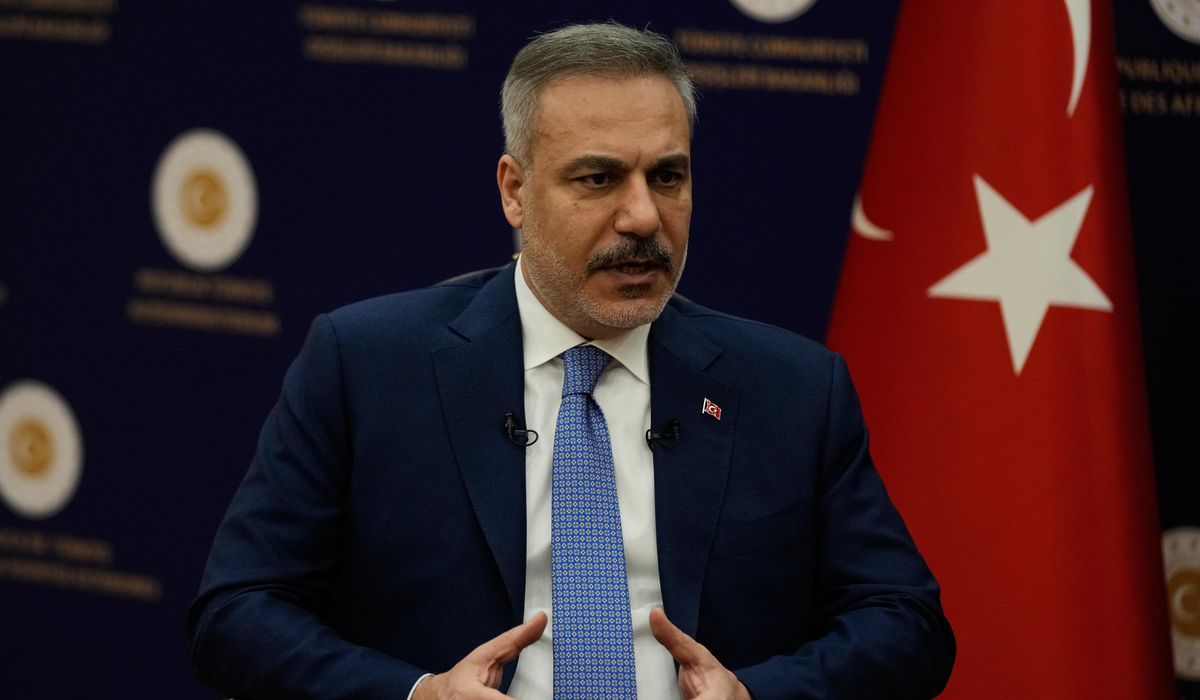
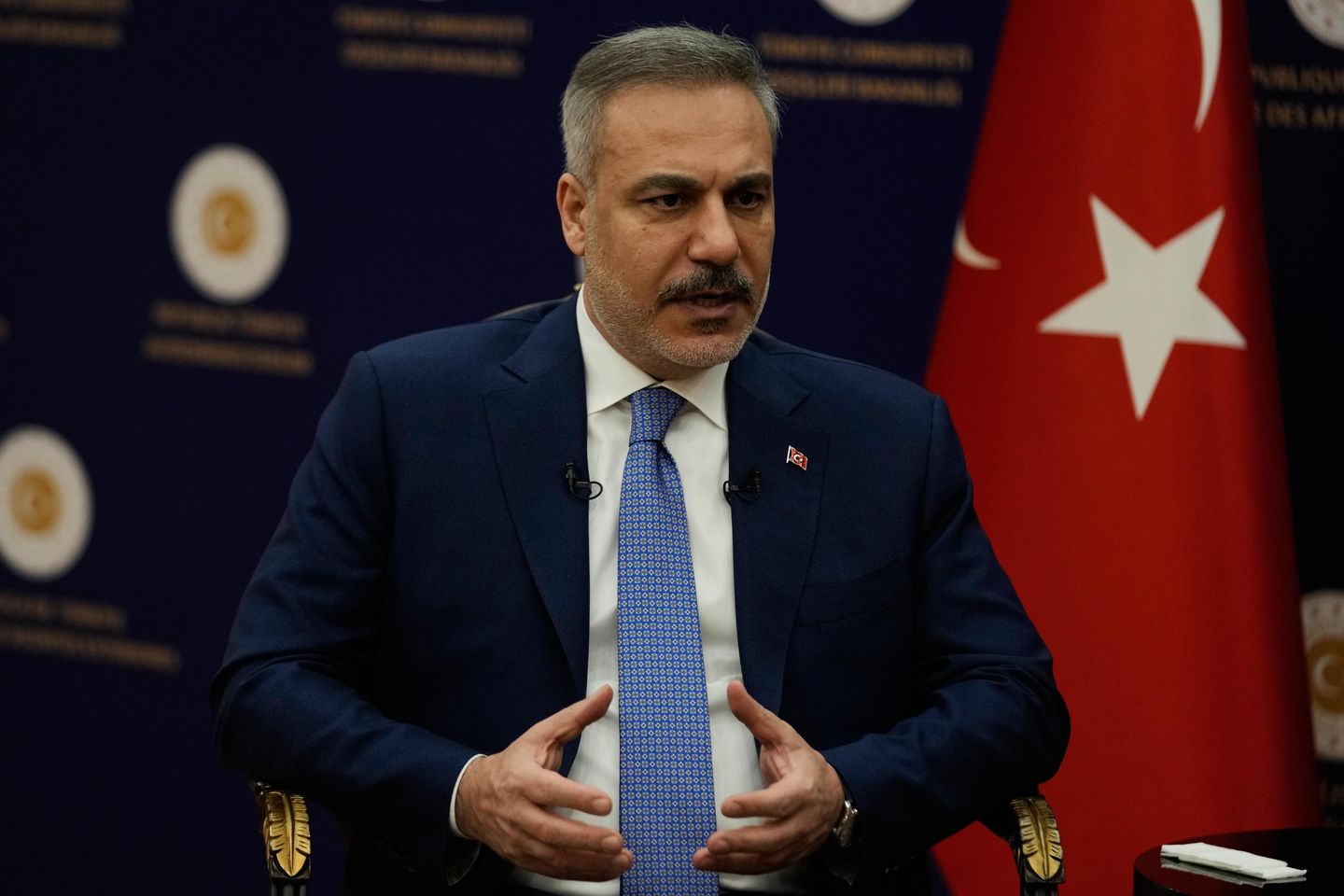
Turkish Foreign Minister Hakan Fidan flew to Doha on Thursday, stood beside the Qatari prime minister and pledged “new and concrete steps in the defense industry.”
The Turkish Defense Ministry confirmed its troops were operating in Qatar as part of the Qatar–Turkey Joint Forces Command when the helicopter went down, and stated that “military cooperation and coordination activities between the Republic of Turkey and the State of Qatar continue uninterrupted.”
Mr. Erdogan said he learned “with great sorrow” of the deaths of “our Turkish Armed Forces personnel, our Aselsan staff and members of the Qatari Armed Forces,” and extended condolences to “our country, our nation and the people of Qatar.”
Yet Turkey was not among the 22 countries that signed a joint statement Saturday expressing readiness to contribute to reopening the strait. Of the regional states, only the UAE and Bahrain signed.
Saudi Arabia, despite expelling Iran’s military attaché the same day, was not among them. Despite being a NATO member, stationing six F-16s at the joint squadron in Doha, and having Aselsan engineers embedded in Qatar’s air defense network, Ankara would not join.
Sinem Cengiz, a Turkey and Gulf analyst at Qatar University’s Gulf Studies Center, said the absence reflects a deliberate posture.
“Turkey prefers to maintain a stronger neutral stance, especially as it is able to keep communication channels open with Iran,” she said. “At the same time, Turkish-Qatari defense alignment continues to meet the expectations of both allies. Over the years, Turkey has consistently stood by Qatar in every crisis it has faced, and this time is no different.”
Alignment of interests
That absence, Gerd Nonneman argued, is not a failure of commitment. It is the point.
Mr. Nonneman, professor of international relations and Gulf studies at Georgetown University in Qatar, said Doha wants Ankara exactly where it is.
“Turkey’s position aligns with Qatar’s interests,” he said. “The Qataris want Turkey to maintain relations with and pressure on Iran, while at the same time offering protective help — without offensively taking on Iran. Exactly what Qatar itself is doing.”
Mr. Nonneman noted that Qatar has historically sought pragmatic channels with Tehran even under sustained pressure — and that this posture survives the current rupture, at least for now.
“Qatar will still try to maintain bridges and channels of communication with Iran,” he said. “Levels of trust have crashed and will take a long time to recover, but then that was the case during the Iran-Iraq war as well, and it does not rule out trying to claw one’s way back to a pragmatic, if wary, modus vivendi.”
Ms. Cengiz cautioned against assuming Qatar’s posture is fixed.
“From the outset, Qatar has maintained a careful position,” she said. “However, a potential turning point could emerge that shifts its foreign policy harder against Iran. Such a shift would likely depend on the scale and intensity of Iran’s escalation, which could act as the decisive trigger for change.”
Qatar shares the world’s largest gas field with Iran. The North Field on the Qatari side and South Pars on the Iranian side sit astride the same geological formation. Israel struck South Pars on March 18. Iran struck Ras Laffan in response.
Turkish fears
Hay Eytan Cohen Yanarocak, a Turkey expert at the Jerusalem Institute for Strategy and Security, argued that Ankara’s refusal to join any coalition arrayed against Iran is not indifference to Iranian aggression but a calculation about what follows it.
Turkey fears that a post-Islamic Republic Iran would realign with Israel, Greece, Cyprus, the UAE and India — a configuration Ankara views, in his telling, as strategic encirclement.
“A contentious but familiar Tehran,” he wrote, “may still seem preferable to a transformed Iran whose consequences no one can fully foresee,” he explained.
On Sunday morning, with the Hormuz deadline running and Iranian power plants in Mr. Trump’s crosshairs, Liqaa Maki, a senior researcher at the Al Jazeera Centre for Studies, asked on Al Jazeera Arabic whether the Hormuz crisis might be a pretext to get international legitimacy for a level of destruction that no European or Arab ally will formally endorse.
No one, Mr. Maki argued, will support strikes on civilian energy infrastructure, but the blocked strait gives the escalation a face that the world can accept.
Qatar has heard all of this before.
Its foreign minister condemned the Israeli strike on South Pars as a “dangerous and irresponsible step.” Its prime minister told reporters Thursday that Iran should stop its attacks immediately so a diplomatic solution can be found. Its energy minister warned that the damage to Ras Laffan has set the region back 10 to 20 years.
The Turkish officer and two Aselsan engineers who died in Friday’s helicopter crash were not on a combat mission but on routine duty inside a military structure that Turkey and Qatar have been quietly deepening for years and, analysts argue, will not bring Turkey into the war.
They confirm that the “Gulfization” of this war — the process by which the conflict absorbs and reshapes the Gulf’s political and security architecture — is already underway.
“This war is likely to recalibrate Turkish-Gulf relations well beyond crisis diplomacy,” Mr. Yesiltas said. “It may deepen military-industrial cooperation, expand defense and security coordination, reinforce economic interdependence around energy and logistics, and create new forms of regional alignment.
“The Gulfization of the war would not only reshape the conflict itself, but also accelerate a new phase in Turkey-Gulf strategic relations,” he said.