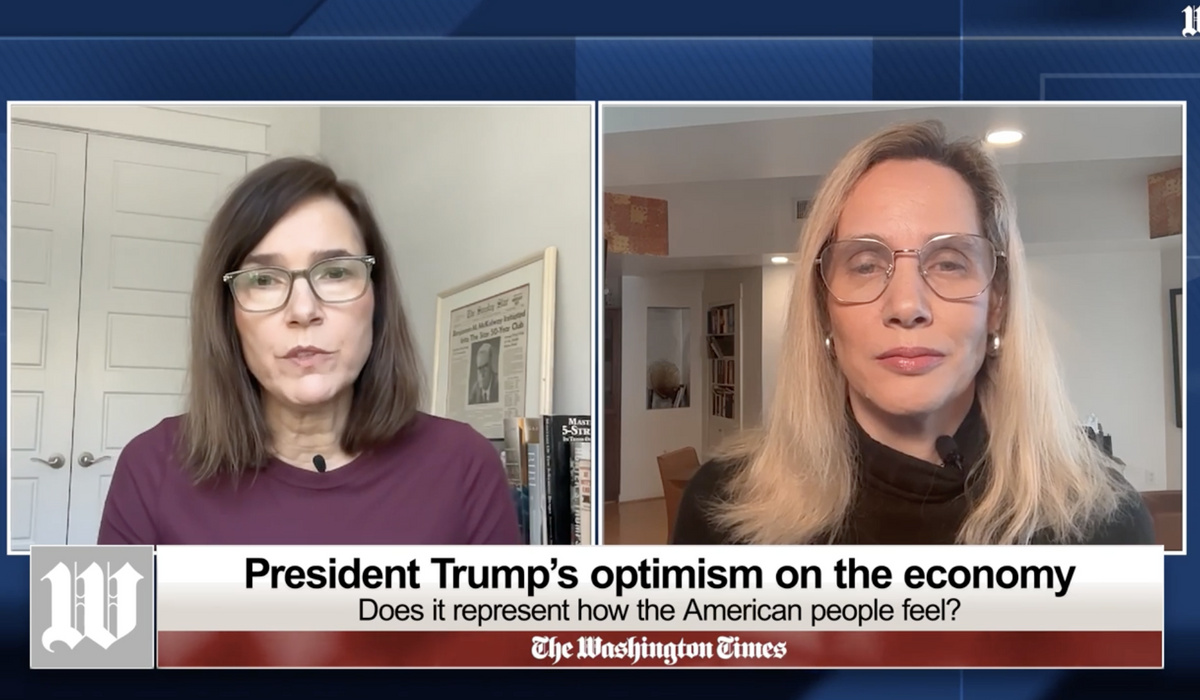
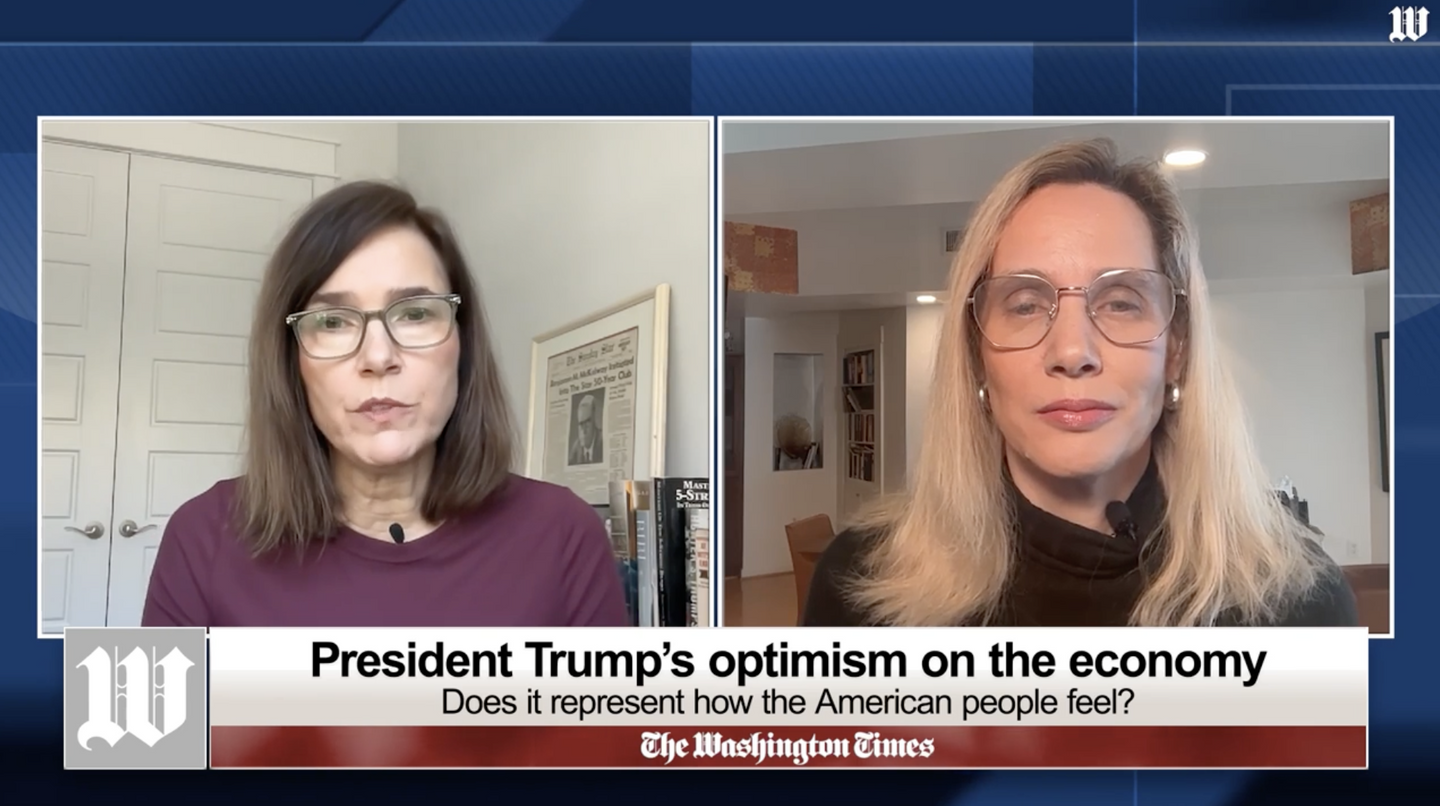
Thank you for being a valued subscriber to The Washington Times. We appreciate your support for honest, in-depth journalism and hope you enjoy this exclusive conversation breaking down the 2026 State of the Union address with Susan Ferrechio and Kerry Picket.
President Trump delivered the longest State of the Union address in American history, more than an hour and 45 minutes. He declared that America is back, entering what he called a new golden age. He pointed to slowing inflation, falling gas prices, and a record stock market as proof that his second term is already delivering results. He doubled down on immigration as a signature achievement, called the southern border the most secure in history, and he outlined aggressive new plans on energy, tariffs and trade.
More than 70 Democrats didn’t show up for the speech, and those who did made their opposition known. With mixed approval ratings and the midterms on the horizon, just how far is the gap between the president’s message and political reality?
I’m Susan Ferrechio, national politics reporter with the Washington Times, and I’m joined by Kerry Picket, our White House reporter. We’re here to unpack all of what happened at this year’s State of the Union.
[FERRECHIO] Okay, Kerry, let’s break this down. I thought the president sounded bullish on our economy and really optimistic about the future. Of course, that’s not what polls are saying. But his message was definitely full of enthusiasm, and hope, and optimism about America. What did you hear?
[PICKET] Well, you know, Susan, he came out there simply to say the union is strong. And, look, voters are fickle. He has a 44% approval rating, not necessarily different than presidents before him. And, you know, there’s always this expectation that the party in power — we know this — is going to lose seats. But still, he mentioned the crime rate’s down, low inflation, gas is down, the mortgage rates are lowest in four years, and the stock market is flying high.
But the thing here, though, is that Donald Trump wanted to come out there and say, “I cleaned up the mess that Biden left us. Okay? And you have to remember that.” Because, you know, at the time when Biden was in office and Donald Trump was on the campaign trail, he wants to remind people that he cleaned up a whole lot. He said, hey, remember when you had all those illegal immigrants who were flooding the border and you came to me and said, you have to run again, you can win again. And all of a sudden, that border is empty. He wants to remind people of those scenes.
And then all of a sudden, these polls are coming out, being like, eh, you know, immigration is not as much of a priority. Well, of course it says not as much of a priority more because Donald Trump is saying, I fixed it. You know, but now affordability is the issue. And he’s saying, yeah, but guess what? Stock market’s up. And, you know, guess what? Inflation is down. I did that. He wants to make sure that he’s getting the credit he deserves. So that is why he is trying to be as forceful as possible on those numbers.
[FERRECHIO] Right. I agree with that. I’d say, talking about just some of the main themes of this speech last night — as you mentioned, immigration, that the border, no one’s getting over the southern border anymore. No more gotaways, no more rampant illegal immigration here into the United States. He didn’t talk too much about deportations, which has been one of his bigger problems with the American public. The public is soured on aggressive deportation policies. That we know.
And he also talked about energy prices, which people are paying far less at the gas pump. Some places you can get gas under $2 a gallon. He also talked about crime, some of the lowest murder rates in history. He made a big deal about that. And as you said, Kerry, these were all things he ran on. So what he did is say, look, it’s been a year. I ran on these things. Here’s what I’ve done on those issues. And here’s how it’s working. Here’s how it’s been a big accomplishment for my administration.
Especially when he’s talking about what he’s accomplished — the one big, beautiful bill, which of course we know is going to affect everybody’s taxes this year, because for the first time, there are no taxes on some tips, some overtime pay, some of the Social Security income for seniors. This is all brand new types of tax cuts, a bigger standard deduction. People are going to see savings as their tax returns come in, which is right about now. And he made that a big part of his speech too.
Foreign policy, he didn’t really spend a lot of time on that. He talked about Iran and that negotiations are ongoing. We know that the U.S. has deployed very significant numbers of military assets into the region. And the president said, look, I’d like a diplomatic solution to this.
And he talked about tariffs. Tariffs have been the centerpoint of his economic policy because he wants to bring jobs back to America. He wants to bring national security to some of our most important production lines. And he wants to rebalance trade and bring money into our economy and help our producers sell their goods overseas. He’s accomplished that through tariffs.
And of course, we know the Supreme Court struck down one of his big tariff authorities. And four of those Supreme Court justices were sitting in the audience. And Trump, I thought, was very restrained. People worried he was going to rail against them from the podium, and that would have been a bad look. Instead, he just called it an unfortunate decision, and he moved on. He didn’t make it personal. He didn’t attack the justices.
Those are some of the big themes, I thought, that came through last night in that very long speech — an hour and 46, hour 47 minutes, long speech.
But Kerry, let’s talk about the Democrats. What an interesting addition they were to the scene last night, because of their protests in the chamber and some of them didn’t show up. Their counter rallies, one involving frogs and giraffes. Can you explain some of that? What was going on?
[PICKET] Okay. So here’s the thing: they thought that they could — well, first off, Hakeem Jeffries wanted to make sure that they didn’t have, like, a lot of protest inside the chamber like they had during the last State of the Union.
[FERRECHIO] Al Green, shaking his cane.
[PICKET] Yes, yes, exactly. So I understand that first, Hakeem Jeffries told his caucus, guys, I don’t want to have any protests in the chamber. Okay, we don’t want that nonsense. And of course, he also said, if you want to have a protest, then go outside and do your own protest. And Al Green — usually, as you and I both know, when you have these, like, elder, senior type of lawmakers, like, I’m going to do what I want to do. I’ve been here longer than Hakeem Jeffries.
[FERRECHIO] What did he do? What was he doing in the chamber? Like, I saw him hold up a sign. What was going on?
[PICKET] He said — black people — he said, “Black people aren’t apes,” which was a reference to the Instagram post or the X post, the reels, including Trump is king of the jungle, and everybody was in these animal — you know, all the politicians were animals.
[FERRECHIO] Exactly. And the Obamas were portrayed in a very derogatory fashion, and Al Green was referencing that when he held the sign up.
[PICKET] And he wouldn’t put the sign down, right? So they ejected him.
Thank you for being a valued subscriber to The Washington Times. We appreciate your support for honest, in-depth journalism. Read more from Susan Ferrechio and Kerry Picket.
Click here for more exclusive events and conversations just for Washington Times subscribers.