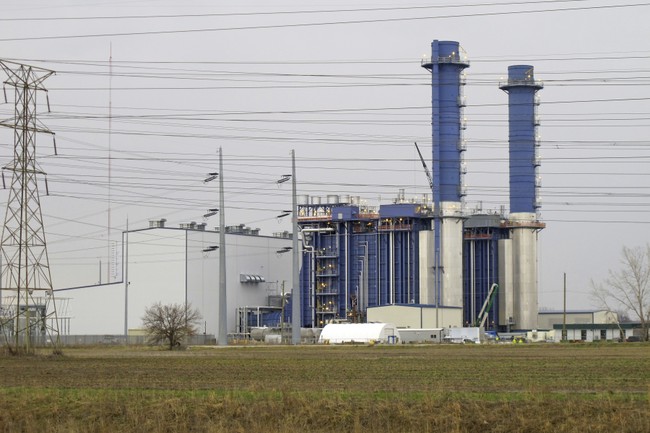
Finally, the power-gobbling growth of data centers is being addressed. Hopefully, it’s early enough in the process to ward off some of the ills associated with the industry. Unlike the situation resembling many small towns like mine, which ruefully wake up to after approving a decade of corporate breaks to encourage growth only to realize they given away all their parking or their tax income, etc and have a bad case of ‘what do we do now?’
In Pensacola’s case, one answer has been to finally require hotels and apartment complexes to include parking garages as part of their proposals. On its face, one would think, why wouldn’t the city do so? But Pensacola had been so desperate for so long to lure residents and hotels to our pretty tiny downtown that the council gave the thumbs-up to several large projects and allotted swaths of formerly public parking spaces to them as part of the deal sweetener. Needless to say, with our explosive growth during the past five years, parking is a constant source of friction. Now that they’ve decided to rip our main boulevard up from stem to stern for some sort of visual refreshment, it would have been nice to have those old public spots back.
It’s much the same with these counties and communities that are thrilled to hear of a data center sniffing around their area with the potential for landing there. Jobs! Additional income to the tax base! Stars in local eyes.
Unless that data center has Amazon or Bill Gates’ name attached to it, there may very well be expensive downsides for everyone who is anywhere in the rate paying district for the utility providing that center’s power. They use enormous amounts of energyand unless you are Bill Gates and can buy an old nuclear plant to generate your own juice, that center is going to tie into the local grid and can very well raise havoc with both rates and reliability.
Everyone knows that California has significant grid issues, but the East Coast is in perilous shape. I’ve covered it a number of times here, from state-level issues to the regional power managers. An article came out yesterday that concerns one of the regional transmission organizations (RTO) I’ve written about often, PJM.
The last time was only a smidge over two weeks ago, when I told you all that the RTO had held an auction to lock on contracts to supply emergency power to cover the shortages during, say, heat waves or extreme cold, and they couldn’t get enough bids to reach their anticipated needs in case of an emergency situation.
What the folks at PJM could contract for, however, is going to cost 67 million utility customers in the 13 states that the PJM is responsible for dearly, and still they will not be able to guarantee the lights – or heat – stay on.
…There is something on the East Coast called the PJM.
PJM is a regional transmission organization (RTO) that coordinates the movement of wholesale electricity in all or parts of 13 states and the District of Columbia.
This is a big RTO, and it recently had what’s called a capacity auction to lock on enough power, aka extra in times of stress, for the states and D.C. that it serves.
It couldn’t.
The RTO couldn’t buy enough power, even though it offered prices as high as the government rate cap on megawatt costs, to ensure reliable electricity in extremis for the region in the coming year. They still came up short of what they needed. The scary part is that the artificial government cap was set at over $333 MW/day, and that wasn’t enough to buy them what they needed, thanks to population growth and the explosion of electricity-gobbling data centers.
PJM rate-payers, however, are going to be on the hook for what the RTO had to pay to get what they could.
There is not enough excess capacity being generated anywhere, thanks to population growth, the insistence in the northeast on transitioning to all-electric homes, and the emergence of data centers in every nook and cranny. What excess there is, then, naturally is purchased at a premium.
This is not the RTO’s fault – they don’t generate electricity. They manage the flow of it, and they played within the rules of the game.
But it’s a devastating outcome for rate-paying Americans already buffeted by insane electrical costs and only going to get worse if more sources – reliable sources – of power generation, be they gas, nuclear, clean coal, whatever, are not approved, built, and do not come online rapidly.
A good deal of the problem is regulatory intransigence to new power plants, and one of the largest states in the PJM is also one of the worst for impeding the development of new power generation – Pennsylvania. New Jersey is another.
The auction outcome should be a wake-up clarion call.
…To be fair, PJM is set to release a revised load forecast this month, and the shortfall may narrow. Even if it does, that is not something to celebrate. The underlying problem remains unchanged: new power is not getting built fast enough.
Unsurprisingly, this has sparked a growing debate over who is to blame. Some point squarely at PJM and its interconnection backlog. Others argue that Pennsylvania’s long-standing reputation as a difficult place to build, driven by permitting complexity, regulatory uncertainty, and tax policy, is equally responsible. At the same time, restrictive policies in states such as Maryland and New Jersey have weakened baseload power and deterred new generation, exporting reliability risk across the PJM footprint. Taken together, these dynamics have produced a regional market where new investment increasingly flows toward states offering clearer rules, faster timelines, and greater certainty.
Need more proof? Under PJM’s most recent Reliability Resource Initiative (RRI), Pennsylvania accounted for just 342 megawatts of proposed new or expanded natural-gas capacity. By comparison, Ohio accounted for 3,363 megawatts, Virginia for 3,320 megawatts, and Kentucky for 786 megawatts. Pennsylvania barely edged out New Jersey in this category, a state that has signaled little appetite for new natural-gas generation.
This lack of clear direction even has electric utilities, largely removed from power generation since Pennsylvania restructured and deregulated its electricity markets more than two decades ago, lobbying to re-enter generation in the name of reliability.
As the article says, the situation is so critical that utilities are now often only distributing power they’ve purchased, agitating for the right to build their own power plants again to guarantee reliable power to their excessively burdened customers.
By 2030, experts (and you know how I hate using that term, but it’s all I’ve got) estimate that data centers alone will be at least 12% of all the industrial power used in the US – that’s a huge chunk. Where is all that additional juice to come from and who the heck gets stuck with both the bill and the downside?
This is what President Trump’s announcement (set for this morning) is meant as an attempt to forestall – further downside. And it’s aimed squarely at PJM’s contract and consumers.
President Donald Trump and the governors of several US Northeastern states agreed to push for an emergency wholesale electricity auction that would compel technology companies to effectively fund new power plants.
The unprecedented plan, set to be announced Friday morning, seeks to address growing tensions over how the nation can supply electricity to power-hungry data centers — seen as necessary to help win the global AI race — without simultaneously hiking utility bills for homes and businesses.
The Trump administration and some US governors plan to direct grid operator PJM Interconnection LLC to hold an auction for tech companies to bid on 15-year contracts for new electricity generation capacity.
If the auction proceeds as envisaged, tech giants would pay for power over the duration of the contracts, whether they use the electricity or not, providing secure revenues for years in a market notorious for price volatility and generator bankruptcies.
The auction would deliver contracts supporting the construction of some $15 billion worth of new power plants, said a White House official granted anonymity to detail the approach.
Trump and governors from PA, OH, VA, MD pushing for emergency 15-year capacity auction where tech companies fund roughly $15B in new power plants. Data centers would pay whether they use the power or not. PJM wasn’t invited to the announcement and won’t attend.… pic.twitter.com/xKtvg0leFq
— Shanu Mathew (@ShanuMathew93) January 16, 2026
This initiative is kind of out of the old-school one-hand-washing-the-other. Yes, the data companies are going to be the ones paying for it, but they are the ones causing the issues and need the power, are they not? Why should a homeowner in Teaneck foot the bill?
What’s that progressive bromide – paying your fair share?
…In some ways, Trump is handing tech companies what they’ve been desperately seeking for the past three years: a massive supply of new electricity they can depend on when they energize the hundreds of billions of dollars in mega-data centers now under construction. Amazon.com Inc., Microsoft Corp., Alphabet Inc., Meta Platforms Inc. and OpenAI have already collectively invested in the development of several gigawatts of new power — with a single gigawatt being enough to power roughly 750,000 homes at any given moment.
…Trump has repeatedly described power plants being built alongside data centers, and on Monday, he doubled down on the idea, insisting in a social media post that the big technology companies that construct data centers must “pay their own way.”
“I never want Americans to pay higher Electricity bills because of Data Centers,” Trump wrote in his post.
...The average US retail price for electricity gained 7.4% in September to a record 18.07 cents per kilowatt-hour, the biggest gain since December 2023. Residential prices have jumped even higher, rising by 10.5% between January and August 2025, marking one of the largest increases in more than a decade, according to the National Energy Assistance Directors Association.
Friday’s action is being cast as a one-time emergency intervention into the PJM market, necessary because of the rapid rise in electricity prices in the Mid-Atlantic region. The Trump administration and governors will urge the grid operator to return to market fundamentals after the acute problem is addressed, the White House official said.
The plan is getting thumbs up in many quarters.
…“It sounds like a significant improvement and a logical extension of bring-your-own new generation,” Joe Bowring, president of PJM’ s independent watchdog Monitoring Analytics LLC, said in a telephone interview.
“While a ‘statement of principles’ doesn’t appear to include a legal mandate for PJM to act, pressure from the Trump administration and a bipartisan coalition of PJM states is very likely to motivate a considerable response” from the grid operator, said Timothy Fox, an analyst with the research firm ClearView Energy Partners.
This plan also could fast track the development of natural gas generation and potentially nuclear plants by guaranteeing revenues – and profits – specifically to support data campuses needed to deploy artificial intelligence.
Naturally, there are concerns that smaller data companies without the heft of an Amazon will have difficulties, but this is still in it’s roll0out phase. Also, the management of PJM wasn’t invited to this White House confab of governors, so they’re in a bit of a snit.
…“We don’t have a lot to say on this,” PJM spokesman Jeffrey Shields said by email. “We were not invited to the event they are apparently having tomorrow and we will not be there.”
Everyone is going to have to get over it, I’m thinking.
Or get out of the way.
Ed, David, John, and I work hard every day here at HotAir in our efforts to continue revealing Democrats’ plans to lead America down a dangerous path.
But we can’t do it without the help and support of our tremendous VIP community.
Please help us continue to expose Democrats, progressives, and the media’s left-wing bias by reading news you can trust. Join Hot Air VIP and use promo code FIGHT to get 60% off your membership!