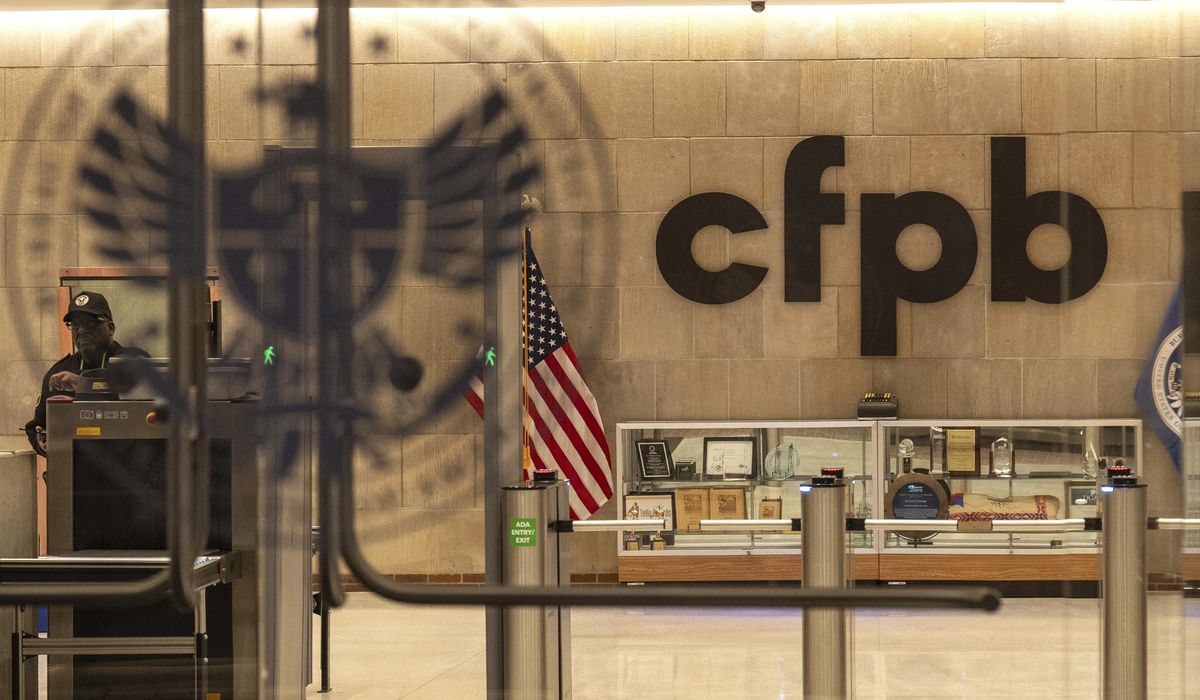
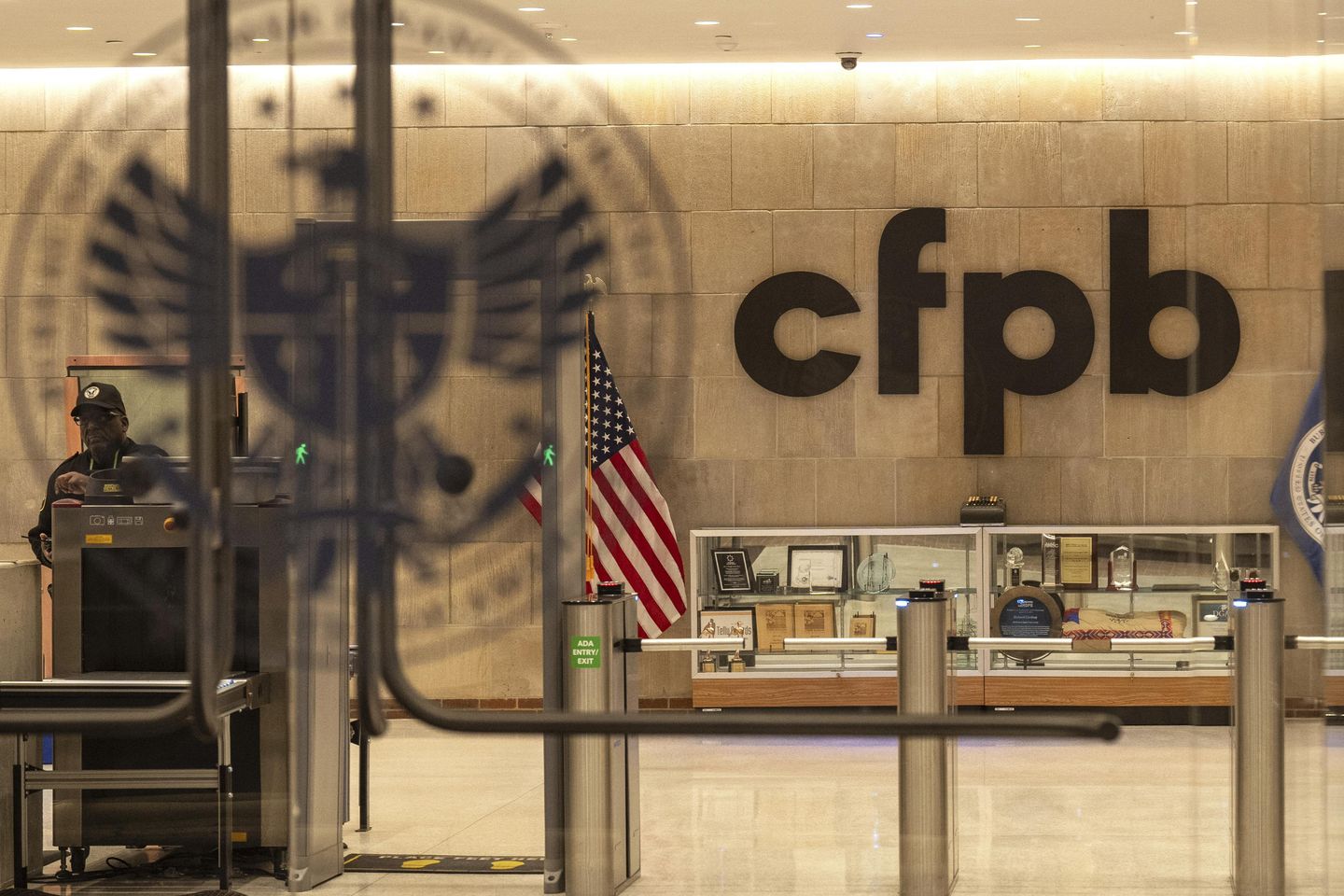
A federal judge ruled Tuesday that the White House cannot shutter the Consumer Financial Protection Bureau by using a novel interpretation of the law to starve the watchdog of funding.
U.S. District Judge Amy Berman Jackson, an Obama appointee to the court in Washington, said the Trump administration cannot fabricate a lapse in government funding to complete its evisceration of the CFPB, an agency long detested by Republicans.
The bureau was established with an independent source of funding coming straight from the Federal Reserve, rather than Congress’s regular spending deliberations.
Trump officials, though, argued that the way the law is written, it only allows the money to flow in years when the Fed actually turns a profit. The White House budget office said that won’t be the case early next year, so the CFPB won’t be able to access new money without an infusion from Congress — which, under the control of the GOP, is unlikely.
Judge Jackson, though, said that’s a new interpretation that doesn’t match the way the law has always been read.
And she said the previous interpretation makes more sense, because when Congress created the CFPB in 2010, it intended for the bureau to be able to get a continuous flow of money.
“It is apparent from the funding arrangement enshrined in the Act – which is entirely separate from the ordinary appropriations process and the political considerations and accommodations that characterize that process, and is not reviewable by either congressional appropriations committee – that Congress intended that the bureau must be able to rely upon a stable, independent source of funding,” the judge wrote.
Judge Jackson had previously issued an injunction ordering that the CFPB must be kept open to perform at least the minimum of duties established by the law. The U.S. Circuit Court of Appeals for the District of Columbia has gone back and forth on the matter, but that injunction remains somewhat in place while the case develops.
CFPB, the brainchild of Sen. Elizabeth Warren, Massachusetts Democrat, was established in the wake of the 2008 Wall Street collapse.
Ms. Warren, at the time a Harvard professor, urged creation of a watchdog insulated from political pressure. That included the odd funding scheme, where it gets its budget directly from the Federal Reserve rather than the U.S. Treasury, and enjoys protections against its director being fired by the president.
The Supreme Court erased the firing protections in a 2020 ruling but, in a 2024 decision, upheld the Federal Reserve financing scheme.
The agency is currently being run by Russ Vought, President Trump’s budget director.
At issue in the current legal battle is whether the CFPB’s funding must come from Federal Reserve profits, or total revenue.
Revenue had long been accepted. But the Justice Department’s Office of Legal Counsel, in a sharp departure earlier this year, embraced the profit argument.
“Under the Office of Legal Counsel’s opinion, issued on Friday, ‘the Federal Reserve currently lacks combined earnings from which the CFPB can draw,’” Charles E.T. Roberts, a government lawyer, had told the court last month.
The Fed earns billions of dollars a year but has operated at a loss since 2022 because it has raised interest rates to combat inflation, sending its interest expenses up.