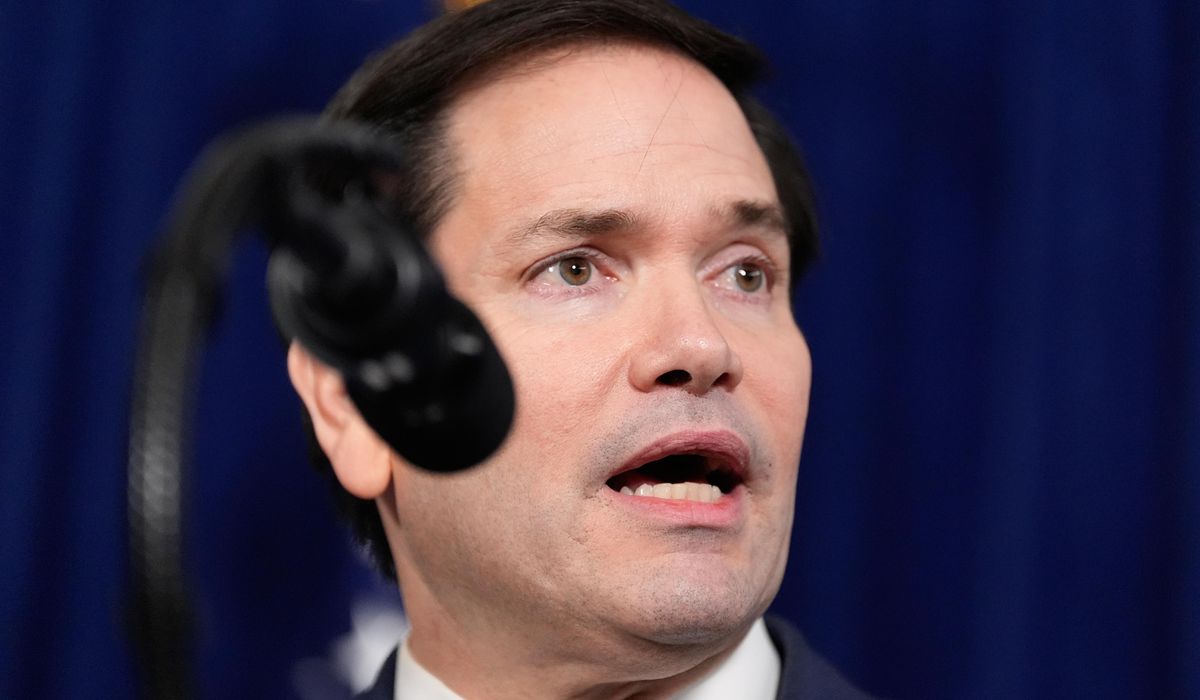
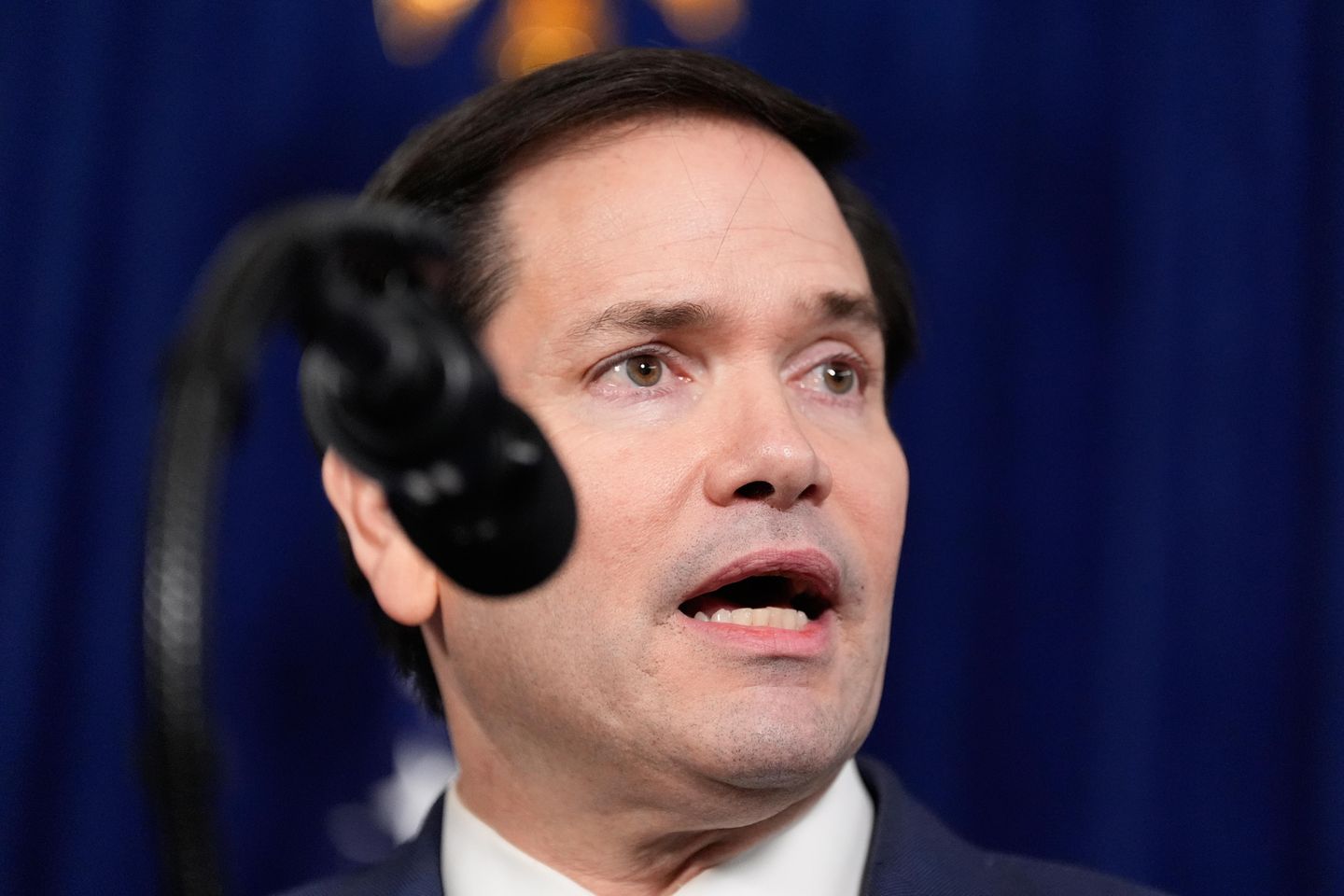
Secretary of State Marco Rubio says the U.S. quarantine on Venezuelan oil isn’t going anywhere — at least not until the Trump administration is convinced that what’s left of the government in Caracas is acting in both U.S. interests and the interests of its own people.
At the same time, Homeland Security Secretary Kristi Noem said President Trump has delivered a blunt message to Venezuelan Vice President Delcy Rodriguez: Work with Washington, or Washington will find someone else who will.
The comments came as the dust continued to settle Sunday after the dramatic U.S. military operation in Caracas that ended with the capture of Venezuelan President Nicolas Maduro and his wife, Cilia Flores.
Mr. Maduro, now facing narco‑terrorism and cocaine‑importation conspiracy charges, is being held at the Metropolitan Detention Center in Brooklyn.
Mr. Maduro, a former bus driver who has led the country since the 2013 death of President Hugo Chavez, and his wife are expected in Manhattan federal court on Monday.
Across Venezuela, uncertainty hung in the air as the world tried to figure out what comes next — especially after Mr. Trump vowed to “run” the country until there’s a “safe, proper, and judicious transition.”
SEE ALSO: Trump to Venezuelan Vice President Delcy Rodriguez: Either get on board or get out of the way
Mr. Rubio tried to clarify the administration’s approach, saying there are no U.S. troops on the ground in Venezuela and that Washington plans to lean heavily on its control of the country’s oil industry to pressure the country’s remaining leaders into political change.
“That’s why we have a quarantine,” Mr. Rubio said Sunday on CBS’s “Face the Nation.” “That’s a tremendous amount of leverage that we have and will continue to be in place until we see changes.”
He added that the U.S. will keep a strong naval presence in the Caribbean to monitor maritime traffic and push Venezuela toward a fundamentally different future.
“We don’t have the expectation that’s going to happen in the next 15 hours,” he said. “What we do have an expectation is that it move in that direction. We think it’s in our national interest, and frankly, in the interest of the people of Venezuela.”
Ms. Noem said Mr. Trump has had “very matter‑of‑fact and very clear” conversations with Ms. Rodriguez — who served as Mr. Maduro’s vice president and was tapped by Venezuela’s high court to serve as interim president — about what the U.S. expects moving forward.
“You can lead, or you can get out of the way,” she said on “Fox News Sunday.”
SEE ALSO: Sen. Tom Cotton rejects Iraq war comparison of Venezuela raid
Ms. Rodriguez, whom the U.S. sanctioned during Mr. Trump’s first term for undermining Venezuelan democracy, has blasted the raid, saying the U.S. wants to take the country’s natural resources and demanding Maduro’s release.
“There is only one president in Venezuela, and his name is Nicolas Maduro Moros,” Ms. Rodriguez said in a televised address hours after the U.S. strikes and Mr. Maduro’s capture.
But Mr. Trump said Saturday she’s ready to cooperate, suggesting her private conversations are different from her public posturing.
“She’s essentially willing to do what we think is necessary to make Venezuela great again,” Mr. Trump told reporters Saturday.
At home, Democrats have accused Mr. Trump of overstepping his constitutional authority and keeping lawmakers in the dark.
“This was a military action, and pursuant to the Constitution, only Congress has the power to declare war to authorize acts that take place in this regard,” House Minority Leader Hakeem Jeffries, New York Democrat, said on NBC’s “Meet the Press.”
“We have to make sure when we return to Washington, D.C., that legislative action is taken to ensure that no further military steps occur absent explicit congressional approval,” he added.
The Trump administration maintains the operation did not require congressional approval.
Mr. Jeffries also questioned whether Venezuelans will be any better off with Mr. Trump calling the shots.
“He’s done a terrible job running the United States of America,” he said. “So the notion that he’s going to run Venezuela and make life better for the Venezuelan people, of course, is belied by the facts as to what he’s done as President here in the United States of America.”
Rep. Jamie Raskin, Maryland Democrat, said the president is simply trying to distract from his troubles at home.
“Trump’s presidency is sinking like a stone, our economy is collapsing under the weight of Trump’s unconstitutional tariffs, the administration’s efforts to suppress the Epstein Files are failing and millions of Americans just lost their health care insurance coverage,” Mr. Raskin said.
He also accused Mr. Trump of engaging in a double standard regarding Latin American political leaders involved in the drug trade.
The raid came “just one month after he pardoned the drug-dealing ex-president of Honduras, Juan Orlando Hernandez, commuting his 45-year sentence after one year,” he said.
Mr. Maduro’s ouster was met with celebration and protests.
In South Florida, revelers chanted “liberty” and draped Venezuelan flags over their shoulders.
People rallied outside El Arepazo restaurant, a hub of Venezuelan culture in the Miami suburbs. One man held a piece of cardboard with “Libertad” scrawled in black marker.
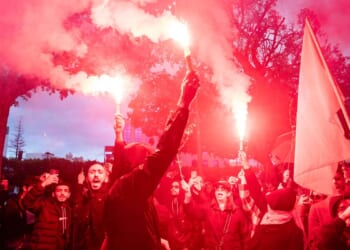
On the other hand, protests broke out in New York City with protestors demanding Mr. Maduro’s release, marching with “No war with Venezuela,” “No Blood for Oil,” and “[expletive] all colonizers” signs.
• Mike Glenn contributed to this article, which is based in part on wire reports.