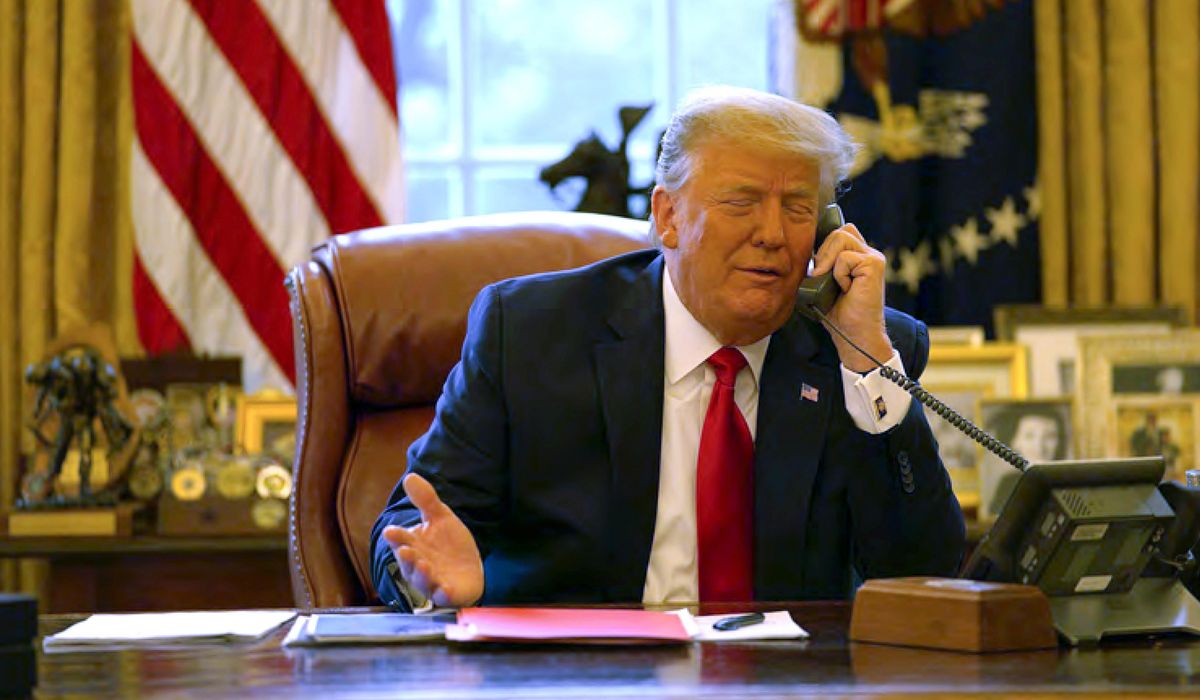
Former special counsel Jack Smith used a closed-door session with Congress to defend his prosecutorial pursuit of President Trump, saying his probe found proof “beyond a reasonable doubt” the president tried to overturn the results of the 2020 election.
Mr. Smith doubled down on his prosecution in a closed-door deposition with the House Judiciary Committee on Dec. 17. The panel released a transcript of the session on New Year’s Eve.
“The decision to bring charges against President Trump was mine, but the basis for those charges rests entirely with President Trump and his actions, as alleged in the indictments returned by grand juries in two different districts,” Mr. Smith told lawmakers. “Our investigation developed proof beyond a reasonable doubt that President Trump engaged in a criminal scheme to overturn the results of the 2020 election and to prevent the lawful transfer of power.”
Mr. Smith, who was appointed as special counsel to investigate Mr. Trump during the Biden administration, secured a federal indictment in 2023 alleging Mr. Trump conspired against the U.S. and its voters through efforts to block certification of his loss to President Biden in 2020.
A separate indictment, secured in Florida, accused Mr. Trump of unlawfully retaining government records and blocking archivists’ efforts to retrieve them.
“Our investigation also developed powerful evidence that showed that President Trump willfully retained highly classified documents after he left office in January of 2021, storing them at his social club, including in a ballroom and a bathroom,” Mr. Smith told lawmakers. “He then repeatedly tried to obstruct justice to conceal his continued retention of those documents.”
Mr. Trump quashed both indictments after winning a second White House term.
House Republicans hauled Mr. Smith before Congress as part of their efforts to expose potential weaponization of the justice system during the Biden years, while Mr. Trump was seeking a political comeback and a second term.
They took particular exception to Mr. Smith’s use of subpoenas to collect phone records from Congress, telling the counsel he could have taken more collaborative measures. One Republican questioner said the effort appeared to run afoul of speech-and-debate protections, because investigators could see whom a senator or House member had been calling around the time of legislative decisions.
Mr. Smith defended his subpoenas. He said the records might have been relevant to the investigation and that his team followed laws and regulations in obtaining them.
The special counsel told lawmakers that some measures, such as the seizure of Pennsylvania Republican Rep. Scott Perry’s phone, happened before he was appointed special counsel.
“Certainly, my office did everything consistent with the law and department regulations at the time,” Mr. Smith said.
The special counsel said the records could have been useful at trial because they outlined Mr. Trump’s efforts to reach lawmakers around the time he was lobbying them to send certification of the election back to the states.
Some of the calls happened before the certification on Jan. 6, 2021, which unfolded after Trump supporters attacked the Capitol.
Also, Mr. Smith said the calls spoke to alleged attempts to create a false narrative around potential fraud in the election.
“Sometimes the communications were relevant to us to show that people were telling Donald Trump that the things he was saying were not true. Other times, they were evidence of the false nature of the things they were saying,” Mr. Smith said.
Mr. Trump was able to delay legal criminal proceedings against him during 2024 and used Mr. Smith’s prosecution as political fuel for his successful campaign for a second term.
Republicans said Mr. Smith was overzealous in pursuing Mr. Trump for statements that amounted to First Amendment-protected speech.
Mr. Smith rejected that argument, saying Mr. Trump went beyond speech and took tangible actions as the head of the executive branch.
“There is no historical analog for what President Trump did in this case. As we said in the indictment, he was free to say that he thought he won the election. He was even free to say falsely that he won the election,” Mr. Smith said. “But what he was not free to do was violate federal law and use knowingly false statements about election fraud to target a lawful government function. That he was not allowed to do. And that differentiates this case from any past history.”
Mr. Smith also said Mr. Trump showed a pattern in which he rejected any information during the post-2020 period that would result in his leaving office.
The alleged scheme involved state pressure campaigns to delay certification of results. When the state pressure campaigns failed, Mr. Trump tried to use fraudulent electors and Vice President Mike Pence to upend Congress’ certification of the results on Jan. 6, 2021, Mr. Smith alleged.
“The evidence here made clear that President Trump was by a large measure the most culpable and most responsible person in this conspiracy,” Mr. Smith said in his deposition. “These crimes were committed for his benefit. The attack that happened at the Capitol, part of this case, does not happen without him. The other co-conspirators were doing this for his benefit.”
The Washington Times reached out to the White House for comment on Mr. Smith’s deposition testimony.