A Republican senator is vowing to oppose Federal Reserve nominees until a criminal inquiry into Chair Jerome Powell is resolved, creating an uncertain path for President Trump’s nomination of Kevin Warsh to lead the central bank.
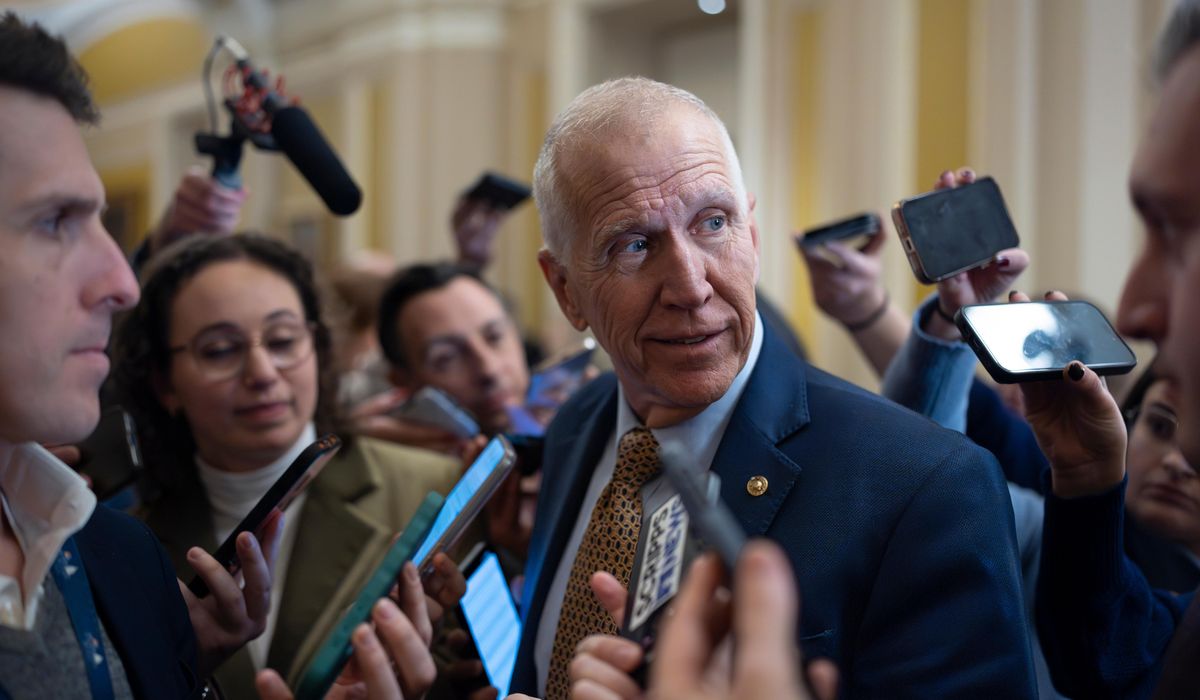
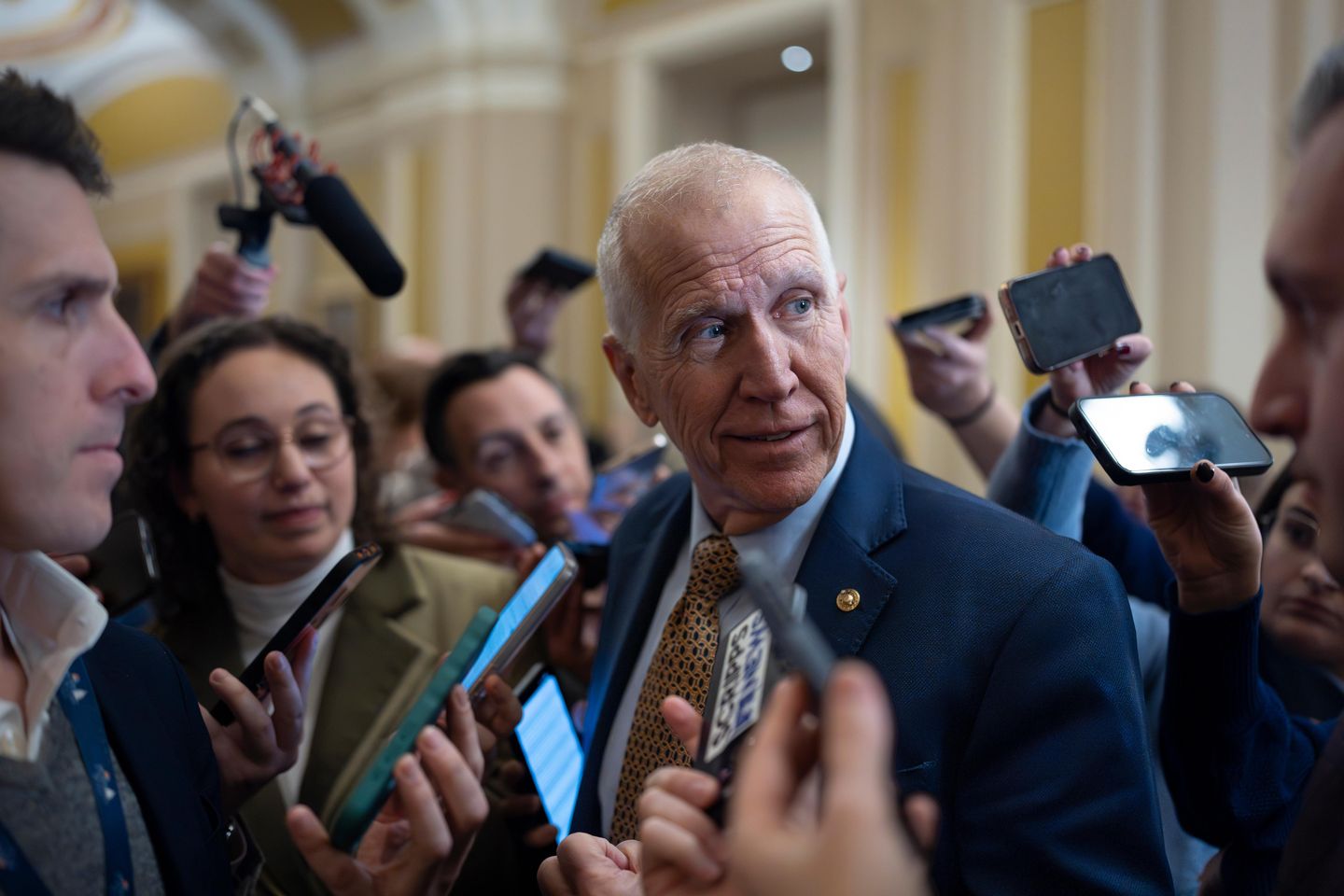
The senator, Thom Tillis of North Carolina, believes that Mr. Warsh, a former Fed governor with a deep knowledge of Wall Street, is qualified to be Fed chairman. But Mr. Tillis is digging in against Mr. Trump’s Fed picks while the DOJ pursues a case against Mr. Powell that he views as frivolous.
The senator’s opposition would create a 12-12 tie on the Senate Banking Committee if all panel Democrats oppose Mr. Warsh. A deadlock would prevent the nomination from advancing to the full Senate for confirmation.
The Justice Department is believed to be exploring whether Mr. Powell committed perjury when he testified to Congress about a Fed renovation project that is over budget.
“The Department of Justice continues to pursue a criminal investigation into Chairman Jerome Powell based on committee testimony that no reasonable person could construe as possessing criminal intent,” Mr. Tillis, who declined to seek reelection in November, said Friday on social media. “Protecting the independence of the Federal Reserve from political interference or legal intimidation is non-negotiable.”
Mr. Tillis’ threat effectively ties the fate of the next Fed chair to that of the current one.
The financial and political worlds largely cheered Mr. Trump’s decision to pick Mr. Warsh as a successor to Mr. Powell, whose term ends in May.
Mr. Trump said Mr. Warsh, 55, is reliable and straight out of “central casting.”
“I have known Kevin for a long period of time, and have no doubt that he will go down as one of the GREAT Fed Chairmen, maybe the best,” the president said on Truth Social.
The Fed is a powerful institution that sets monetary policy, including interest rates that affect terms for savings, loans and investments.
Mr. Warsh served as a Fed governor from 2006 to 2011. He was the Fed’s liaison to Wall Street during the financial crisis, and his recent calls for “regime change” at the Fed and lower interest rates likely appealed to Mr. Trump.
“He certainly wants to cut rates. I’ve been watching him for a long time,” the president told reporters, adding he did not pressure Mr. Warsh over the subject.
Asked about Mr. Tillis’ threat to block Mr. Warsh, the White House highlighted Mr. Warsh’s qualifications.
“Kevin Warsh’s academic credentials, private sector success, and prior experience on the Federal Reserve’s Board of Governors make him eminently qualified to serve as the next Fed Chairman,” White House spokesman Kush Desai said. “The White House looks forward to working with the Senate to quickly confirm him and get the Federal Reserve back on track.”
Mr. Trump was dismissive of Mr. Tillis, saying his obstruction is why he’s leaving the Senate. He also said the Powell investigation, “He’s either incompetent or he or somebody is a crook, and we’ll find out.”
Mr. Trump wants to reshape the Fed so it takes a bold approach to cutting interest rates. For months, he’s slammed Mr. Powell as “too late” or behind the curve in responding to economic conditions.
Inflation remains above the Fed’s target of 2%, so central bankers are cautious about cutting too aggressively.
Appointed by President George W. Bush, Mr. Warsh was the youngest Fed governor ever when he joined the Board of Governors at age 35.
Mr. Warsh, who went to Stanford University and Harvard Law School, is an economics fellow at the Hoover Institution and a lecturer at the Stanford Graduate School of Business.
Notably, he is a partner to billionaire Stanley Druckenmiller at the Duquesne Family Office, a high-powered investment firm.
Mr. Warsh is married to Jane Lauder Warsh, a wealthy heiress of the Estee Lauder cosmetics company.
His thick resume and Wall Street pedigree speak to Mr. Trump’s “central casting” description. Perhaps more importantly, Mr. Warsh’s recent views on interest rates align with the president’s.
Mr. Warsh had been more of a hawk during his term as Fed governor, fearing rate-easing would lead to inflation. He’s evolved in his thinking, saying lower rates can be paired with deregulation and artificial intelligence to unleash productivity.
“He is a solid choice that the markets trust to be largely independent,” said Wayne Winegarden, a senior fellow in economics at the Pacific Research Institute.
Kishore Kulkarni, a distinguished professor of economics at the Metropolitan State University of Denver, said Mr. Warsh has had an impressive career and a valid point about lowering rates.
“Interest rates should come down by at least 1% because inflation is stable,” Mr. Kulkarni said.
Still, the Democratic National Committee derided Mr. Warsh as a Trump “puppet.”
“Warsh is so desperate to be Fed chair that he’s willing to say or do anything to please Trump, abandoning his previous positions and reinventing himself in Trump’s image,” DNC Chairman Ken Martin said.
Mr. Warsh won the Fed nomination after an interview process overseen by Treasury Secretary Scott Bessent, who whittled down a long list of candidates to four finalists.
White House National Economic Council Director Kevin Hassett was considered the front-runner for a period, though Mr. Trump publicly declared he would like to keep him in his current job.