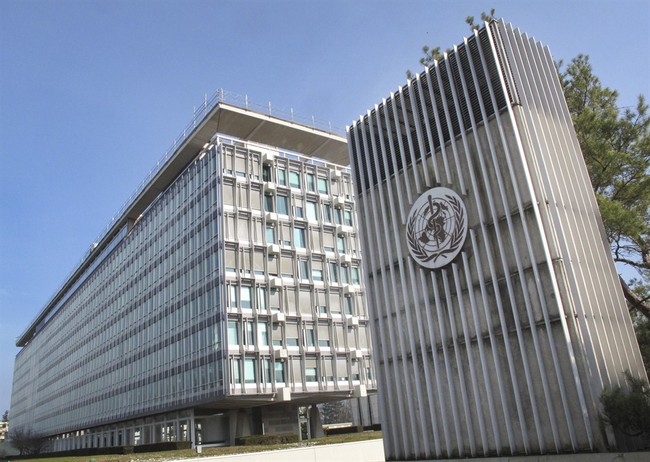
Today marks the formal end of the U.S.’s participation in the World Health Organization, following the withdrawal process initiated by President Donald Trump through his executive action in January 2025.
The decision angered the right people, many of whom called it reckless or dangerous, reactions that ignore the longer story that began well before the withdrawal paperwork.
How Confidence Evaporated
The WHO lost credibility during the COVID response due to mixed messaging, delayed acknowledgment of human-to-human transmission, and shifting guidance that created confusion in moments that required clarity.
Health and Human Services Director Robert F. Kennedy Jr. summed up the reason for America’s withdrawal in a May 2025 recorded message to the WHO.
“Like many legacy institutions, the WHO has become mired in bureaucratic bloat, entrenched paradigms, conflicts of interest, and international power politics,” Kennedy said.
Public confidence didn’t disappear overnight; it drained away with every contradiction.
Americans watched an organization, heavily funded by U.S. taxpayers, struggle to deliver basic transparency. The United States contributed far more than most member nations, both in required dues and voluntary funding, but its influence didn’t match its investment.
Responsibility flowed in only one direction, while accountability rarely flowed back.
I’m not saying that America deserved an echo chamber of yes-men because of how much we paid for membership, but WHO started behaving more like the United Nations, blaming the U.S. for many things, while never looking elsewhere.
The Money Question Nobody Likes
The U.S. has consistently paid more into the WHO than any other country, an imbalance that created dependence rather than reform.
For the WHO, the U.S. departure has sparked a budgetary crisis that has seen it cut its management team in half and scale back work, slashing budgets across the agency. Washington has traditionally been by far the U.N. health agency’s biggest financial backer, contributing around 18% of its overall funding. The WHO will also shed around a quarter of its staff by the middle of this year.
People against the withdrawal warn that U.S. law is being violated.
“This is a clear violation of U.S. law,” said Lawrence Gostin, founding director of the O’Neill Institute for Global Health Law at Georgetown University in Washington, a close observer of the WHO. “But Trump is highly likely to get away with it.”
Speaking to Reuters at Davos, Bill Gates – chair of the Gates Foundation, a major funder of global health initiatives and some of the WHO’s work – said he did not expect the U.S. to reconsider in the short-term.
“I don’t think the U.S. will be coming back to WHO in the near future,” he said, adding that when he had an opportunity to advocate for it, he would. “The world needs the World Health Organization.”
Another question is how the president will address the two years of unpaid dues that America owes to the WHO.
Should we pay?
COVID and the Aftershocks
Public trust in government and world health organizations never recovered after COVID. All future alarms about emerging diseases were seen as an attempt to escalate control over a country’s sovereign rights during pandemic situations. Declarations like monkeypox generated not concern, but skepticism, primarily when the risk was concentrated within such narrow populations, while messaging lacked proportion.
We expect health authorities to inform us without throwing gasoline on the fire. Repeated worst-case scenario framing dulled any sense of urgency because those warnings felt more political or performative.
Chicken Little’s warnings made it nearly impossible for valid alerts to break through. Once lost, confidence is hard to reclaim.
What Leaving Really Means
Exiting the World Health Organization doesn’t mean we’re abandoning global health. The U.S. maintains bilateral health partnerships, supports research, and funds disease prevention through other channels. What ended wasn’t cooperation; oversight changed hands.
Trump framed the withdrawal as a correction, not a step towards isolation, arguing that American resources should support institutions that respect transparency, fairness, and most importantly, results.
All the people catching the vapors over the withdrawal are angry because it disrupts a comfortable arrangement; dependence breeds entitlement, which turns to outrage when the checkbook closes.
Final Thoughts
America isn’t abandoning the WHO out of spite; it walked away after confidence ran dry, when rules stopped feeling equal, and trust disappeared.
Our exit only made the new reality official.
Global institutions rise and fall on credibility, not press releases. PJ Media VIP breaks down why the WHO lost American confidence, how COVID reshaped public trust, and what comes next after the United States officially broke ties on January 22, 2026. Join the conversation.